In a food chain, matter and energy are transferred from one organism to another, and thus from one trophic level to the next. Together, food chains form a food web. Every level of the food web is vital to the balance of the ecosystem. Even small changes within the food web can ripple through and affect other parts of it. That’s why it’s important for people to understand how food webs function and to take care of their health and stability.
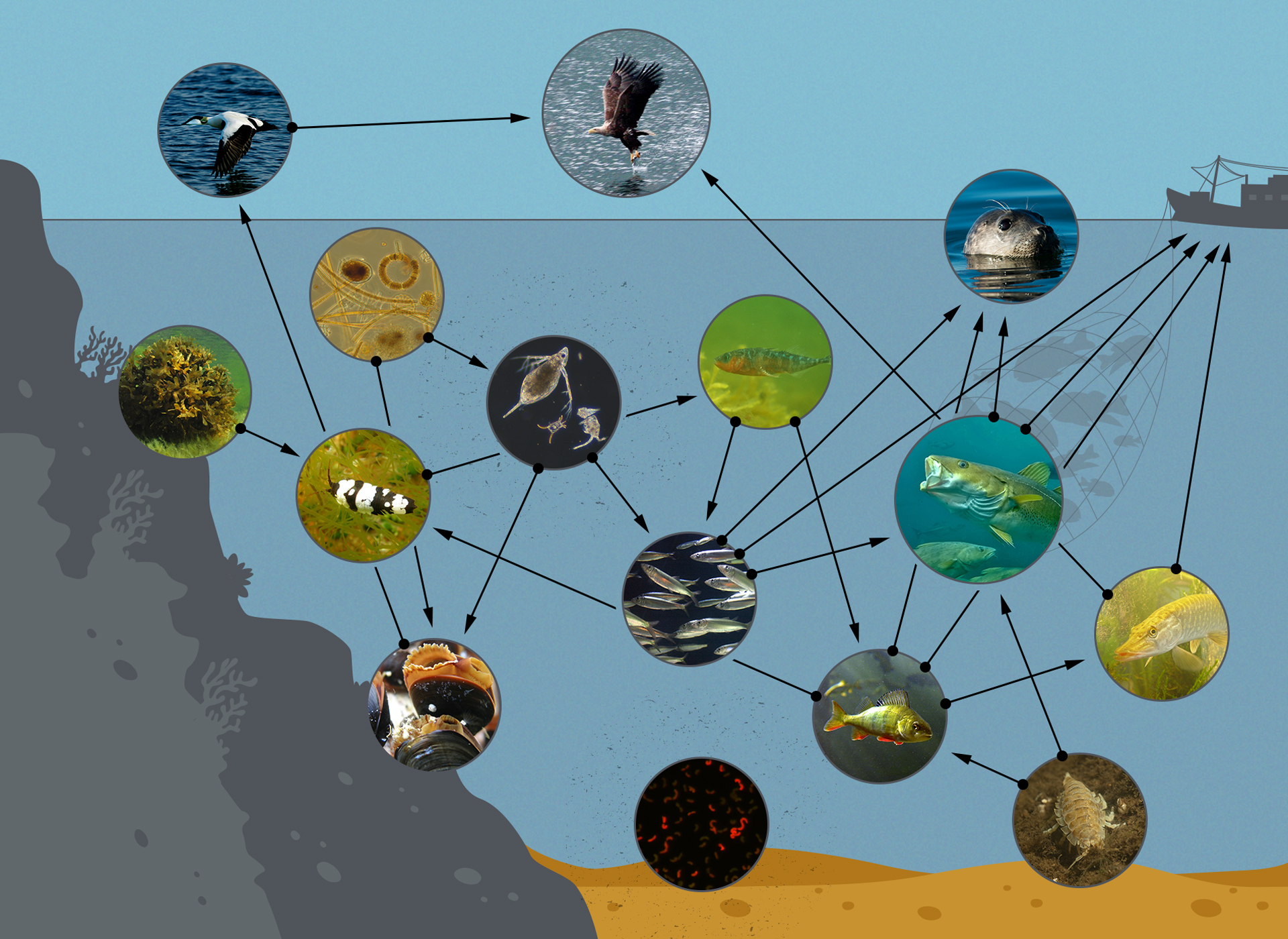
A food chain illustrates how different organisms are connected to one another and how matter and energy flow from primary producers to predators—and eventually back to the beginning of the chain.
Did you know?
The decline in cod affects herring and its food sources
The Baltic Sea cod population has declined sharply over the past few decades. Cod has been overfished, and its reproduction in the Baltic Sea has become more difficult: the salty bottom areas crucial for cod eggs are in poor condition.
Cod feed heavily on herring. Now that cod numbers are low, the herring population has room to grow. However, this isn’t entirely beneficial for the herring. They must compete more fiercely for food—both among themselves and with sprat. As food becomes scarce, herring in many areas remain quite small.
Intense competition for food also affects the animals that herring and sprat feed on. These fish consume zooplankton, but they selectively eat the largest species with the highest nutritional value. When there are many feeders, the composition of zooplankton changes: smaller species like water fleas dominate, and they offer poorer nutrition for the fish.
Primary producers, that is, green plants and algae
At the base of the food web, there is an abundance of organisms. This level includes the primary producers—green plants and algae. Algae come in many forms, ranging from large species like bladderwrack and red algae to tiny single-celled planktonic algae, known as phytoplankton, which are the most important primary producers in the sea. Primary producers perform photosynthesis, converting sunlight into chemical energy in the form of sugars, which they use to build their own cells. This process lays the foundation for the entire food web.
In winter, phytoplankton are nearly absent from the water—there is so little light in the sea that algae cannot photosynthesize or grow. During this time, algae also do not consume the nutrients in the water, so nutrient levels are at their highest in winter. When spring arrives, light increases and the seawater begins to warm. Then, the dormant forms of phytoplankton awaken, and planktonic algae begin to grow and reproduce.
The most important nutrients for primary producers in the Baltic Sea are phosphorus and nitrogen. Therefore, phosphorus and nitrogen emissions from land enhance the growth of algae and plants, leading to eutrophication.
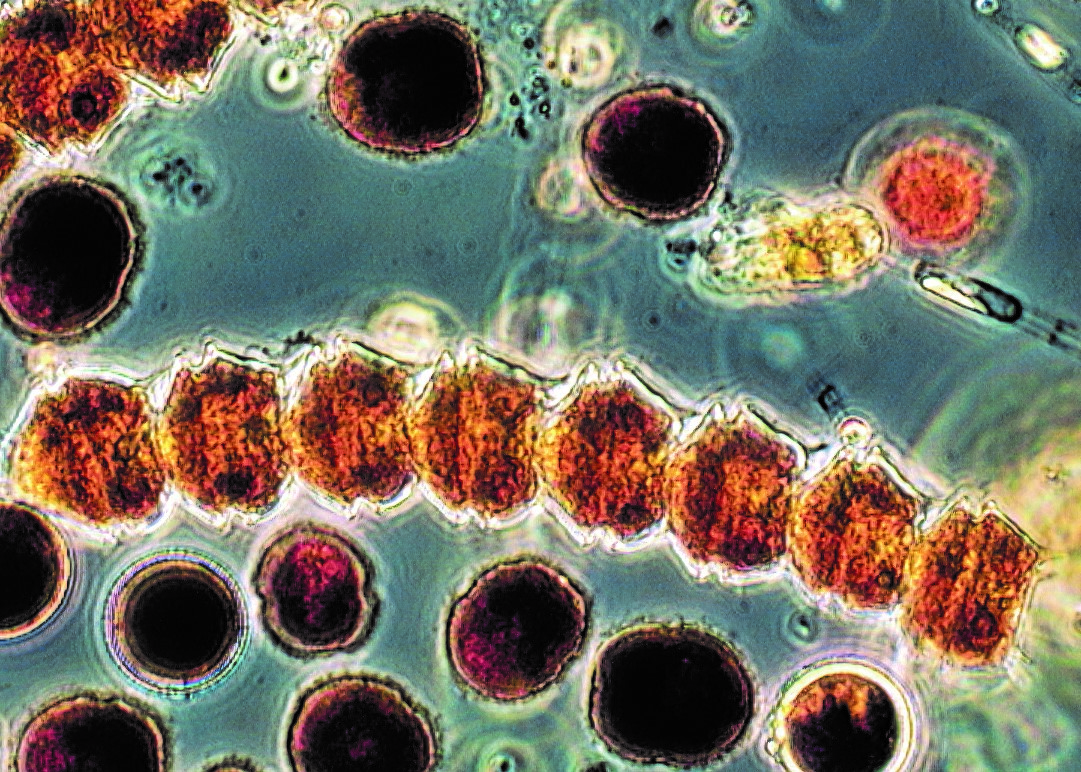
Springtime dinoflagellates under the microscope.
Did you know?
Half of the oxygen you breathe comes from marine phytoplankton.
Approximately 2,000 species of phytoplankton are known from the Baltic Sea.
In most of the open waters of the Gulf of Finland, nitrogen is the limiting nutrient. In contrast, phosphorus is the limiting nutrient in the open waters of the Bothnian Sea.
Grazers feed on primary producers
In the second layer of the food web are the grazers, which feed on primary producers. A large portion of these grazers consists of zooplankton, such as water fleas, copepods, and other crustaceans. Among these, copepods are the most important group for the Baltic Sea food web, as they serve as a key food source for many larger animals, including jellyfish and herring. Copepods themselves feed on phytoplankton, although the largest species also consume smaller zooplankton.
In addition to the amount of phytoplankton and predation pressure, the abundance and species composition of zooplankton are also influenced by the salinity and temperature of the water.
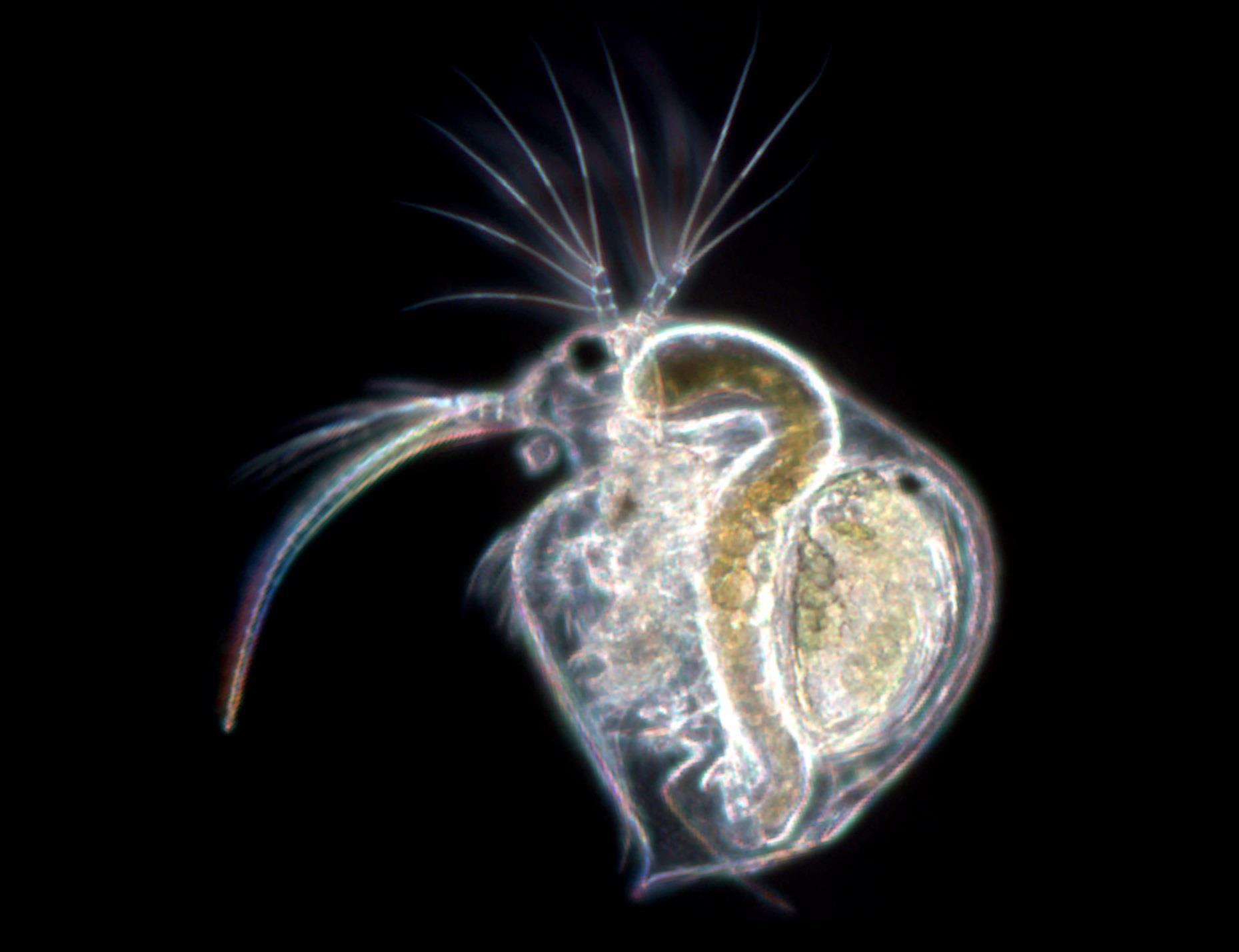
The water flea is a small crustacean and belongs to zooplankton.
Predators feed on zooplankton and smaller predators
Above the grazers are predators, arranged in multiple layers. Zooplankton are eaten by fish such as herring and other schooling species that live in the open waters of the Baltic Sea. These smaller fish, in turn, are preyed upon by larger predatory fish like cod. At the very top are apex predators, which are not eaten by any other species in the sea. In the Baltic Sea food web, apex predators include animals such as the white-tailed eagle and seals.
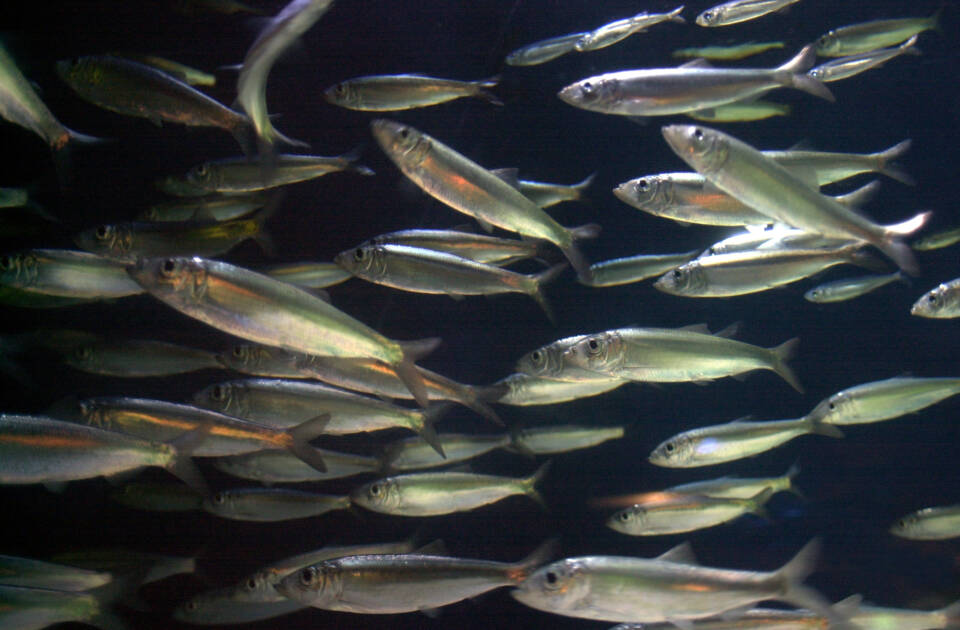
Baltic herring
Herring is an important link in the food chain. It feeds on zooplankton and is itself a common prey for several predatory fish.
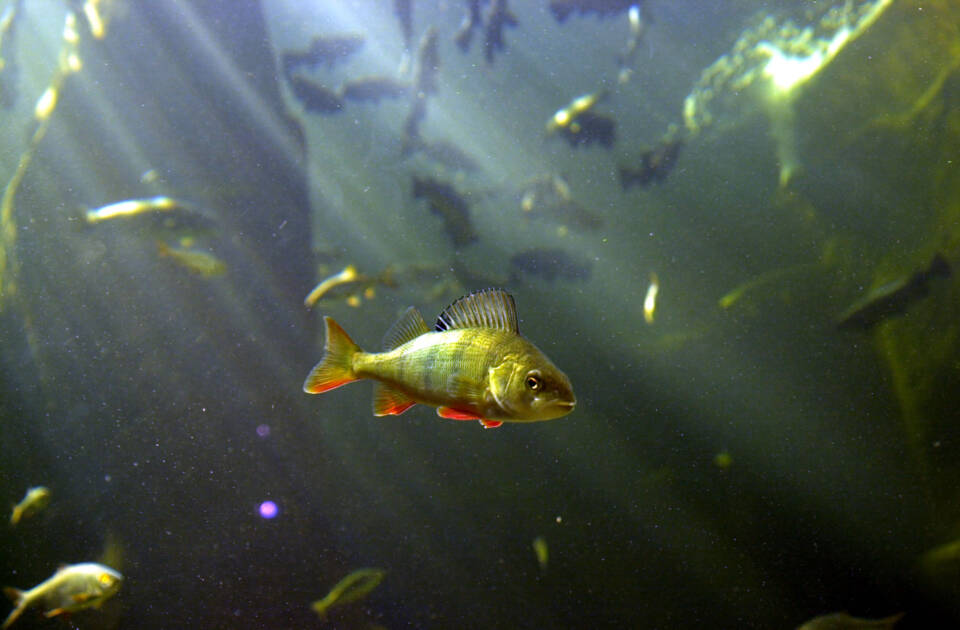
Perch
Like herring, perch is a so-called secondary consumer in the food web, meaning it transfers energy from plankton to predators.
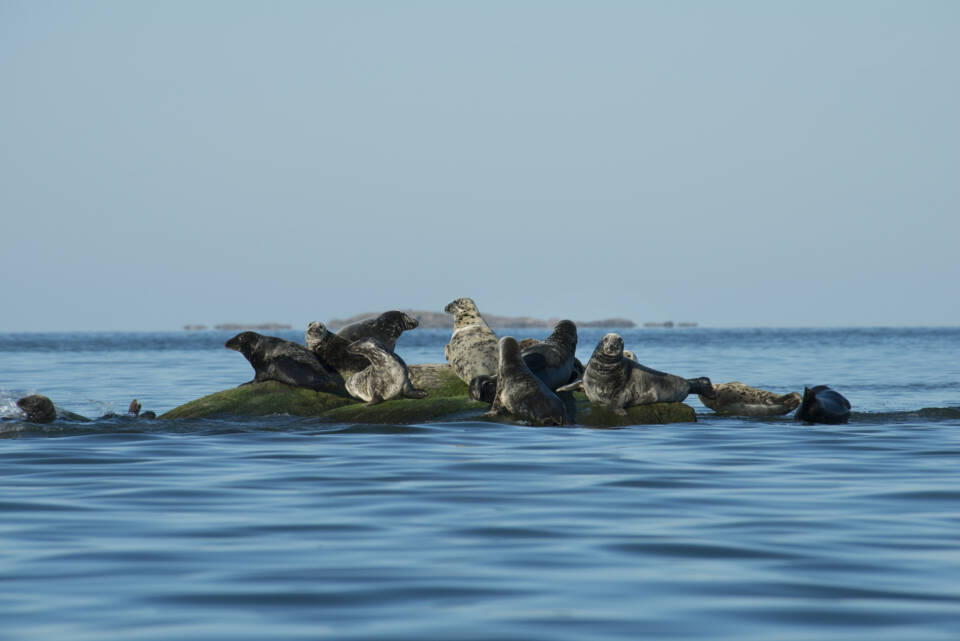
Grey seals
The most common seal in the Baltic Sea, the grey seal, sits at the top of the food chain.
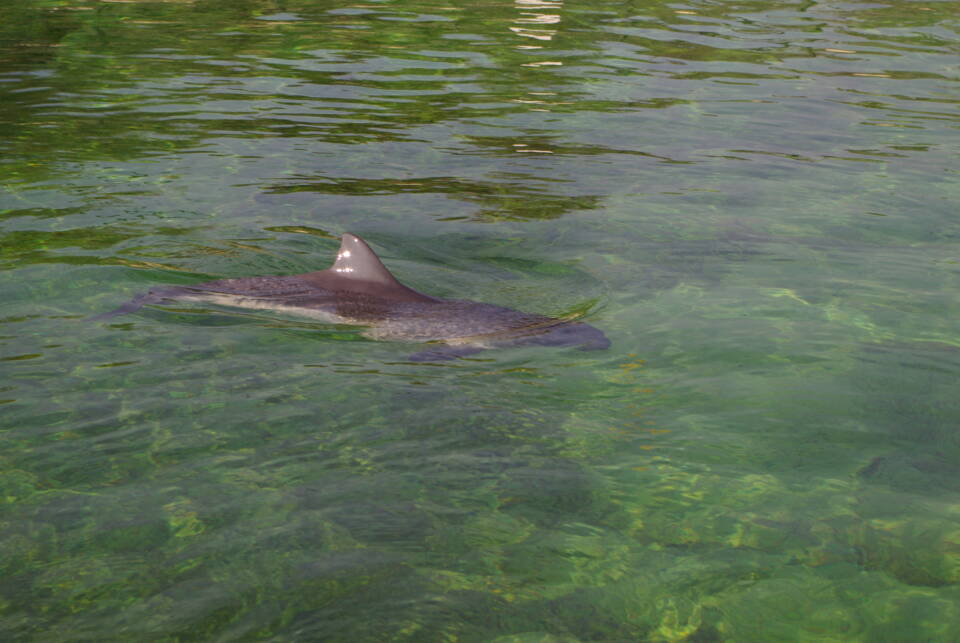
Harbour porpoise
Finland’s only whale species is an apex predator.
Did you know?
Harmful substances move upward through the food web and accumulate in top predators. For example, white-tailed eagles nearly disappeared from Finland due to mercury that ended up in the water. As mercury built up in the eagles, it weakened the shells of their eggs. The eggs couldn’t withstand the weight of the brooding parent and were crushed.
The health of fish stocks in the Baltic Sea is regulated by the sea’s nutrient levels and fishing practices. Many prey fish species have a minimum catch size, intended to ensure that fish have a chance to reproduce before being caught. Seal hunting is also regulated. For grey seals, regional catch quotas have been established.
Decomposers break down compounds and return them to the beginning of the food web
At the end of the food chain are decomposers, which feed on dead organisms and their waste. They break down the complex compounds within these organisms into simple raw materials that primary producers can use. In this way, matter cycles back to the base of the food web.
Energy, on the other hand, is consumed along the way by the life processes of organisms, and the remaining energy is released as heat when the organism decomposes. Therefore, primary producers must continuously capture new energy from sunlight.
Bakteeri
Bakteereita ja niiden muodostamia kasvustoja löytyy niin vesirajan kalliolta, vesimassasta kuin meren pohjaltakin. Tunnetuimpia bakteerikasvustoja muodostavat syanobakteerit eli sinilevät. Bakteereihin kuuluvat myös pallomaiset Rivularia-suvun lajit ja pohjille samettisia mattoja muodostavat Spirulinat. Kuva: Hermanni Kaartokallio.
Rakkohauru
Rakkohaurun (ent. rakkolevä) kellertävien ja pensasmaisten kasvustojen suojissa viihtyvät monet muut eliölajit. Tyynillä paikoilla niiden varsiin kasvaa pullistelevia kaasurakkuloita, jotka nostavat levää pintaa kohti. Kuva: Heidi Arponen, Metsähallitus.
Punahelmilevä
Punahelmilevä muodostaa punertavana hohtavia tupsuja avoimille kallio- ja kivikkorannoille. Parhaimmillaan punainen levämatto saattaa peittää koko kalliopinnan. Kuva: Julia Scheinin, Metsähallitus.
Kasviplankton
Kasviplankton eli keijusto elää avovedessä ja on niin pientä, ettei sitä yleensä näe paljain silmin. Itämeressä on jopa 2000 kasviplanktonlajia. Kasviplankton sitoo ilmakehästä hiilidioksidia ja tuottaa happea. Kuva: Sirpa Lehtinen.
Rihmalevä
Nopeasti kasvavat rihmalevät näyttävät ohuilta nauhoilta ja saattavat peittää alleen laajoja alueita. Rihmalevät hyötyvät rehevöitymisestä ja kukoistavat Itämeren muuttuvissa olosuhteissa. Rihmalevien suojissa elää lukuisia selkärangattomia. Kuva: Heidi Arponen, Metsähallitus.
Leväsiira
Leväsiira on Itämeren rannoilla yleinen, litteän muotoinen siiralaji, joilla on poikkeuksellinen kyky syödä parkkihappoja sisältäviä rakkoleviä. Leväsiira on tärkeää ravintoa muun muassa ahvenelle. Kuva: Metsähallitus.
Sinisimpukka
Sinisimpukat kuuluvat maailman vanhimpiin eläimiin. Ne siivilöivät vedestä ravinnokseen pieneliöitä ja samalla ne suodattavat vettä kirkastaen sitä. Monet kalat ja linnut käyttävät simpukoita ravintonaan. Kuva: Heidi Arponen, Metsähallitus.
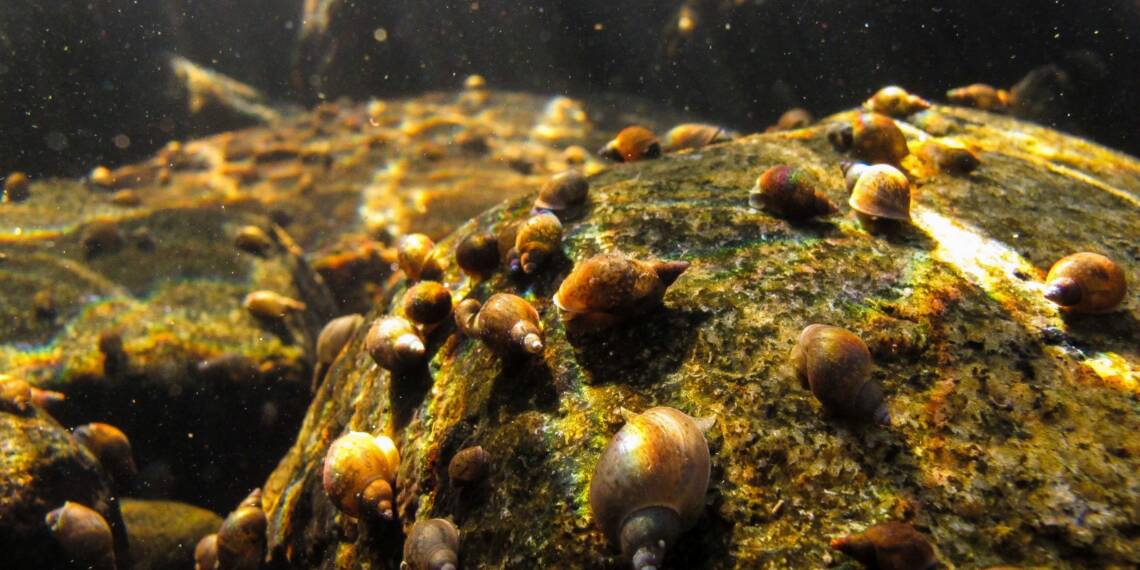
Leväkotilo
Leväkotilot ovat kalliorantojen yleisimpiä kotiloita, joiden kuori muistuttaa papukaijan nokkaa. Se pysyy tyrskyjen keinutuksessakin kiinni alustassaan vahvan jalkansa ansiosta. Leväkotilot syövät leviä ja pieneliöitä. Kuva: Heidi Arponen, Metsähallitus.
Liejusimpukka
Liejusimpukka on Itämeren laajimmalle levinnyt simpukkalaji. Se elää pohjaan kaivautuneena ja kurottaa pohjan pinnalle kaksi hengitysputkea. Kuva: Jan-Erik Bruun.
Eläinplankton
Eläinplankton koostuu hiukan kasviplanktonia suuremmista toisenvaraisista eliöistä, jotka käyttävät ravinnokseen kasviplanktonia. Ne uivat hitaasti tai kulkeutuvat veden virtausten mukana. Kuva: Siru Tasala.
Haahka
Haahka on saaristoissa elävä suuri sorsalintu. Haahkat saapuvat aikaisin keväällä pesimään ulkosaariston avoimille luodoille, sekä nykyään yleisesti myös sisäsaariston saarille. Ne syövät pääasiassa sinisimpukoita, jotka ne nielaisevat kokonaisina. Kuva: Riku Lumiaro.
Merikotka
Merikotka on suurin petolintumme, joka meinasi hävitä Suomesta kokonaan. Rauhoituksen, vapaaehtoisten järjestämän talviruokinnan ja ympäristömyrkkyjen kieltämisen ansiosta ne saatiin kuitenkin pelastettua. Kuva: Esa Nikunen.
Halli
Harmaahylje eli halli on Itämeren suurin ja yleisin hylje. Sen poikaset eli kuutit syntyvät alkuvuodesta avojäälle tai luodolle. Hallit syövät pääosin silakkaa, minkä lisäksi ne hyödyntävät kalastajien pyydyksiä. Kuva: Riku Lumiaro.
Hauki
Hauki on petokala, joka käyttää ravinnokseen lähes itsensä kokoisia kaloja, linnunpoikasia ja myös omia lajitovereitaan. Kuva: Ari Saura.
Silakka
Silakka on Itämerellä asuva sillin alalaji, joka liikkuu isoissa parvissa. Öisin parvet ruokailevat pinnassa ja päivisin painuvat syvemmälle veteen. Silakka on Suomen kalastuselinkeinolle tärkein saalislaji. Kuva: Riku Lumiaro.
Turska
Turska on suosittu ruokakala, jonka määrä Itämerellä on romahtanut. Turska kärsii Itämeren heikosta tilasta ja ylikalastuksesta, minkä takia Itämerestä pyydettyä turskaa ei suositella syötävän enää ollenkaan. Kuva: Ari Saura.
Kilkki
Kilkki on Suomen rannikon kookkain pohjaeläin ja voi kasvaa jopa kymmensenttiseksi. Se on monipuolinen saalistaja ja raadonsyöjä, joka selviää vaikeissakin olosuhteissa. Kuva: Juho Lappalainen, Metsähallitus.
Kolmipiikki
Rannikoilla elävä kolmipiikki on saanut nimensä sen selässä olevasta kolmesta piikistä, jotka suojaavat sitä muilta pedoilta. Itämerellä kolmipiikki on yleistynyt huolestuttavan nopeasti: vuonna 2015 julkaistun ruotsalaistutkimuksen mukaan kanta on jopa 50-kertaistunut 80-lukuun verrattuna. Kuva: Jussi-Tapio Roininen, Metsähallitus.
Ihminen
Kaikkiruokainen ihminen sijoittuu ravintoketjun
huipulle, sillä ihmiset eivät yleensä ole muiden eliöiden saalista. Meri on ihmiselle tärkeä
paitsi ravinnon lähteenä, myös esimerkiksi kulkureittinä ja virkistäytymisessä.
Perustuottajat
Laiduntajat
Pedot
Hajottajat
Avomeren perustuottajia ovat mikroskooppisen pienet levät ja
yhteyttävät bakteerit. Ne keijuvat vedessä, ja niitä kutsutaan kasviplanktoniksi. Rannikkovesissä
tärkeimpiä perustuottajia ovat pohjaan ankkuroituneet suurikokoiset levät sekä vesikasvit.
Laiduntajat syövät perustuottajia. Laiduntajia ovat
esimerkiksi pienenpienet alkueliöt, äyriäiset ja rataseläimet, joita kutsutaan eläinplanktoniksi. Myös
monet suuremmat eläimet, vaikkapa kotilot, syövät kasviravintoa ja ovat siis laiduntajia.
Laiduntajia saalistavat pedot, muun muassa monet kalat ja
äyriäiset. Koska erilaiset pedot syövät myös toisiaan, ravintoverkko voi olla tässä kohdassa hyvinkin
mutkikas ja monitasoinen. Esimerkiksi hauki voi päätyä ihmisen ruokapöytään. Hylkeet, monet vesilinnut
ja muut suurikokoiset pedot ovat huippupetoja, joille ei löydy enää löydy merestä syöjiä.
Kuolleet eliöt ja niiden jätökset päätyvät lopulta hajottajien
ravinnoksi. Hajottajiin kuuluu suuri joukko bakteereja ja selkärangattomia, jotka vapauttavat
jäänteisiin sitoutunutta energiaa. Näin energia päätyy takaisin perustuottajien käyttöön ravintoketjun
alkuun.
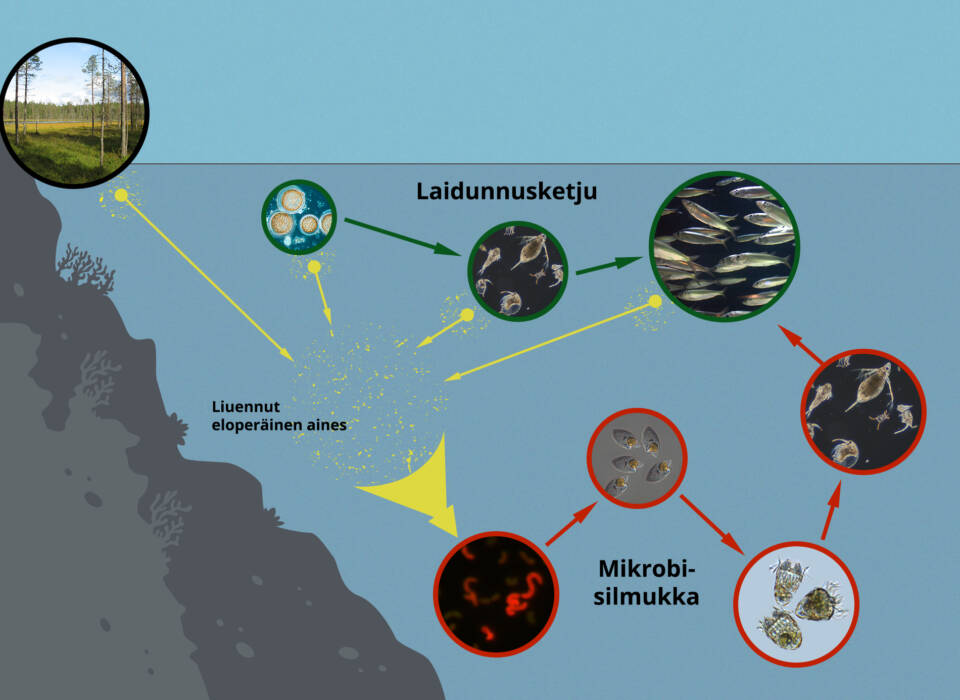
The microbial loop is a special case within the food web
The food chain that begins with primary producers is not the only pathway through which energy moves from one level to another in the sea. Another route starts with bacterial activity. This pathway is called the microbial loop. Bacteria are able to utilize organic matter dissolved in the water. Using this energy, they reproduce and build their own biomass.
Where do the organic substances in seawater come from? Some originate from the metabolism of marine organisms, such as fish excrement. However, the majority comes from land. As rainwater flows across the surface of the ground, it dissolves humus and other organic materials from the soil. These substances are carried by water into streams, lakes, rivers, and eventually into the sea. Additional organic matter also enters the water from residential and industrial wastewater. All of these materials serve as food for bacteria.
The microbial loop loses more energy
As bacteria convert dissolved organic matter in the water into their own biomass, they simultaneously open up a new pathway for energy transfer. However, this bacteria-based route is more complex than the one that begins with algae and other primary producers, as it involves more steps at the start. The microbial loop might proceed like this: bacterium → flagellate → ciliate → zooplankton → herring… In contrast, the route starting from primary producers goes directly from phytoplankton to zooplankton.
Because the microbial loop has many steps, energy is transferred less efficiently. Therefore, a very large amount of bacterial biomass is needed for a herring to obtain its daily food through this pathway.
The microbial loop is the only route through which dissolved organic matter is returned to the rest of the food web.
In the Gulf of Bothnia, bacteria thrive
The importance of the microbial loop to the Baltic Sea ecosystem varies by marine region. Its role is greatest in the Gulf of Bothnia, where the surrounding environment contains many bogs and other peatlands. Waters flowing from these areas are rich in humus, which bacteria can utilize.
In addition to organic matter, bacteria also require nutrients—just like algae do. The difference is that bacteria can make use of much lower nutrient concentrations than algae. As a result, they compete effectively with algae for nutrients and help reduce the eutrophying impact of nutrient loading.