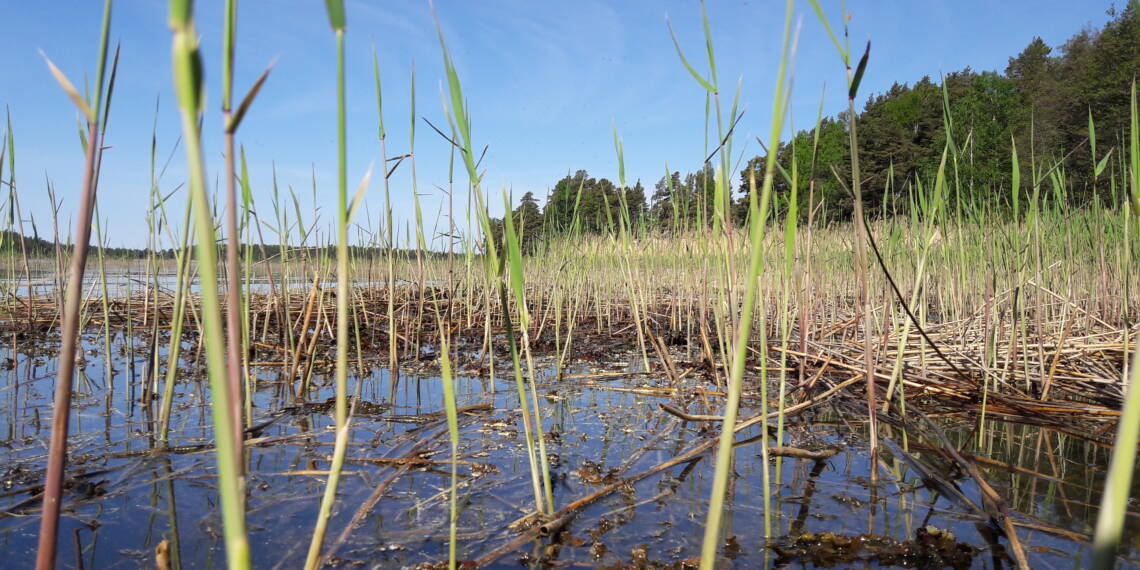
Shallow marine bays teem with life
If you’re looking for areas in Finland’s marine regions that are particularly rich in nature and species, large shallow bays are strong candidates. They are shallow enough for aquatic plants and provide shelter from the harsh waves of the sea. The bays’ food web also receives sufficient nutrients from the surrounding land areas. Overall, the conditions for life are well in place.
Fishes
Perch, pike, roach, and bream are just some of the fish species that thrive in shallow bays. Such areas are also important spawning grounds for many fish species.
Birds
Dabbling waterfowl, such as the mallard duck and the mute swan, thrive in shallow bays. These areas are also home to insect-eating birds, such as warblers, as well as wading birds, which include the oyster-catcher.
Vascular plants
Aquatic vascular plants include those that sprout both underwater and above the surface. These include, for example, lake reeds, water horsetail, yellow water-lily, fennel and perfoliate pondweeds, as well as brackish-water crowfoot.
Large shallow marine bays have been identified as important habitats throughout the Baltic Sea region and also across Europe. They are part of the habitat types defined by the EU Habitats Directive, which member states are required to protect.
In addition to being valuable in themselves, shallow bays also provide ecosystem services beneficial to humans, such as fish and recreational opportunities. Bays also contribute to the overall health of the Baltic Sea: their abundant vegetation retains nutrients from runoff and helps protect the sea from eutrophication.
Shallow marine bays host a diverse range of species
Shallow marine bays teem with life. Their shores are often lined with reed beds, while the outer waters are dominated by submerged and floating-leaved plants. The plant diversity is overall rich and varied.
Among the vegetation lives a variety of invertebrate animals. Some burrow into the muddy seabed, others climb on plants or swim among them. Many insects lay their eggs in the warm and calm waters of the bays, where their larvae develop before eventually taking flight as adult insects.
Among fish, especially pike, perch, and cyprinids seek out shallow coastal waters to spawn. Their fry begin life in the sheltered and gentle conditions of the bays. Larger fish, as well as many water and shorebirds, gather to feed on fish fry and invertebrates burrowed in the seabed. Due to the rich birdlife, many large shallow marine bays have been included in the national bird water protection program.
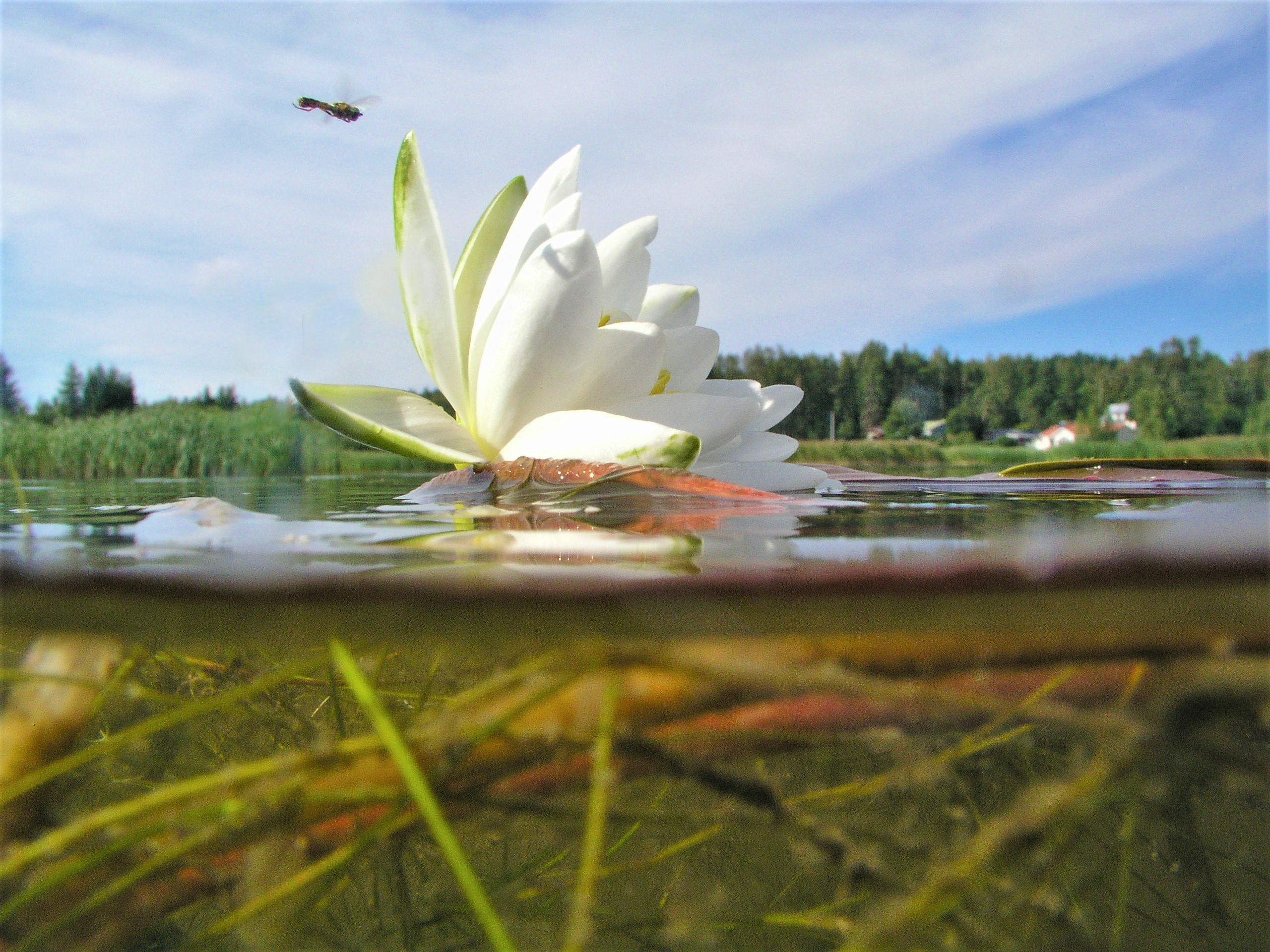
Plant communities dominated by pondweeds and watermilfoils
In shallow and sheltered bays, the seabed vegetation is often dominated by either watermilfoils or pondweeds. Pondweed-dominated plant communities are common along the entire coast, although the species composition varies depending on the openness of the site and the salinity of the water.
Watermilfoil-dominated communities typically occur on sheltered muddy bottoms, but also on open mixed substrates. Watermilfoils tolerate eutrophication and turbidity slightly better than pondweeds, but both plant groups can also coexist in the same communities.
Both watermilfoil and pondweed habitats are defined in Finland as protected habitat types. Their condition has remained stable, and this is expected to continue in the future.
Endangered aquatic plants thrive in shallow marine bays
With some luck, one might find an endangered plant species in shallow bays, as most of Finland’s coastal endangered aquatic plants grow in shallow shoreline waters. Many endangered species enjoy special legal protection, and it is prohibited to destroy or degrade their habitats. By protecting natural and ecologically valuable marine bays, biodiversity can be effectively promoted and the ecosystem services provided by the bays safeguarded.

Sisältö vaatii markkinointievästeiden sallimisen. Ole hyvä ja salli evästeet katsoaksesi sen.
Did you know?
Even a small breeding ground can produce fish stocks over a wide area. A good example is pike-perch which spawns in shallow turbid bays along the coast: only 1.4% of the sea area produces almost all of the juvenile spawning stock.
Eutrophication and heavy use degrade the condition of bays
-
 Find out more
The EU Nature and Birds Directives
Large marine bays are popular recreational destinations: warm and shallow waters, along with the sheltered nature of bays, encourage boating and the construction of summer cottages along the shores. However, the heavy use of bays, shoreline modifications, and maintenance of boating routes degrade their natural state.
In addition to dredging and shoreline construction, shallow bays face other pressures. These include the general eutrophication trend in the Baltic Sea, reed overgrowth caused by excessive nutrient loads, and invasive species. The condition of large shallow bays along Finland’s coast has therefore been assessed as poor.
The status of wide shallow bays in Finland is bad, and no positive development is in sight. The assessment is based on a 2025 evaluation of the conservation status of habitat types under the EU Habitats Directive for the period 2019–2024.
Status of shallow bays
Future trend of shallow bays
Habitat Threats
State of the Environment
- Eutrophication
- Climate Change
Physical Environment
- Construction
- Bottom Alteration Dredging
Human Activity
Biology
- Invasive Species
- Overgrowth

