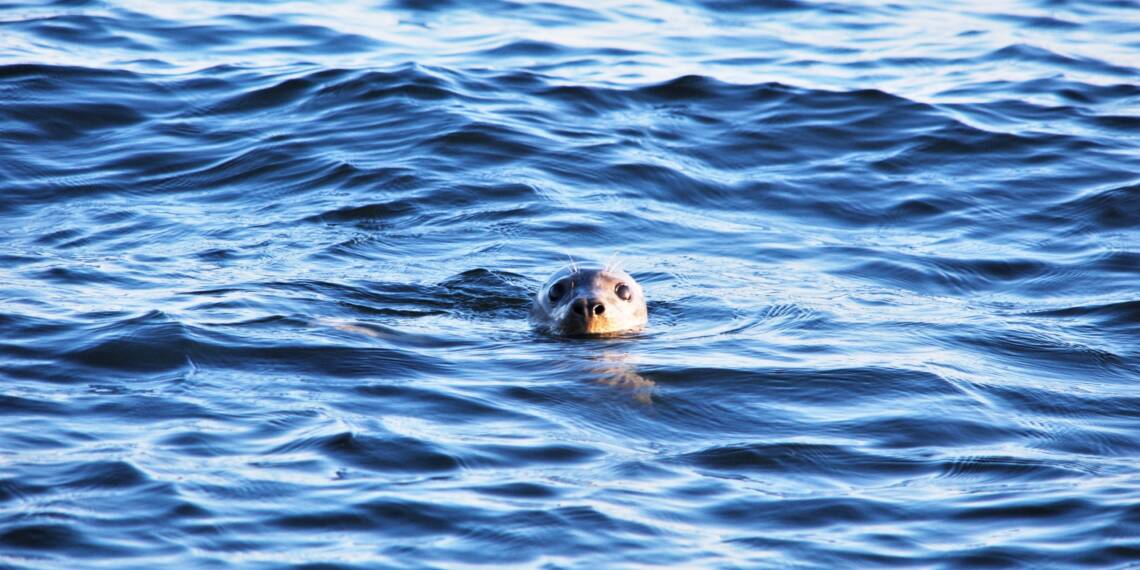
Two seal species are found in the Baltic Sea: the grey seal and the Baltic ringed seal
The grey seal is the largest in the Baltic Sea
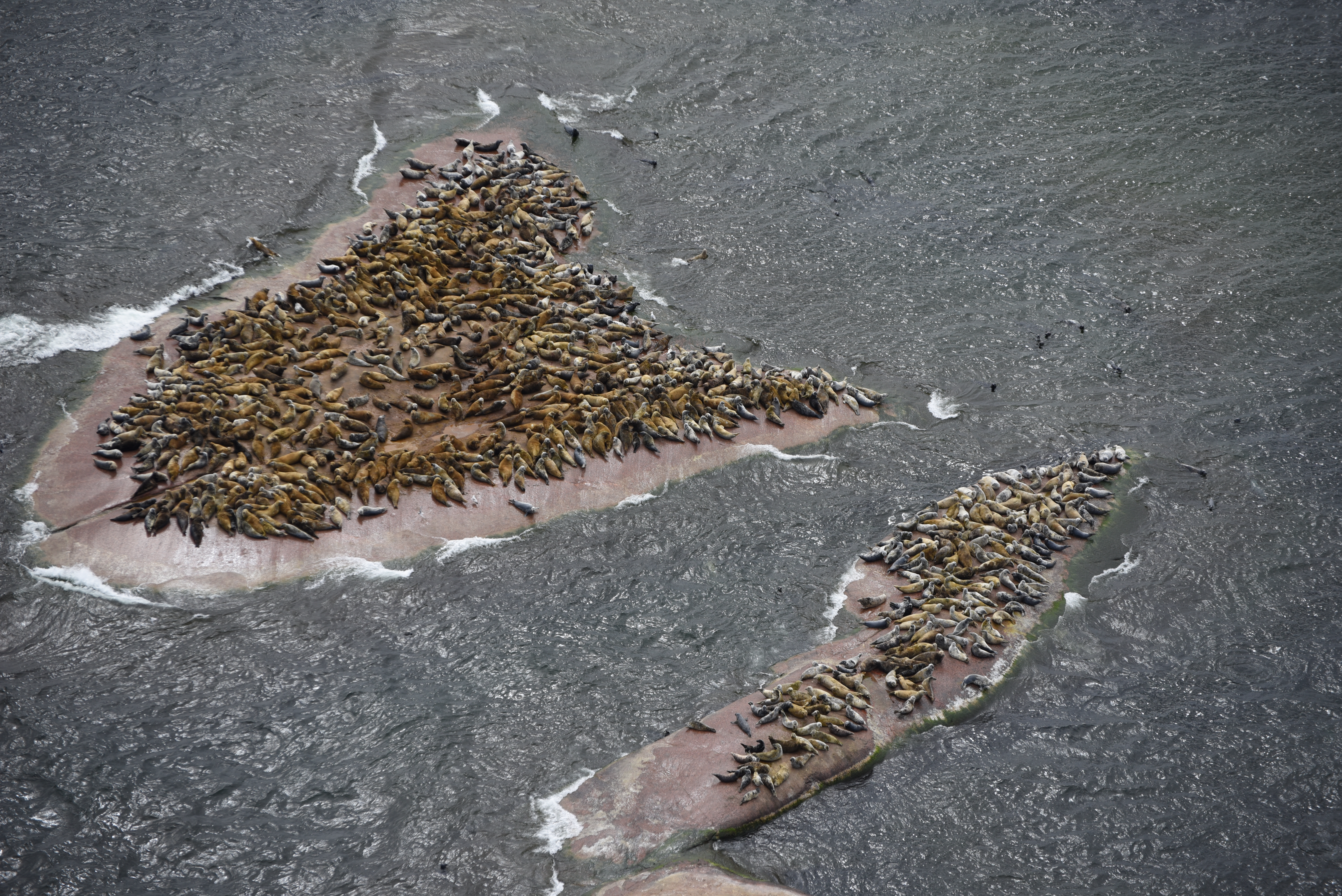
The grey seal, i.e. Halichoerus grypus, is the largest and most abundant seal species in the Baltic Sea. In 2024, the estimated grey seal population in the Baltic Sea was just under 49,000 individuals, of which approximately 17,500 were observed in Finnish marine areas. The number of grey seals is assessed through aerial surveys in late spring, when the seals are molting while resting on outer islets. The survey results represent a minimum population estimate, as some seals remain in the water and are not visible during the counting period. The adult males are easy to identify because of their ”Roman noses” and they may reach up to 300 kilograms in weight. Female grey seals are paler in colour and leaner, with body weights usually remaining below 150 kilograms.
Grey seals are social animals and gather in large groups composed of as many as 1,000 individuals. On calm summer nights, their ”song” can carry dozens of kilometres. Grey seals are nomadic and in the space of a week may travel as much as 500 kilometres.
Seal pups are born in early spring
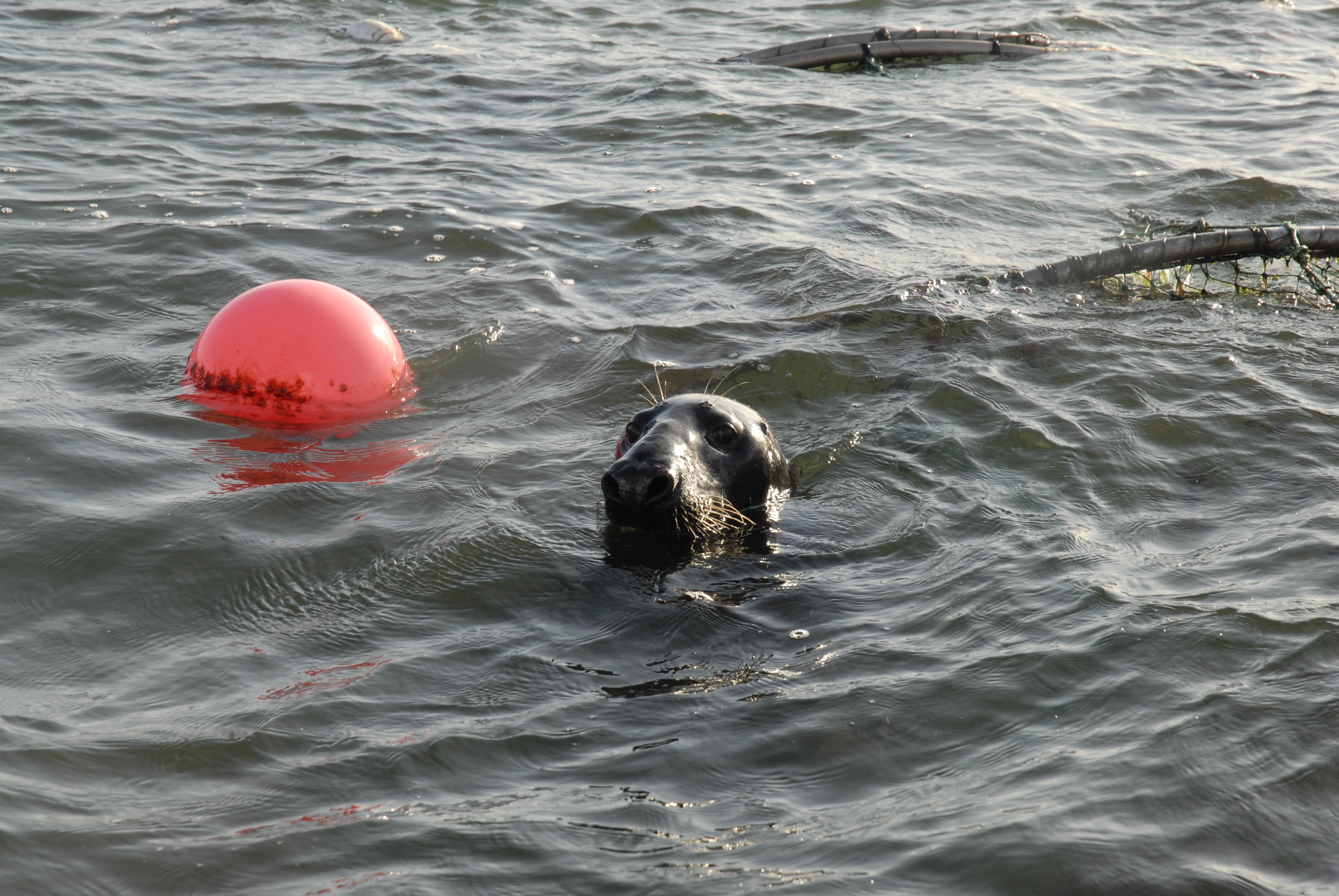
Between February and March, females give birth to a single pup weighing about 12 kilograms either on the open ice or an outer skerry. The females nurse the pups for three weeks, during which time they fatten rapidly, increasing their body weight to 40 or 50 kilograms. The fattest pups grow on the open ice, while those on islets and skerries have lower body weights.
During their nursing period, seal pups change their white, wavy baby fur for a shorter adult pelt. Females come into heat towards the end of the nursing period and the adult males spend much of this time near the islets where the juveniles nurseries are. Each year between May and June, grey seals older than one year moult their fur on the outermost skerries.
-
 Find out more
Baltic herring is the main catch of commercial fishing
A grey seal eats over five kilograms of fish each day
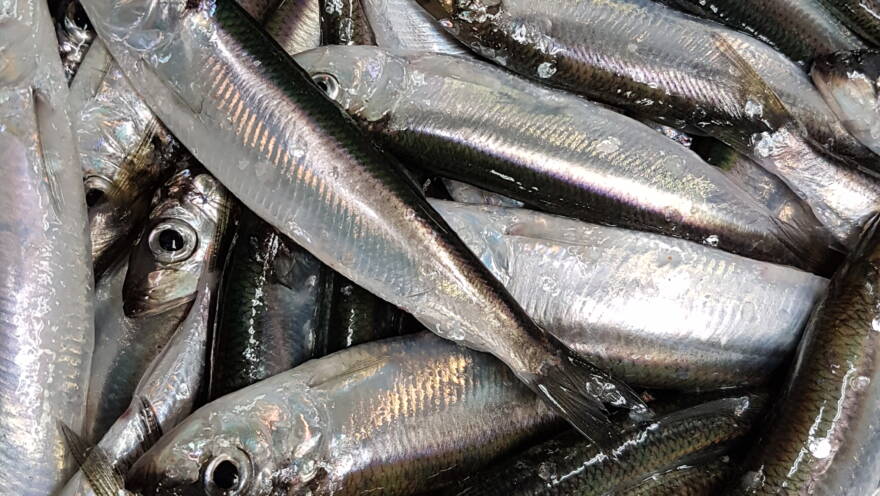
Although a fully-grown grey seal consumes between five and eight kilograms of fish per day, there is a large seasonal variation in their food intake. The abundant herring forms the dietary basis for grey seals of all age classes.
Salmon is also highly favoured as a food item by grey seals and they can catch it most easily from fishermen’s traps and nets. Some adult males have even become specialised in looting fishing gear. In the Baltic Sea, the highest proportion of damage caused by seals to commercial fishing is by the grey seal. The eaten catch and the broken fishing gear cause significant problems for commercial fishermen.
The protection status of the grey seal
Status of the grey seal
Future trend of the grey seal
The status of the grey seal population in Finland is good as is the future population trend. The assessment is based on a 2025 evaluation of the conservation status of habitat types under the EU Habitats Directive for the period 2019–2024.
Observations of grey seals in Finnish coastal areas starting from 1980. The map is based on observations recorded in Laji.fi portal that have a coordinate accuracy of 1000 meters.
The Baltic ringed seal is dependent on snow and ice for its survival
The Baltic ringed seal, i.e. Pusa hispida botnica, is the smallest of the Baltic Sea seals, growing from 50 to 120 kilograms in weight. Like the ringed seals of the Saimaa- and Ladoga lake systems, the Baltic ringed seal is subspecies of ringed seal. It is highly dependent on ice and snow as suitable environments for reproduction and moulting and is also capable of inhabiting fast ice in marine areas, with the help of breathing holes in the ice. Therefore, climate change is one of the greatest threats to the Baltic ringed seal in the near future.
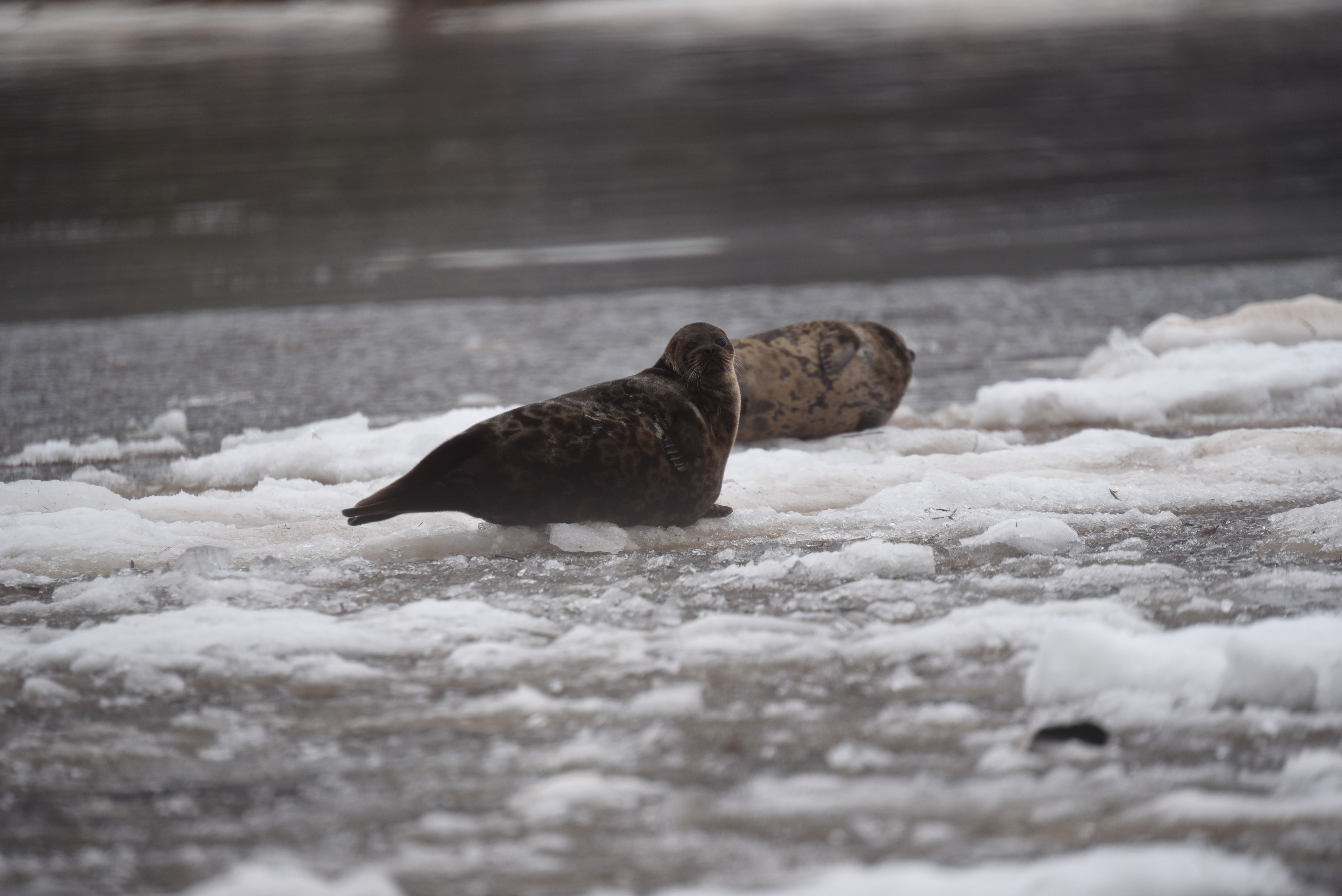
The tiny seal pups are born in a nest of snow
New-born Baltic ringed seal pups weigh about five kilograms. They are born between February and March in a lair dug by the female usually from a snowdrift on the pack ice. Females nurse their single pups for five to seven weeks when the white seal pup fur changes to the typical ringed pattern of the adult pelt. The female comes into oestrus during the nursing period. Baltic ringed seals become sexually mature from three to six years of age and may live for forty years.
Baltic ringed seals moult their fur annually towards the end of April when the last of the sea ice is melting. It is at this time when the abundance of this species is assessed by aerial surveys.
The habitats of the Baltic ringed seal occur in the northern Baltic Sea and the Bay of Bothnia
For the most part, Baltic ringed seals live in the northern parts of the Baltic Sea, north of a line running between the Stockholm Archipelago and the Gulf of Riga. Only on rare occasions are individuals encountered south of this line. Therefore, the distribution of ringed seals in the Baltic Sea reflects the sea areas most likely to be frozen annually.
Most of the Baltic ringed seal population lives in the Bay of Bothnia, where it is estimated there may be up to 20,000 individuals. At least one thousand individuals are living in the Gulf of Riga. Currently, a total of only a few hundred ringed seals are found in the Archipelago Sea and the Gulf of Finland combined. These breeding populations are considered endangered.
Baltic ringed seals mainly eat herring
The Baltic ringed seal predominantly eats small shoaling fish about 10 centimetres long, and herring forms its main diet. In the Bay of Bothnia, it not only eats three-spined stickleback but also vendace. Occasionally, they will also eat crustaceans, such as bottom-dwelling isopods, i.e. Saduria entomon. On average, a Baltic ringed seal consumes 3.5 kilograms of food per day. This seal species fasts in the spring, while the peak of its food intake occurs in late summer and autumn when it fattens itself for the winter.
Baltic ringed seals are mainly solitary in nature and they are not particularly social. However, they may occasionally be observed resting in small groups.
The protection status of the Baltic ringed seal
Status of the ringed seal
Future trend of the ringed seal
The status of the Baltic ringed seal population in Finland is inadequate as is the future population trend. The assessment is based on a 2025 evaluation of the conservation status of habitat types under the EU Habitats Directive for the period 2019–2024.
Observations of Baltic ringed seals in Finnish coastal areas starting from 1980. The map is based on observations recorded in Laji.fi portal that have a coordinate accuracy of 1000 meters.
There are seven seal reserves in Finnish marine areas
There are seven seal protection areas in Finnish state-owned sea areas, which specifically protect the main moulting and resting islets used by grey seals. The total area of these reserves covers 188 km², which is only 0.37% of the Finnish marine area.
In addition to species protection, seal protected areas also benefit research, as well as species monitoring. Although some protected areas may also play a role in the protection of the Baltic ringed seal, it is more difficult to identify equally clear protected areas for this ice-dependent species. Seals have also been observed in several marine Natura 2000 nature protection sites.
Finland has a long history of seal hunting
-
 Find out more
Hunting at sea – then and now
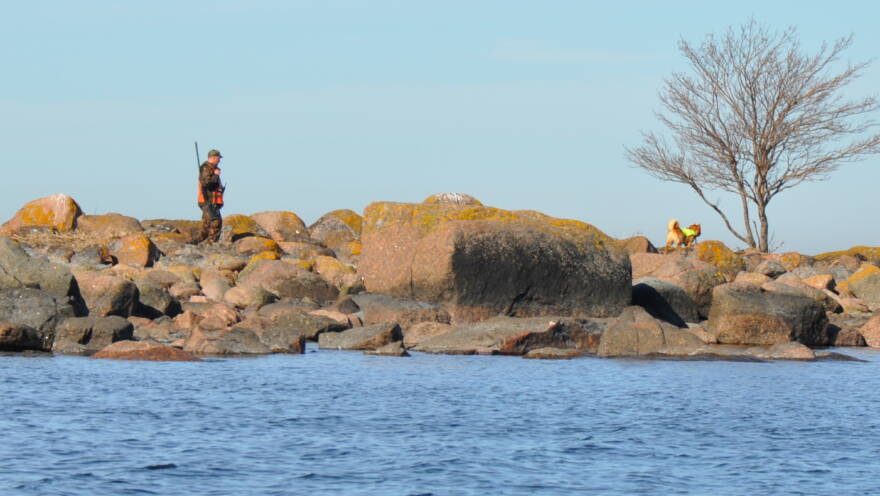
In Finland, both the grey- and ringed seals of the Baltic Sea are considered game animals. For centuries seal hunting has been part of the archipelago culture and the income from seals was an important additional source of livelihood for fishermen. Seal pelts, meat, as well as blubber and oil were exploited in many ways. Seals were also considered as pests and their hunting was encouraged.
In Finland, a bounty for was paid for killing marine seals until the mid-1970s. Overhunting caused seal populations to collapse, and the decline was intensified—and recovery slowed—by environmental toxins that negatively affected seal reproduction. Marine seals were protected from hunting in the 1980s.
With the increase in population, seal damages also increased. As a result, seal hunting was resumed, first for grey seals and later for ringed seals. Finland’s current annual catch quota for grey seals is 1550 individuals, of which a quota for 500 individuals is from the marine areas around the Åland Islands. However, less than half of the total catch quota is accomplished.
Baltic ringed seals may only be hunted in the Bay of Bothnia, where the Finnish annual catch quota is 375 individuals. In addition to Finland, marine seals are also hunted in Sweden and, to a lesser extent, in Estonia and Denmark. Due to sea conditions, seal hunting is more challenging than average hunting. The EU ban on trade in seal products currently prevents the wider commercial exploitation of hunted seals.
-
 Find out more
Bothnian Bay National Park
-
Find out more
By diving and snorkelling