Life in the open sea, or offshore waters, is different from life along the coast. In the open sea, the seabed lies deep below and there is plenty of free water. Many fish, such as herring, spend most of their lives in these offshore areas. Some of them come to the shore only to spawn. Fish often travel long distances in search of food.
Most of the Baltic Sea’s seabed lies deeper than 10 meters and consists of soft mud, where sunlight does not reach. As a result, algae and plants do not grow there. However, if oxygen is available, other organisms can live on the seabed. Deep, soft mud bottoms are home to species such as mysids, Baltic clams, tubificid worms, and amphipods. In oxygen-depleted areas, only sulfur bacteria can survive.
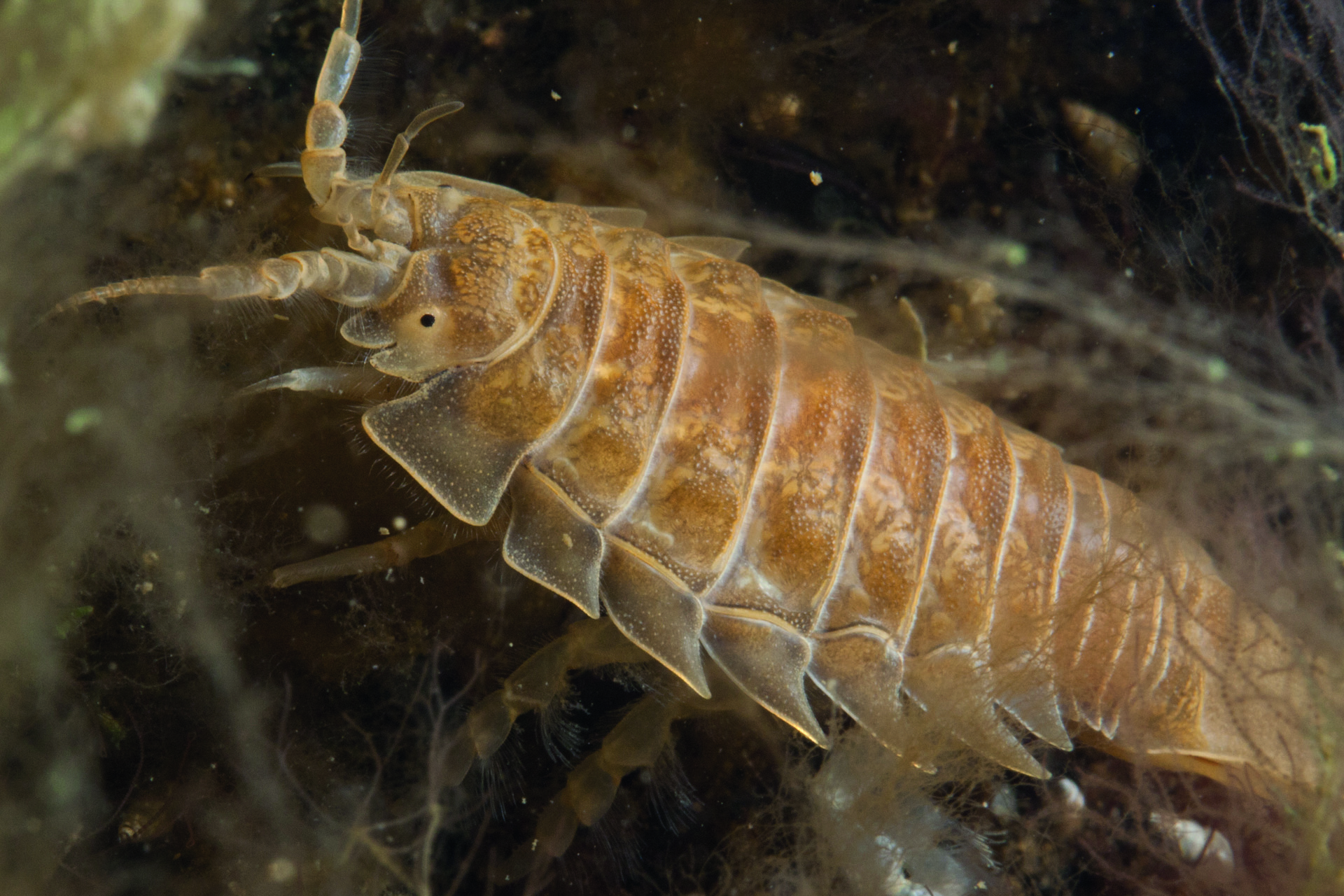
A large crustacean Saduria entomon is an inhabitant of deep, soft seabeds.
Life on different types of coastlines
The coastal landscape of the Baltic Sea has been shaped by events such as ice ages. The types of organisms found along the coast vary depending on the shoreline’s characteristics, and the Baltic Sea offers a wide range of diverse habitats.
On the northern coast of the Gulf of Finland, the Bothnian Sea, and the eastern and southern coasts of Sweden, smooth rocky shores carved by glacial erosion are common. In contrast, the Kvarken area of the Gulf of Bothnia features low-lying coastlines where the land continues to rise by about 9 millimeters per year due to post-glacial rebound. Melting glaciers also formed sandbanks, especially in the southern Baltic Sea.
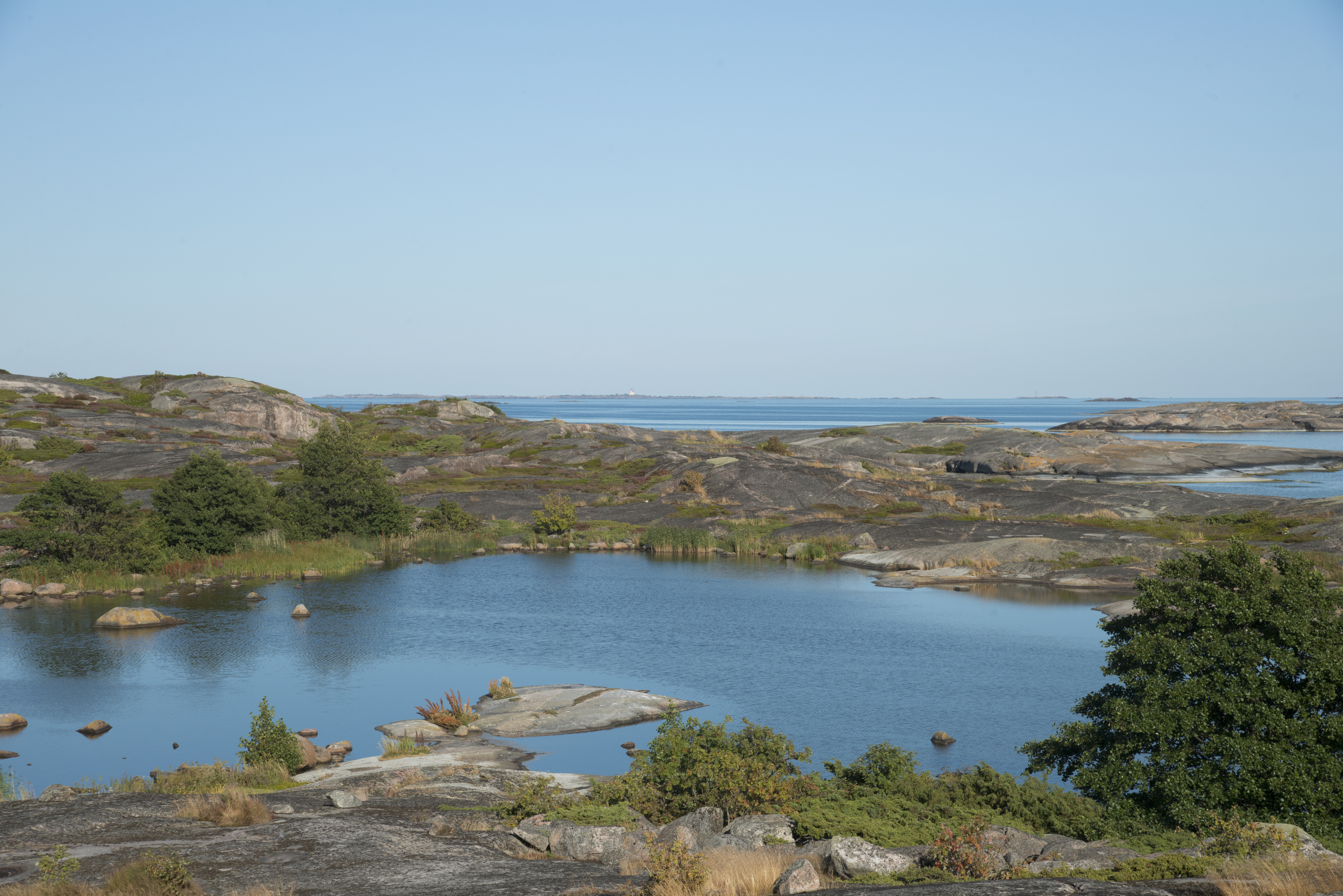
The Gulf of Finland and the Archipelago Sea are home to labyrinths of thousands of islands and rocky islets. Between them lie sheltered bays and open waters. This mosaic of soft muddy bottoms and hard rocky walls allows species adapted to different environments to coexist side by side.
Rocky shores are typical along the Finnish coastline.
A rocky shore provides a good anchoring point
Rocky shores provide a stable growing surface for many organisms that can attach to it, such as algae and blue mussels. You’ve probably noticed while diving that the amount of light decreases with depth. This change in light levels especially affects the types of algae that grow on rock surfaces at different depths.
Sisältö vaatii markkinointievästeiden sallimisen. Ole hyvä ja salli evästeet katsoaksesi sen.
Distinct zones with different types of organisms can be identified along hard rocky shores. As you step onto the shore, the first zone you encounter is the splash zone, which is a harsh environment. In summer, it is battered by waves, and in winter, by ice. As a result, there is very little life in the splash zone.
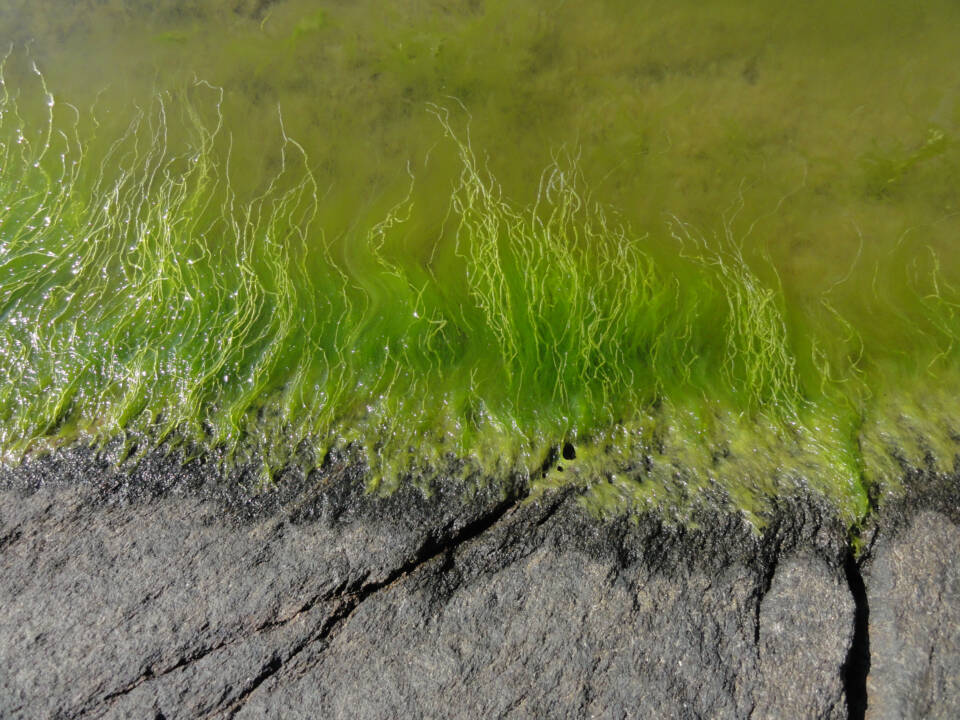
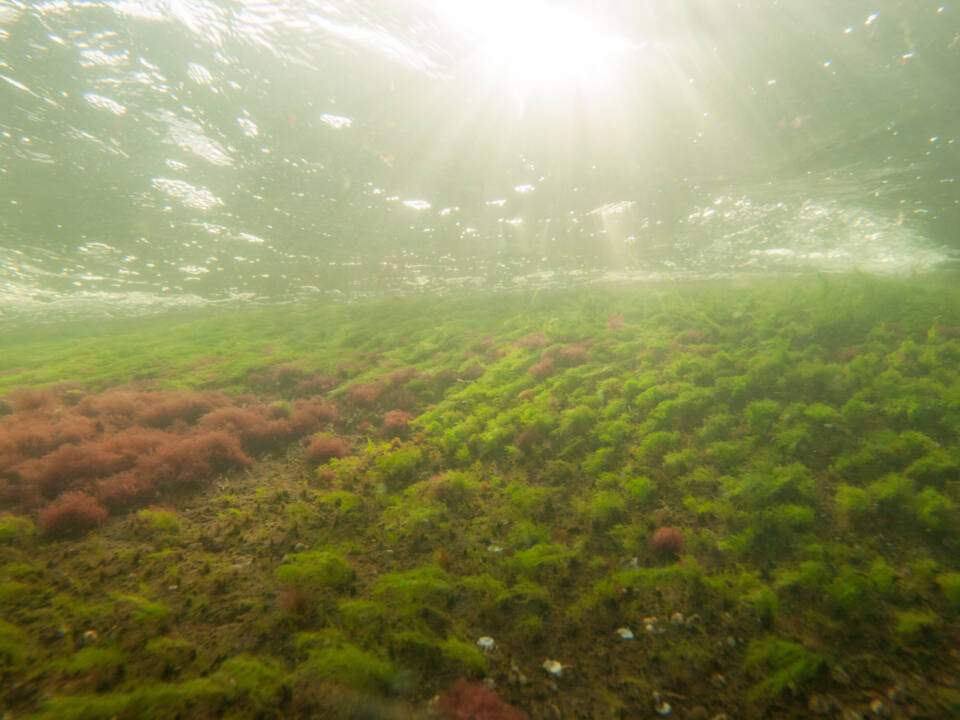
Below the splash zone begins the zone of green filamentous algae. These algae require a lot of light. They typically regenerate annually, as ice scours the zone during winter. One example of filamentous algae found here is Cladophora glomerata.
Filamentous algal zone
The splash zone and the adjacent filamentous algae zone.
Green filamentous algae.
Green filamentous algae.
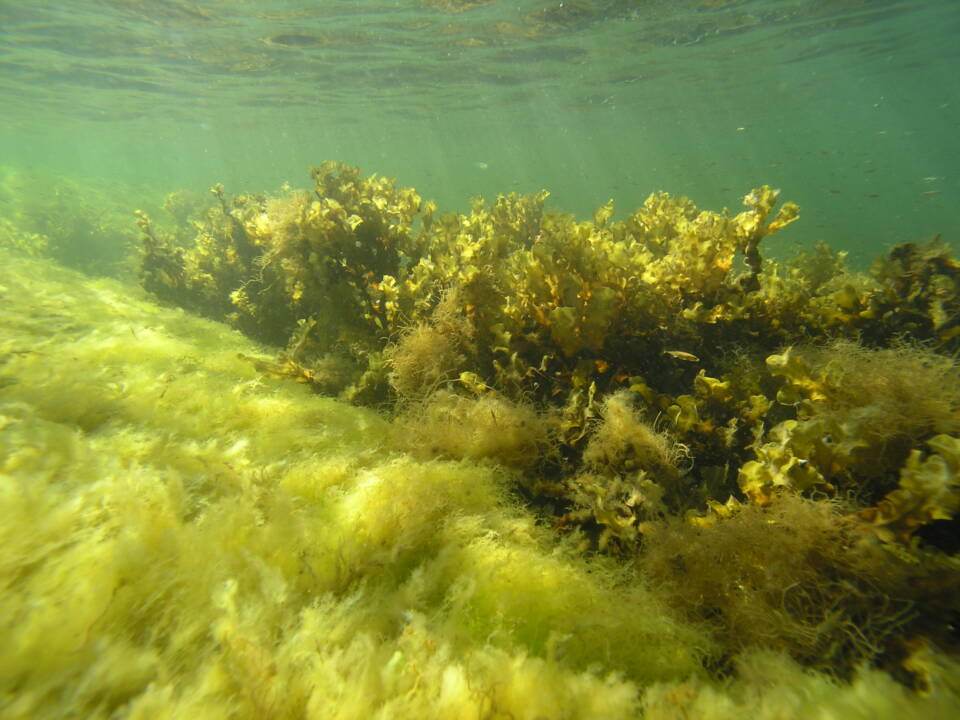
Bladderwrack and filamentous algae
The filamentous algae zone transitions into the brown algae zone, where the dominant species is bladderwrack.
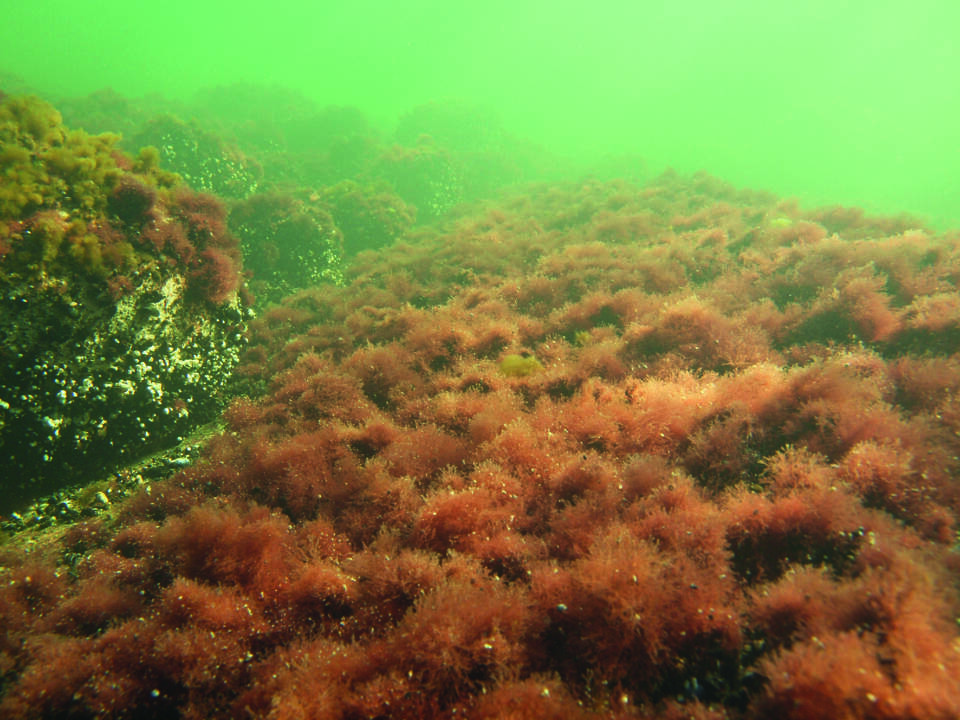
Red filamentous algae.
Red filamentous algae.
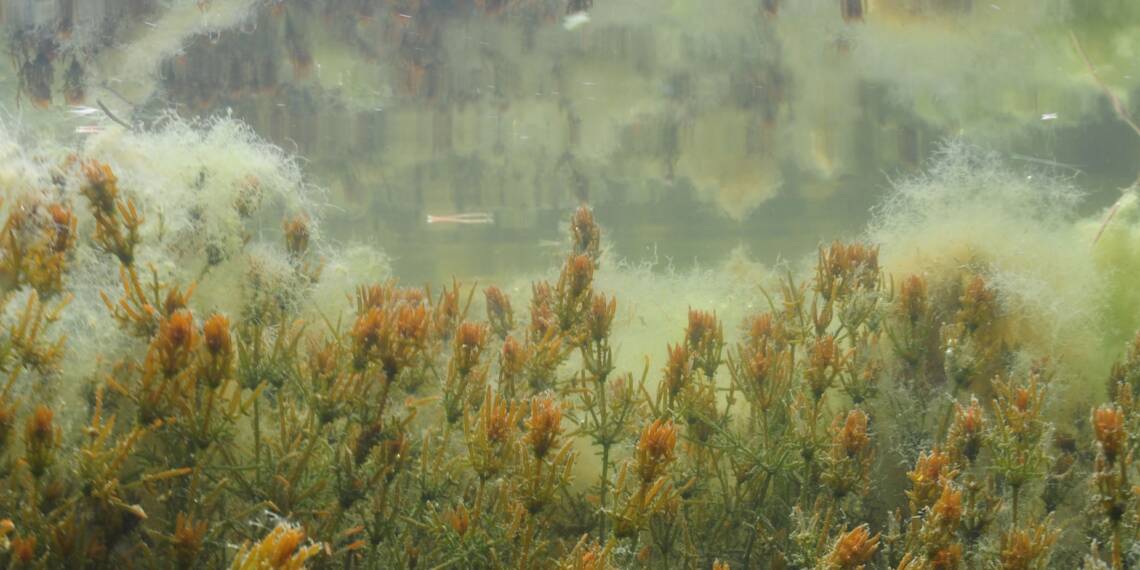
Below the filamentous algae zone begins the brown algae zone, where bladderwrack thrives. In clear water, bladderwrack grows in wide, bushy mats that provide habitat for many amphipods, fish fry, and snails.
Sisältö vaatii markkinointievästeiden sallimisen. Ole hyvä ja salli evästeet katsoaksesi sen.
Below the brown algae zone begins the red algae zone. In this zone, light is already scarce, and the algae that live there are adapted to relatively dim conditions. As the light diminishes even further, the growth of red algae becomes more difficult, and blue mussels begin to dominate the area.
Many species also inhabit muddy and silty seabeds
In addition to rocky shores, the soft muddy and silty bays along the Finnish coastline are important habitats for various organisms. Aquatic plants are the dominant species in these muddy and silty seabeds.
Sisältö vaatii markkinointievästeiden sallimisen. Ole hyvä ja salli evästeet katsoaksesi sen.
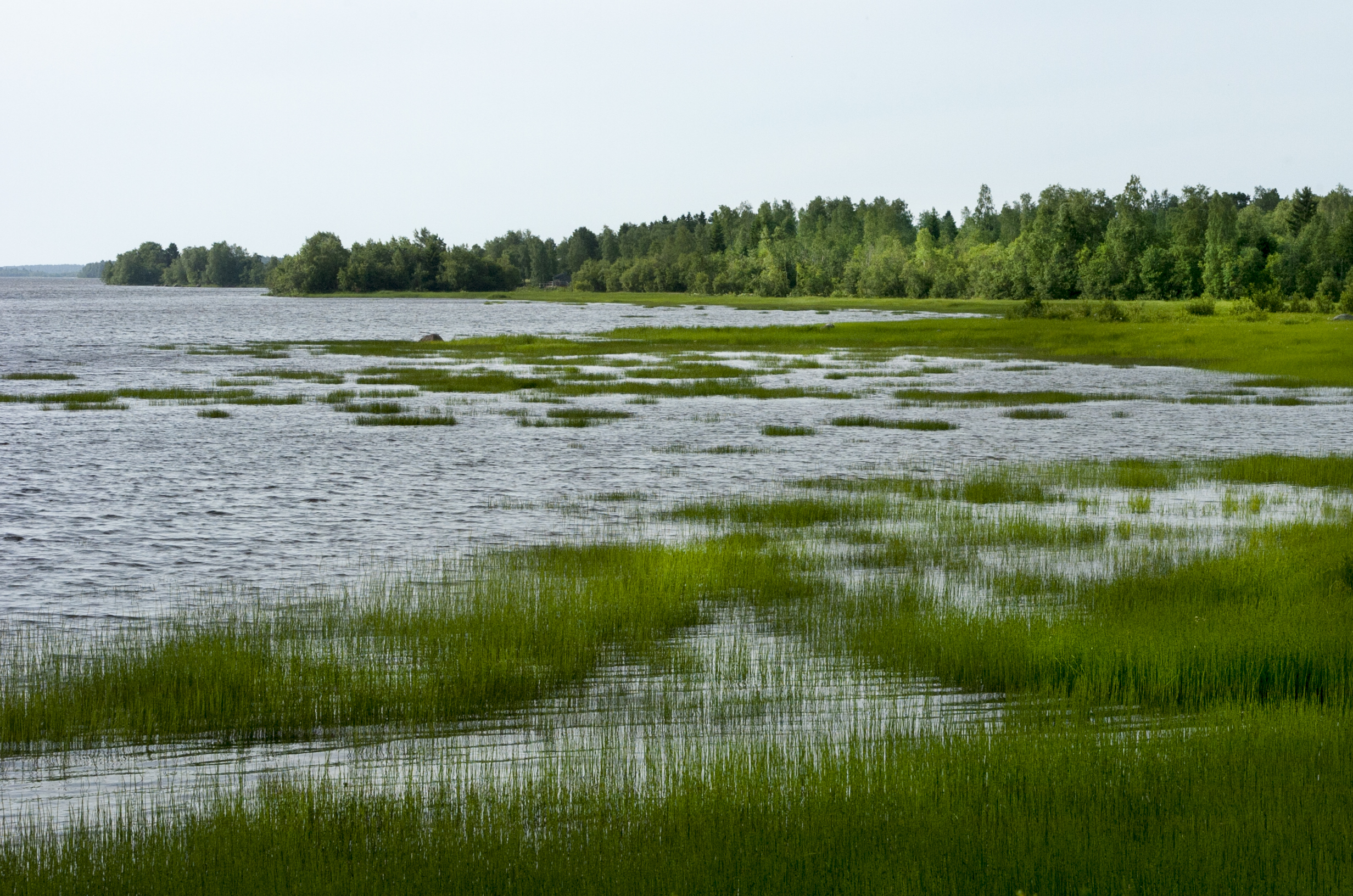
For example, common reed beds cover large areas in shallow sea bays and provide an important habitat for fish fry and insect larvae. On sandy bottoms, eelgrass thrives.
Shallow sea bays are important and diverse habitats. Unlike rocky shores, the seabed here is often soft mud or silt, resulting in a different variety of species. Photo from the innermost part of the Bothnian Bay.