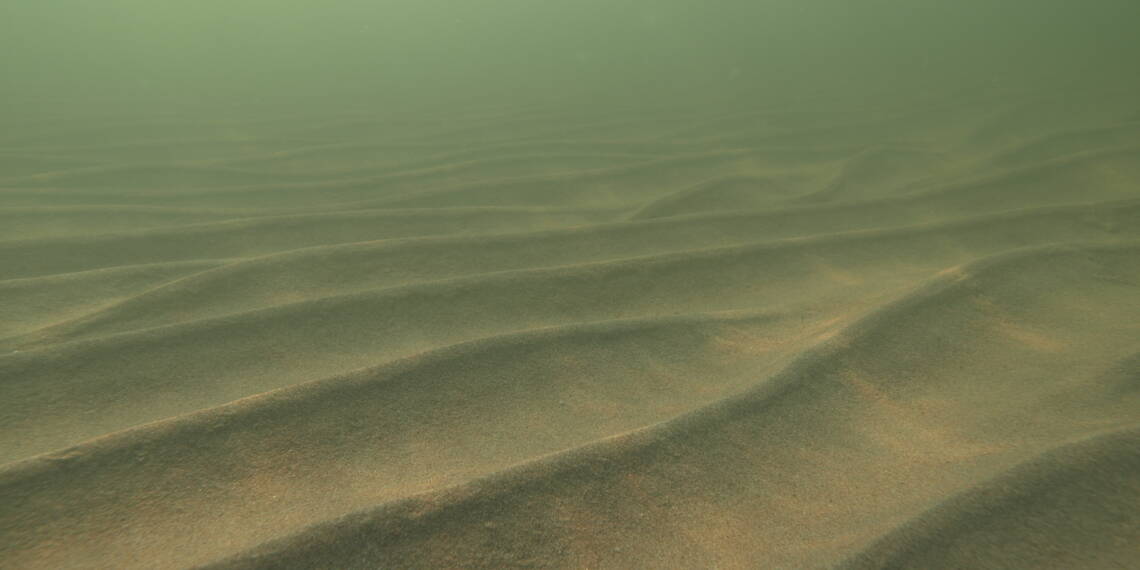
When talking about the sea and the sand, the first thing that comes to mind are long, beautiful beaches full of clean, fine-grained sand washed by the waves. Under the surface, the landscape and conditions are much the same. However, despite its benevolent appearance, the almost continuous subtle motion of the sand creates a harsh habitat, where survival requires special qualities.
Benthic fauna
Examples of benthic animals include bivalve mollusc species, such as the sand gaper (Mya arenaria) and the lagoon cockle (Cerastoderma glaucum), as well as the sand digger shrimp (Bathyporeia pilosa).
Seagrass
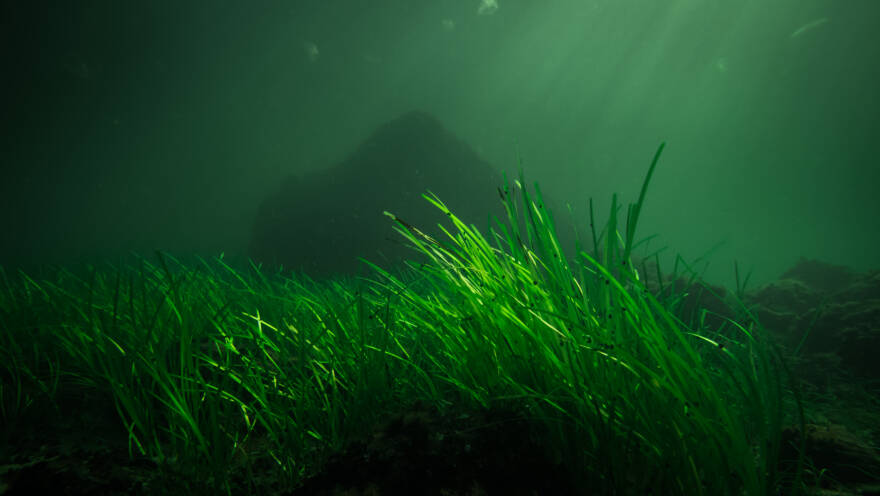
Seagrass, i.e. Zostera marina, is one of the key species in the Baltic Sea. It forms cohesive meadows and creates habitats on an otherwise bare sandy bottom. The rooting systems of seagrass, known as rhizomes, are effective in binding abundant biomass. Other vascular plants often thrive as companion species of seagrass in multispecies underwater communities.
Charophytes or Stoneworts
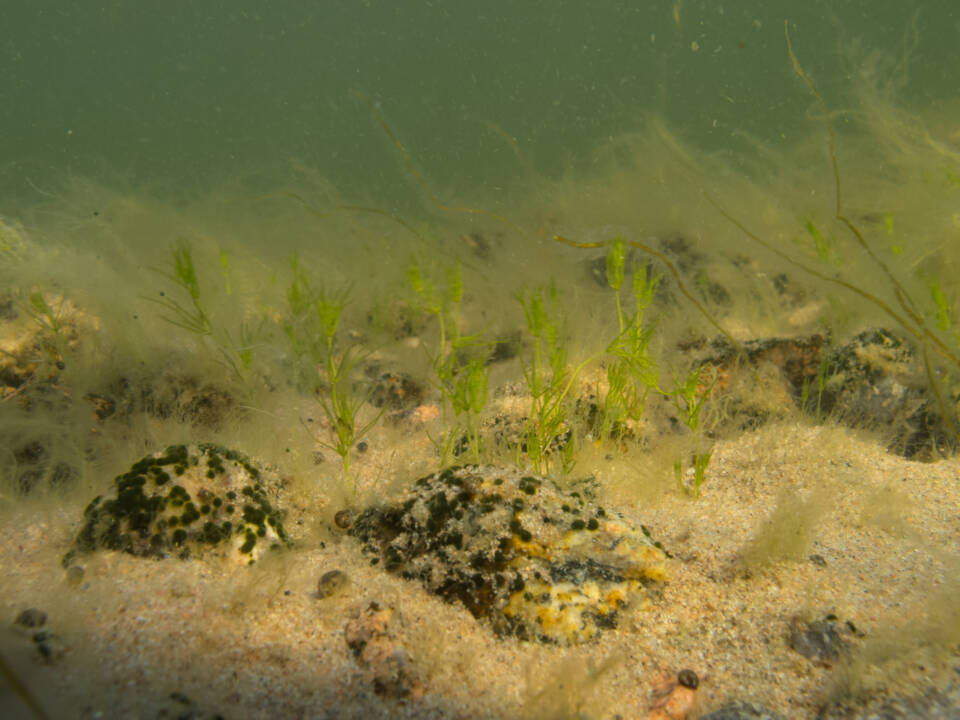
The rough stonewort, i.e. Chara aspera, thrives on sandy bottoms. They form light green meadows, especially in the Bay of Bothnia and the Kvarken. Charophytes are often found growing as a smaller companion species to seagrass, only reaching about 7 cm in height.
Fishes
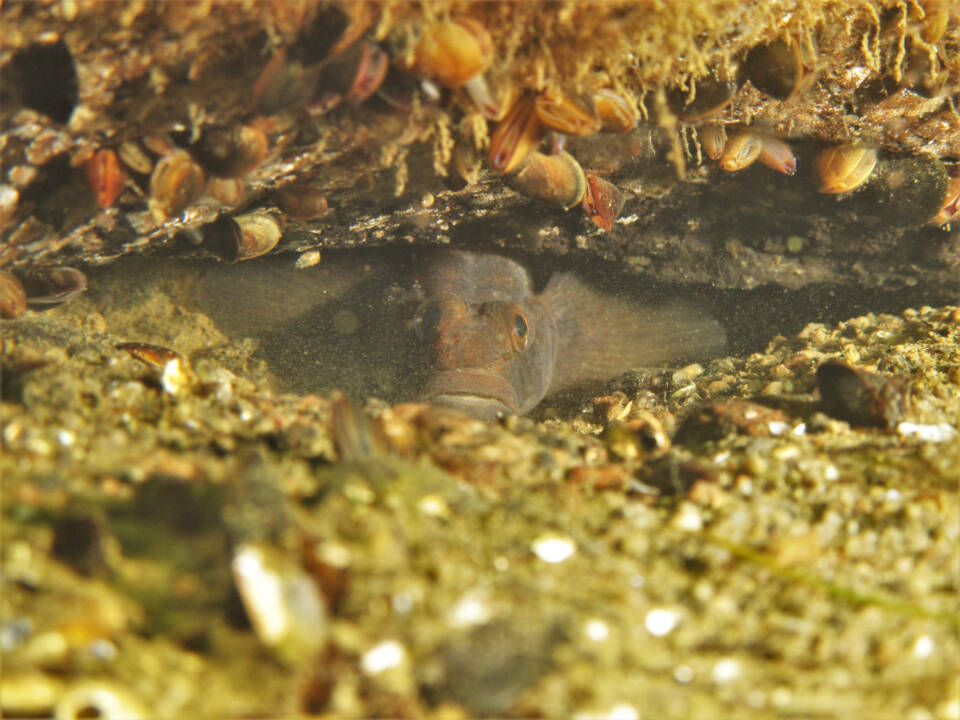
The flounder uses camouflage to hide on the sandy seabed. The straightnose pipefish (Nerophis ophidion) thrives in the shelter of the seagrass meadows. Whitefish, i.e. Coregonus spp. usually spawn on sandbanks. Male gobies, on the other hand, dig nests in the sand to spawn in.
Sandbanks, and sandy bottoms in general, are demanding habitats. At first glance, they appear rather barren. However, a closer look reveals a variety of invertebrate animals living among the grains of sand and on the surface. Fish are often seen swimming above the bottom as well. Where light is sufficient for photosynthesis, tube-like plants rooted in the sand can grow.
Sandbanks are an important habitat type as defined by the EU
Sandbanks that are permanently underwater are one of the habitat types covered by the EU Habitats Directive, which member states are required to protect. In Finland, sandbanks are mostly found in sandy coastal zones, where they often appear as distinct elevations in an otherwise fairly flat sandy seabed. Sandbanks occur along the entire coastline. The water above them is usually quite shallow, rarely deeper than 20 meters.
Sandbanks consist mostly of sand, but stones and boulders are commonly found mixed in. Wave motion and currents can erode or accumulate sandbanks – much like wind shapes and moves sand dunes on land. These banks are dynamic formations that may shift with the currents.
The fauna of sandbanks is often quite similar to that of the surrounding flat sandy bottoms. In addition to the quality of the substrate, species composition is influenced by the distance to the water surface, the amount of light, salinity, and the openness of the shoreline.
Plants require special adaptations
As a moving platform, sandbanks are difficult places for vegetation to grow, particularly in open areas. In more sheltered areas, the vegetation of the sandy bottoms can be highly diverse. The anchoring of aquatic plants on sandy bottoms requires strong roots or rhizomes that bind moving sediments in place.
Exposed and open sand bottoms are usually dominated by seagrass or low-growing, rough stoneworts. Other plant species found on sandy bottoms also include ditch-grasses, horned pondweeds, pondweeds, and the bearded stonewort.
Species of sandy bottoms
Rough stoneworts (Chara aspera) is the most common charophyte species in the Baltic Sea
Species of sandy bottoms
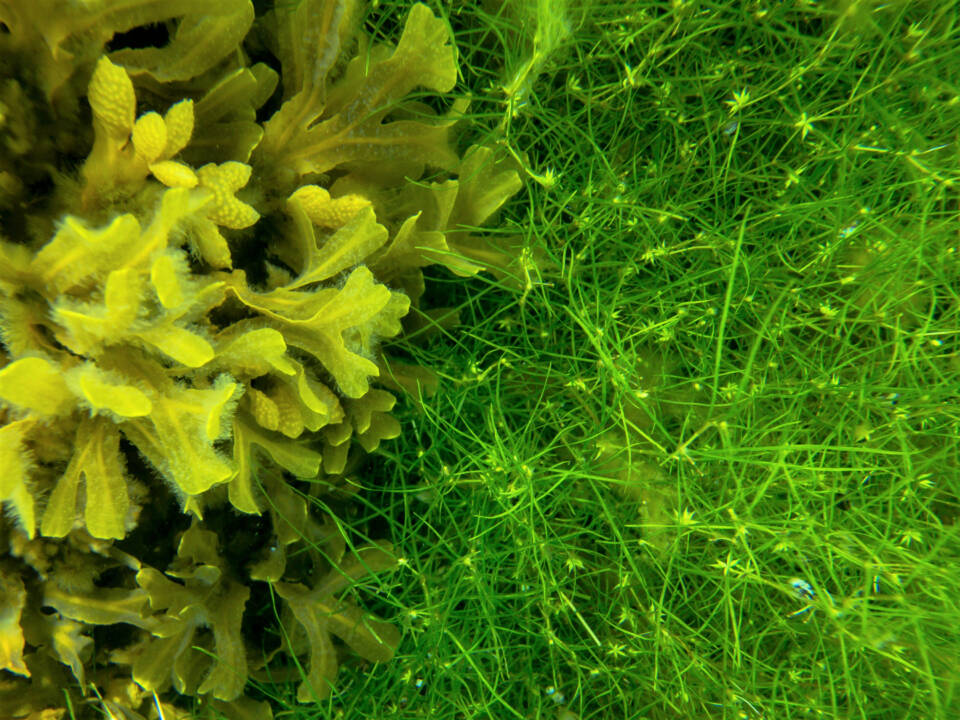
Bladder wrack (Fucus vesiculosus) and horned pondweeds (Zannichellia spp.)
Species of sandy bottoms
Gobies hide in sandy bottoms.
Plants turn sandy bottoms into sheltered habitats
The rootstock or rhizomes of aquatic plants bind the moving sediment material in place, mitigate wave currents, and provide habitats for many invertebrates, such as worms, clams, and crustaceans. In turn, these invertebrates are food for fish species, such as flounder and gobies.
Crustaceans which can burrow rapidly into the sand, such as the sand digger amphipod and the sand shrimp, also survive on the bare sandy bottom if they succeed in avoiding predators.
Sisältö vaatii markkinointievästeiden sallimisen. Ole hyvä ja salli evästeet katsoaksesi sen.
The condition of underwater sandbanks has deteriorated due to eutrophication. Eutrophication clouds the water, reducing the available habitat for aquatic plants. It also promotes the growth of filamentous algae on hard bottoms, from which they detach in mats and drift away with the currents. When these algae mats settle on sandy bottoms, they cover both vegetation and clean sand, worsening the oxygen conditions of the seabed.
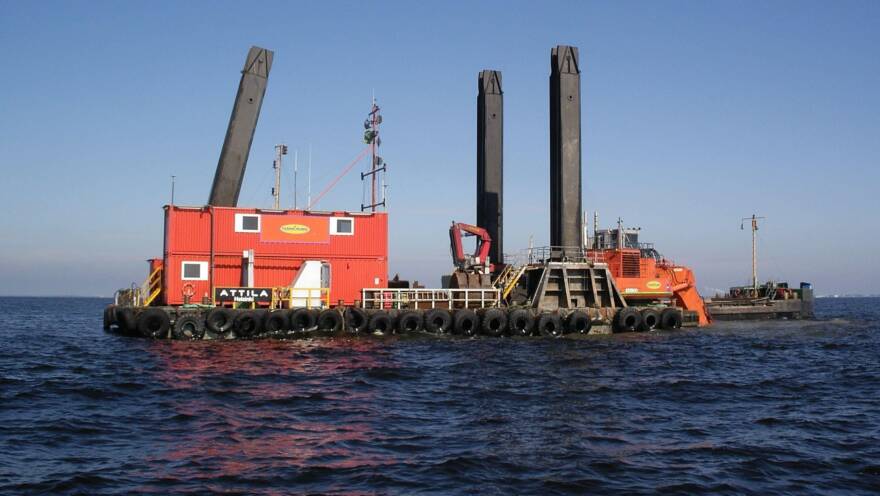
The state of sandbanks and sandy bottoms can also be locally degraded by dredging of shores and waterways. Dredging can even destroy the targeted sandy bottom, but in any case, it increases the deposition of suspended solids, causing sandy bottoms to become muddier.
Sandbanks and their biological communities face many other pressures as well. These include increasing tourism, water sports, and other recreational use, as well as invasive species spreading into the area. The future of sandbanks is also threatened by marine sand extraction and the construction of offshore wind power and its required infrastructure.
Status of sandbanks
Unfavourable, badFavourable
Unfavourable, bad
Future trend of sandbanks
Unfavourable, badFavourable
Unfavourable, bad
Habitat Threats
State of the Environment
Eutrophication
Climate Change
Pollution
Physical Environment
Construction
Bottom Alteration
Dredging and marine sand extraction
Human Activity
Traffic and Boating
Recreational Use
Tourism, recreation and outdoor activities
Fishing and Harvesting
Biology
Invasive Species
Overgrowth
The status of underwater sandbanks in Finland is bad, and no positive development is in sight. The assessment is based on a 2025 evaluation of the conservation status of habitat types under the EU Habitats Directive for the period 2019–2024.