
Estuaries – when rivers meet the sea
In river estuaries, the freshwater brought by rivers mixes with the brackish water of the Baltic Sea. Rivers carry not only water to the sea, but also fine particulate matter that settles in the estuary area. Estuaries are highly dynamic environments where salinity and other conditions vary both temporally and locally.
River estuaries are one of the habitat types defined in the EU Habitats Directive, which member states are required to protect. This habitat type includes all areas where the sea and river meet, extending as far into the sea as the influence of freshwater and sedimentation of particulate matter reaches.
Estuaries are characterized by a gradual transition of living conditions from the lower reaches of the river toward the open sea. The habitat type includes a wide variety of environments, ranging from riverside deciduous forests to marine communities dominated by submerged vegetation.
Zones of the river estuaries
Estuaries can be divided into three zones:
- the actual estuary, that is, the innermost part of the area, is dominated by diverse vegetation,
- a river bay strongly influenced by the run-off effect. The accumulation of suspended solids makes it difficult for vegetation to become established in this area,
- an estuary with a distinct gradient from fresh to saltwater.
From the perspective of the Baltic Sea, the third zone – the outermost and most marine – is the most essential when examining river estuaries.
Constantly changing environments
The environmental conditions of estuaries are influenced by the river’s variable flow. The strength of the current and the saline water pushing in from the sea regulate the salinity levels in the estuary. They also affect how far into the sea the river water carries suspended matter and nutrients from the catchment area.
In the inner parts of estuaries, the water remains mostly fresh, which is reflected in the area’s plant and animal species. In the outer parts, the characteristics of the water are influenced by regional features and the salinity of the surrounding sea.
Over time, more and more sediment brought by the river accumulates in the estuary, causing the area to gradually expand toward the sea. In some cases, the estuary can advance by tens of meters per year.
Abundance of plants above and below the water surface
Among the plant species in estuaries are submerged plants, floating-leaved species, and emergent plants that rise above the water surface. The composition of plant species varies depending on biogeographical location and bottom substrate.
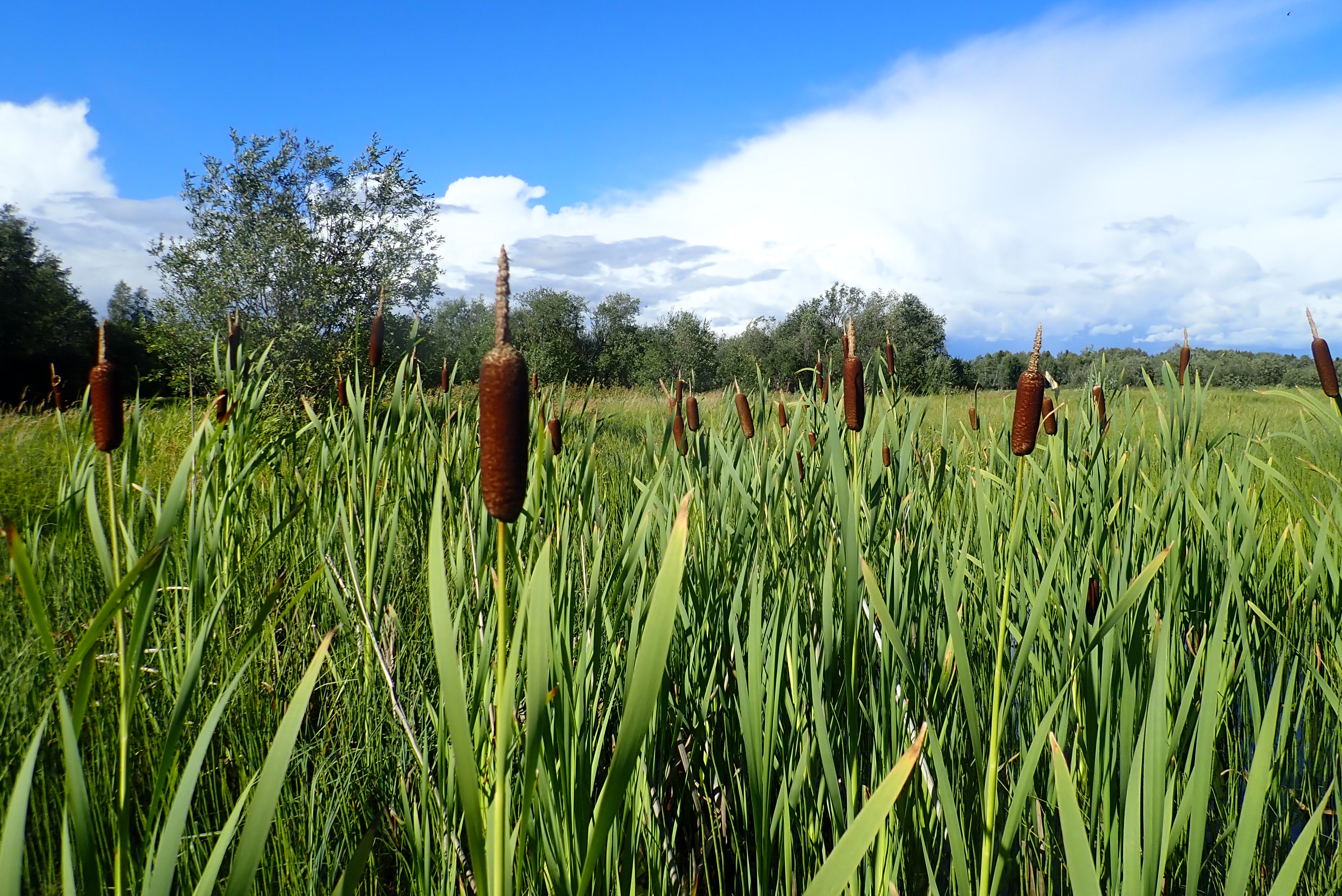
The suspended matter carried by the current is usually very fine and soft. In such sediment, reeds and bulrushes are the first to take root. Their rhizomes stabilize the sediment, making it easier for other species to establish.
In the deeper parts of the estuary, within the freshwater-influenced zone, water lilies and yellow water lilies are commonly found. As salinity and openness increase, dominant species shift to pondweeds and milfoils. In the most nutrient-rich areas, mats of free-floating plants may also occur.

Birds and invertebrates thrive in estuaries
Large river estuaries are important habitats especially for water and shorebirds, but many birds of prey and passerines also thrive there. Among the muddy root systems, one might spot a muskrat crawling around.
In the bottom substrate and sheltered by underwater plants lives a diverse community of invertebrates and insect larvae. The parts of the area that are permanently submerged provide excellent spawning and nursery environments for many fish species.
Did you know?
Springtime meltwaters may extend the influence of estuaries well beyond their usual outer limits. Satellite images give a good indication of how far these masses of sediment-coloured river water spread along the coast.
Many changes are deteriorating the condition of river estuaries
River estuaries are subject to various human-induced pressures that deteriorate their condition: eutrophication, dredging, maintenance of boating routes, shoreline drainage, coastal construction, and potential invasive species.
-
 Find out more
The EU Nature and Birds Directives
As eutrophication increases, reed beds become more abundant and species diversity declines. This development is furthered by the near disappearance of shoreline grazing, which previously helped control reed growth.
Climate change introduces new threats that may affect the species and condition of estuaries in the future. It can, for example, alter water levels in estuaries and increase the amount of freshwater brought by rivers.
The status of river estuaries in Finland is bad, and no positive development is in sight. The assessment is based on a 2025 evaluation of the conservation status of habitat types under the EU Habitats Directive for the period 2019–2024.
Status of river estuaries
Future trend of river estuaries
Habitat Threats
State of the Environment
- Eutrophication
- Climate Change
Physical Environment
- Construction
- Bottom Alteration Dredging
Human Activity
Biology
- Invasive Species
- Overgrowth

