
The directives protect Europe’s shared nature
The EU’s Nature and Birds Directives play a significant role in the protection of nature across the entire EU area, including the protection of marine nature. The Natura 2000 network, established under these directives, includes many marine sites. Reports from member states on the implementation of the directives form the basis for future conservation actions.
The goal of the Nature and Birds Directives is to protect Europe’s most endangered and sensitive species and habitat types throughout their entire range in the EU, regardless of political and administrative boundaries. The directives cover approximately 1,800 plant and animal species, as well as over 230 habitat types.
First, there was the Birds Directive
The EU Birds Directive came into force in 1979. It was driven by growing concern over the decline of many bird species in Europe. Since migratory birds, in particular, travel across the territories of multiple countries, bird conservation was seen as requiring joint European action.
The Birds Directive covers all wild bird species that occur within the European Union, approximately 500 species. The general aim of the Birds Directive is to maintain and restore bird populations to levels that ensure their long-term survival.
The directive requires member states to protect bird species, especially their breeding, resting, and feeding areas. The Birds Directive also regulates the use of species, specifying which bird species can be hunted across the EU or in individual member states and which species’ trade is permitted.
The Nature Directive expanded protection to habitat types
The Nature Directive, adopted in 1992, extended species protection to all groups of organisms. The directive covers approximately 1,300 plant and animal species or subspecies that occur in the EU area. These selected species are referred to as species of “community interest” and are listed in the annexes of the directive. Member states are required to protect these species and their habitats.
In addition, the Nature Directive obligates member states to protect certain habitat types considered to be of community importance. There are a total of 230 such habitat types, which are rare or threatened in the EU area, or represent typical examples of the natural habitats of the six biogeographical regions in the union.
The habitat types in the directive are defined on the basis of geological, landscape, and botanical criteria. They are broad ecosystems that include a variety of biological communities, distinguishing them from scientifically defined habitat types, which are much narrower and characterized by specific biological communities.
The directives also protect Finland’s marine nature
Since the Birds Directive covers all wild bird species occurring in the EU, it also applies to all water and coastal bird species found in Finland’s marine areas. Annex I of the directive lists the birds whose habitats must be protected through special measures. These include species such as the white-tailed eagle, osprey, and arctic tern, as well as fish and little terns.
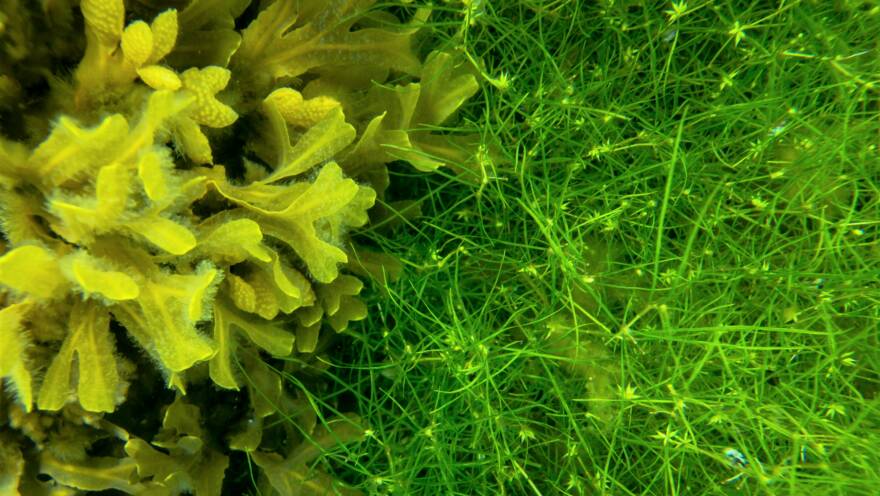
Among the species protected by the Nature Directive, about 20 species can be found in Finland’s marine areas. These include all three marine mammals found here: the Baltic seal, grey seal, and porpoise. There are ten fish species, including salmon and the rocky sculpin, and four species of aquatic plants. One insect species found in Finland’s marine area is the marine water beetle (Macroplea pubipennis).
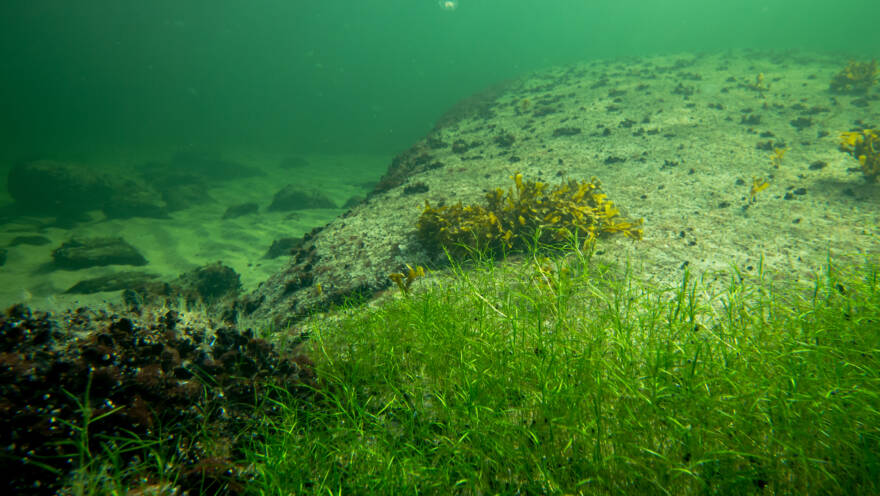
The habitat types of the Nature Directive are also found in Finland’s marine areas. There are seven such types: reefs, sandbanks, large shallow inlets and bays, estuaries, coastal lagoons, boreal Baltic narrow inlets, and underwater parts of Baltic esker islands.
The directives influence Finland’s legislation
Like other member states, Finland has incorporated the Birds and Nature Directives into its national legislation. The directives have influenced various laws, such as the Hunting Act, the Nature Conservation Act, and the Environmental Protection Act, as well as legislation concerning construction and land use. The laws and regulations aim to ensure the protection of the species and habitats mentioned in the directives, as well as the habitat types in the Nature Directive.
In practice, this means that Finland cannot independently make legal changes that would, for example, revoke the protection of the barnacle goose and designate it as a game species. Such a change would first require a corresponding modification to the EU Birds Directive. This, in turn, would require that the status of the barnacle goose be considered sufficiently good in the EU area to support hunting.
Natura 2000 sites protect important habitats
A key part of the implementation of the Birds and Nature Directives is the European-wide network of protected areas, Natura 2000. The Natura 2000 network is specifically intended to protect the species and habitat types covered by the Birds and Nature Directives – their most important occurrences across the entire EU area.
Once an area is added to the Natura 2000 network, its natural values cannot be impaired. The prohibition against impairment particularly applies to the habitat types and species that the area was designated to protect.
Finland’s Natura 2000 sites include marine nature
Nearly 140 of Finland’s Natura 2000 sites include marine areas. About 60 of these have more than 75% of their area covered by the sea. These areas are crucial for the conservation of species and their habitats, as well as marine habitat types, in Finland’s marine areas. Even Natura 2000 sites with only small marine areas can be important, for example, for coastal and marine birds.
Most of Finland’s Natura 2000 sites are already protected areas, such as national parks or areas designated under conservation programs. Coastal Natura areas typically consist of a mosaic of state and private protected areas.
Member states propose Natura 2000 sites
The Birds and Nature Directives require that EU member states designate areas to be added to the Natura 2000 network. The designation process is multi-stage, and its progress depends on whether the focus is on implementing the Nature or Birds Directive.
When applying the Nature Directive, member states submit proposals to the European Commission for areas to be added to the network. The sites must be selected based purely on scientific criteria, and factors such as economic considerations must not influence the selection. Once the Commission approves the protection sites, they become “Sites of Community Importance” (SCI) and are part of the Natura 2000 network.
At this stage, the responsibility returns to the member state: within six years, it must designate the site as a “Special Area of Conservation” (SAC) and outline the necessary conservation measures. In practical management decisions, conservation objectives can be harmonized with other land uses, taking into account economic and societal factors as well.
For the Birds Directive, the process is simpler. Member states designate protection sites, called “Special Protection Areas” (SPA). SPA sites are directly added to the European Natura 2000 network without intermediate steps. SPA and SAC sites often overlap.

Reports on the implementation of the directives
EU member states are required to report to the Commission on how the Nature and Birds Directives have been implemented within the country. What conservation actions have been taken, and how effective have they been? What is the level of protection for the species and habitat types mentioned in the directives?
Reports are produced every six years, separately for the Nature Directive and the Birds Directive. The 2025 reports will cover the implementation of the directives from 2019 to 2024. Producing the reports is a massive task for all member states, including Finland. The reports must assess hundreds of species and dozens of habitat types in detail.
However, this effort is necessary to understand how species and habitats are faring in different countries. The reports help member states focus conservation efforts on the most critical areas—enhancing protection where it will provide the greatest benefit.
The member states’ directive reports also form the foundation for EU-wide actions. Based on these reports, the European Commission may, for example, propose easing the protection of a species mentioned in the Nature or Birds Directive. The directive reports also influence the content and implementation of the EU’s ten-year biodiversity strategy.
Birds Directive reporting covers all bird species
The report under the Birds Directive includes an assessment of the status of different bird populations. The assessment is made for all bird species naturally breeding in the member state, as well as for key migratory and wintering species. In Finland, bird species to be reported on include 255 species (situation in 2025).
The report includes data on the population size and distribution of each species, as well as any changes that have occurred. Additionally, the report covers pressures and threats to bird populations, as well as any conservation plans in place.
More detailed information is provided for the bird species for which Natura 2000 areas have been designated for protection. For these so-called Natura species, the report covers the size of bird populations in the relevant Natura 2000 sites, potential threats, and the conservation measures implemented.
Nature Directive reporting includes both species and habitat types
For species protected under the Nature Directive, the report provides similar information as for the species under the Birds Directive, including more detailed data for Natura species from the Natura 2000 sites.
In addition to species, the report includes assessments of the status of habitat types under the Nature Directive. Reported data includes the distribution and area of each habitat type, as well as its structure and function. The expected development of each habitat type is also assessed. Since 2013, the area of each habitat type within Natura 2000 sites has also been reported.
The goal is a favorable conservation status
Based on all the information collected for the reports, an overall assessment of the conservation status of each species and habitat type is made. The conservation status is divided into four categories:

Additionally, terms describing the development trend are used: deteriorating (–), stable (=), improving (+), or the situation is unknown (x).
The Nature and Birds Directives require member states to ensure that the protection status of species and habitat types occurring in their territory, as specified by the directives, remains favorable or is brought to a favorable status. If this is not the case, based on the assessments, the member state must take action to correct the situation.
Protection of marine habitats needs improvement
The reporting under the Nature Directive covers all the habitat types mentioned in the directive, including the seven marine habitat types that occur in Finland’s marine areas. In the overall assessment for the year 2025, the conservation status of these marine habitat types in Finland was found to be unfavorable. All seven were classified as “unfavorable bad”.
The future status of all marine habitat types was also assessed as unfavorable bad.
Marine species vary in status
The status of marine species listed under the Nature Directive varies greatly in Finland. Among seals, the protection status of the grey seal was assessed as favorable in 2025, while the protection status of the Baltic seal was assessed as unfavorable. Fish species mostly received a good overall rating, except for the grayling, which occurs in our marine areas only sporadically, mainly in the coastal waters of the Bothnian Bay and the Quark. The status of salmon has also deteriorated since the previous reporting.
Reports are produced by a broad team of experts
In Finland, the Ministry of the Environment leads the reporting work under the Nature and Birds Directives. The practical coordination of the work is handled by the Finnish Environment Institute (SYKE).
The report under the Birds Directive is prepared by a bird working group specialized in monitoring and evaluating Finnish bird populations, which is one of nearly 20 expert groups convened by the Ministry of the Environment. In addition to SYKE, the bird working group includes experts from the Finnish Museum of Natural History (Luomus), Metsähallitus, the Natural Resources Institute Finland (Luke), and BirdLife Finland. These organizations are largely responsible for compiling, producing, and evaluating the data.
The report under the Nature Directive also involves numerous experts from various organizations, particularly from the Finnish Environment Institute, Metsähallitus, and the ELY Centres. Important collaboration partners also include the Natural Resources Institute Finland, the Geological Survey of Finland, and the Government of Åland.
-
 Find out more
Marine habitats
-
 Find out more
Species of the Baltic Sea