Invasive species or alien species?
Contents
A new species can be either harmful or beneficial
Often, a species does not thrive when introduced to a new area, as it may struggle to reproduce and therefore fails to establish itself as a permanent resident. However, sometimes the species adapts well and begins to reproduce, which can affect the surrounding ecosystem and other species. The newcomer might, for example, utilize resources efficiently and compete with native species for food. In the worst-case scenario, a non-native species introduced by humans can displace native species to the point where they become endangered or even go extinct.
Alien species in the Baltic Sea
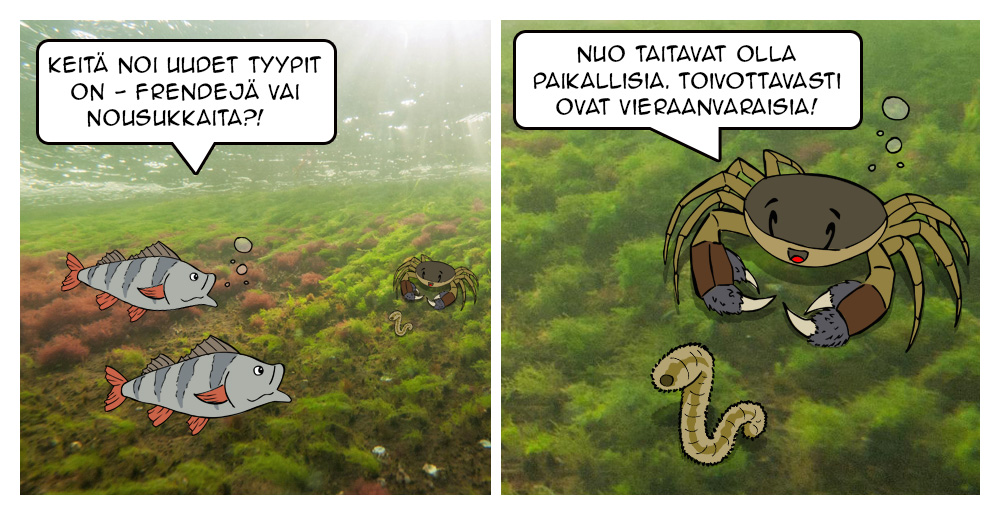
By 2024, more than 30 alien species had been discovered in Finland’s marine areas, including plants, fish, and invertebrates. Here, we introduce a few of them!
Barnacle
Barnacles are a nuisance for boaters
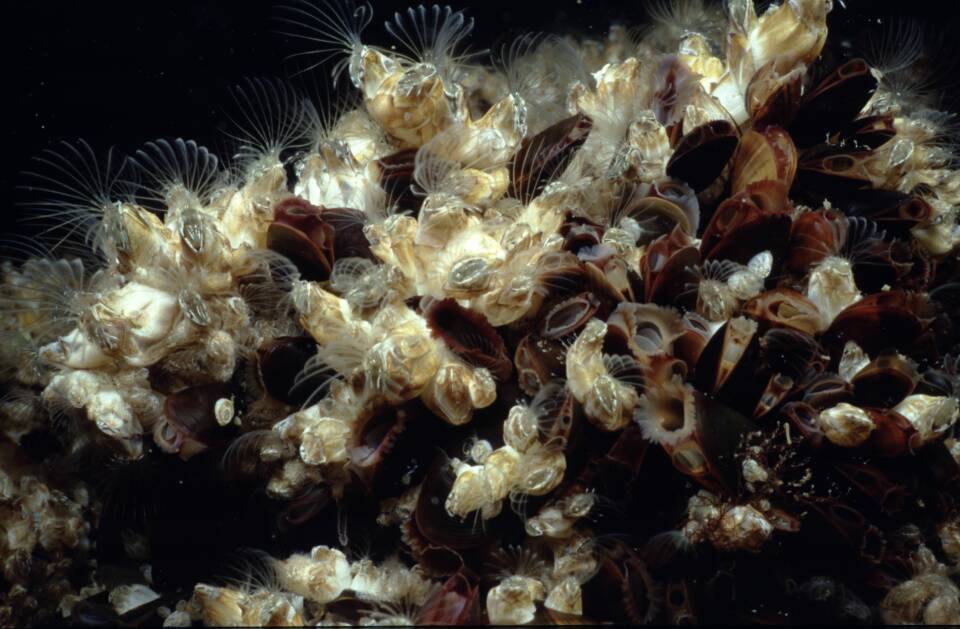
One of the first alien species to arrive in the Baltic Sea was the barnacle, which likely came in the 1840s attached to the hulls of ships and boats. Today, barnacles have spread throughout the Baltic region, reaching as far as the Kvarken area. In the freshwater parts of the Baltic Sea, barnacles cannot survive, as they are a brackish water species.
Barnacles are a nuisance for boaters because their larvae attach to hard surfaces, including boat hulls. If the larvae aren’t brushed off immediately after settling, they cling very tightly and become difficult to remove. When large numbers of barnacles accumulate on a vessel’s hull, water resistance increases—leading to higher fuel consumption.
Spiny water flee
The spiny water flea tangles fishermen’s nets
The spiny water flea has arrived in the Baltic Sea from the Caspian region, most likely carried in the ballast water of ships. It belongs to the group of zooplankton and is a relatively large predator that feeds on smaller zooplankton.
When spiny water fleas are abundant in the water, they can slime up fishing nets, clinging to them with their hook-like tails. As a result, the spiny water flea is classified as a harmful alien species.

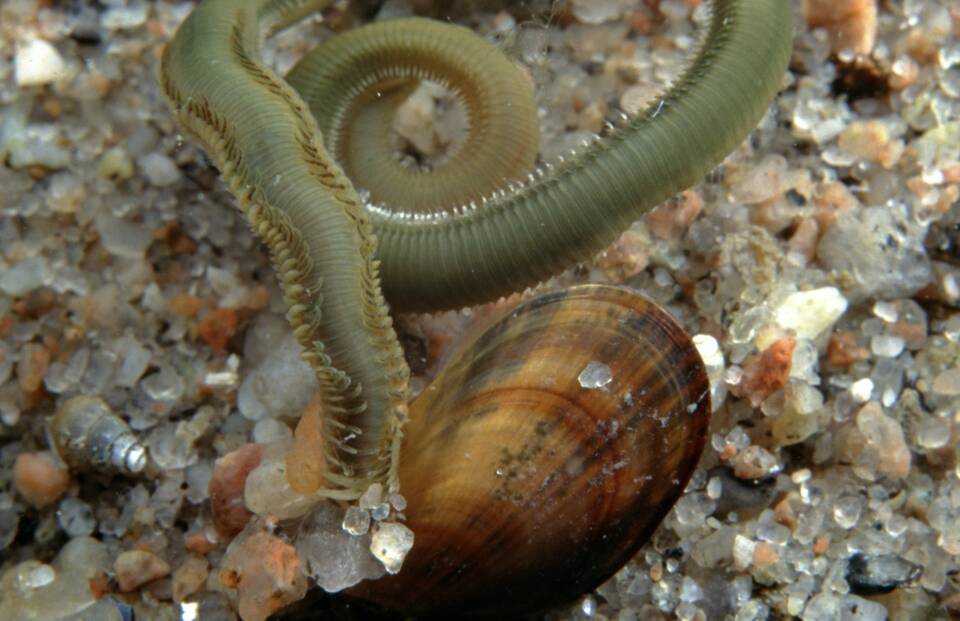
Marenzelleria tube worms
Marenzelleria tube worms oxygenate the seabed
Marenzelleria tube worms, which arrived from North America, inhabit the soft seabeds of the Baltic Sea. These worms burrow into the bottom sediments, mixing oxygen into the sediment layers.
If the sediment was originally low in oxygen, other benthic organisms—such as the Baltic clam—may benefit from the increased oxygen levels. On the other hand, as the worms disturb the seabed, there are concerns that they may release harmful substances that had previously settled into the sediment back into the open water.
The Harris mud crab
The Harris mud crab is a recent newcomer to the Baltic Sea
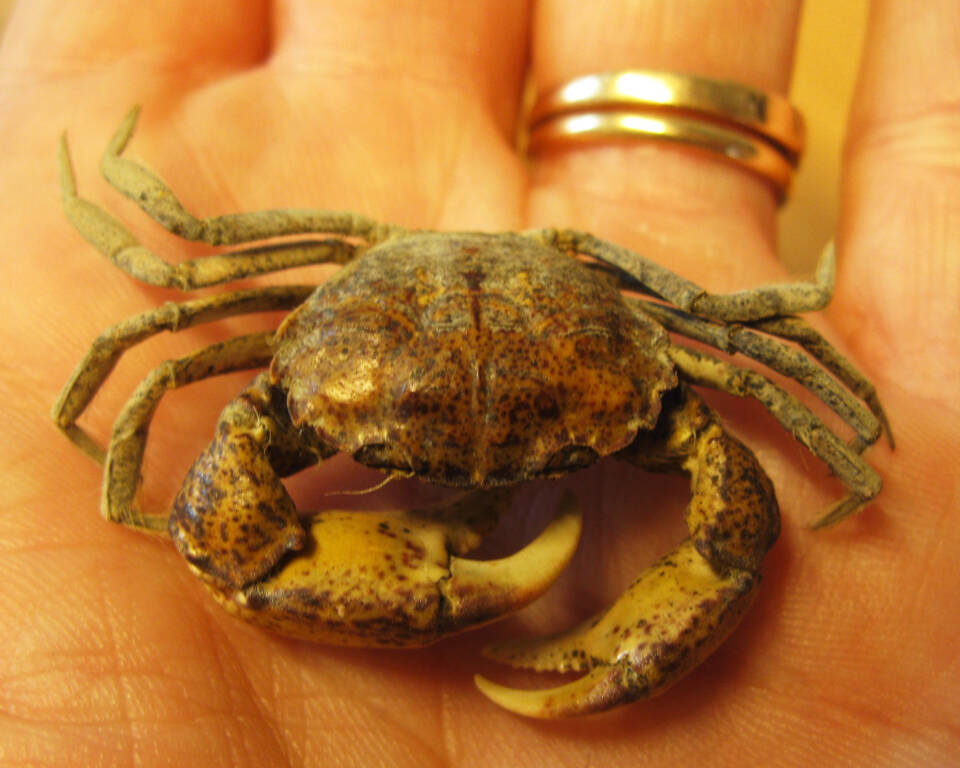
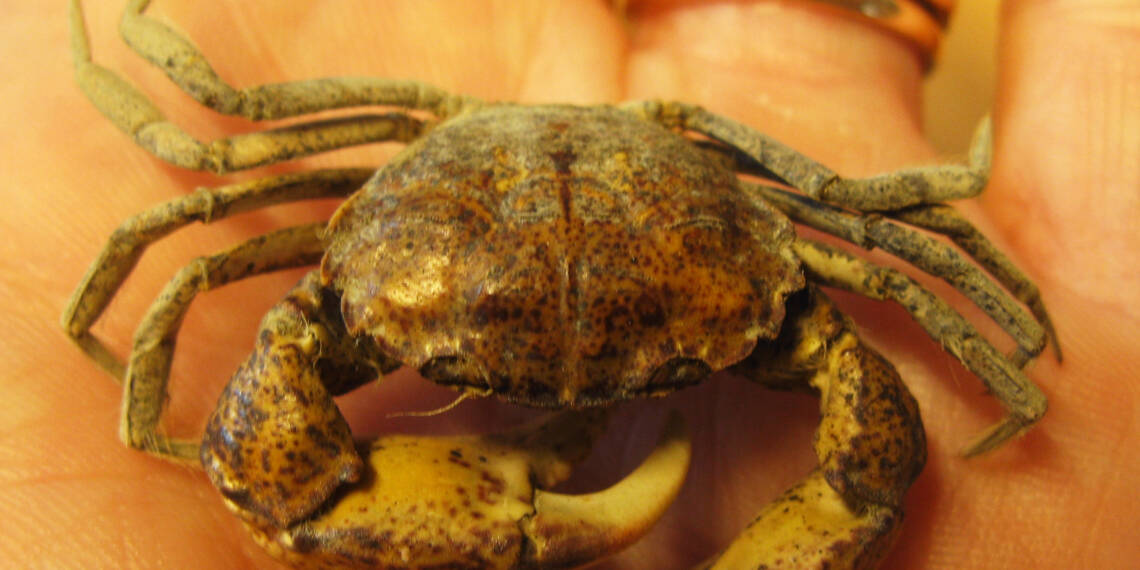
One of the most recent alien species to arrive in Finnish waters is the mud crab, which can be seen especially in the Archipelago Sea. The species originated in North America and was first discovered in 2009. The mud crab has only been present in Finnish waters for a short time, so its impact on the marine environment is still largely unknown. It may pose challenges for fisheries or clog pipes—or it might turn out to be an excellent food source for fish. Its effects are being investigated through scientific research.