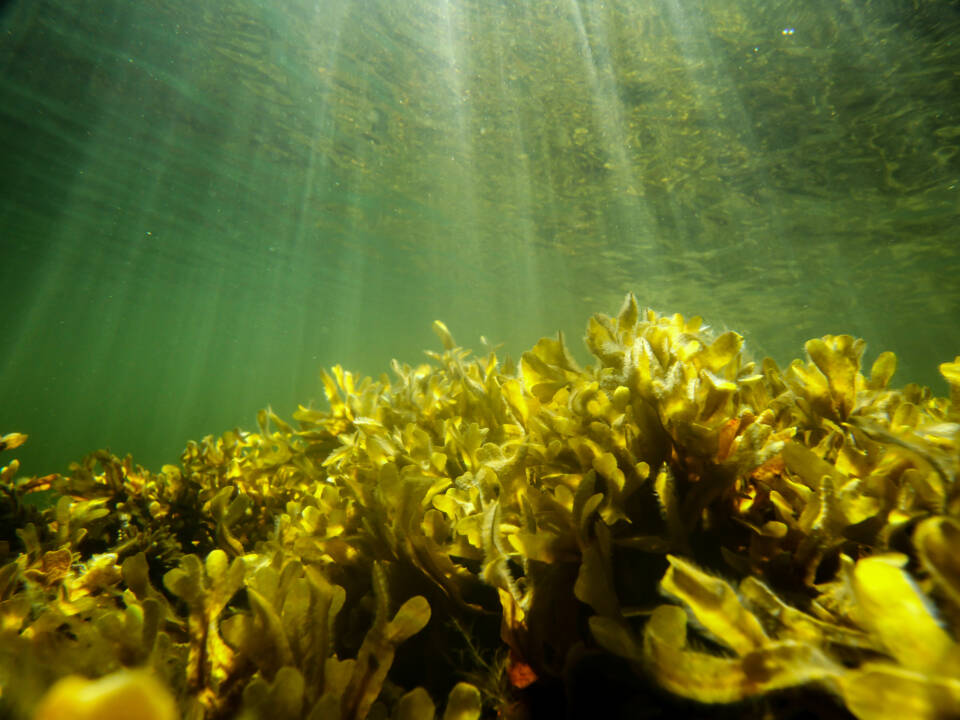
Bladderwrack at the Gulf of Finland
Large brown algae at sunshine under water.
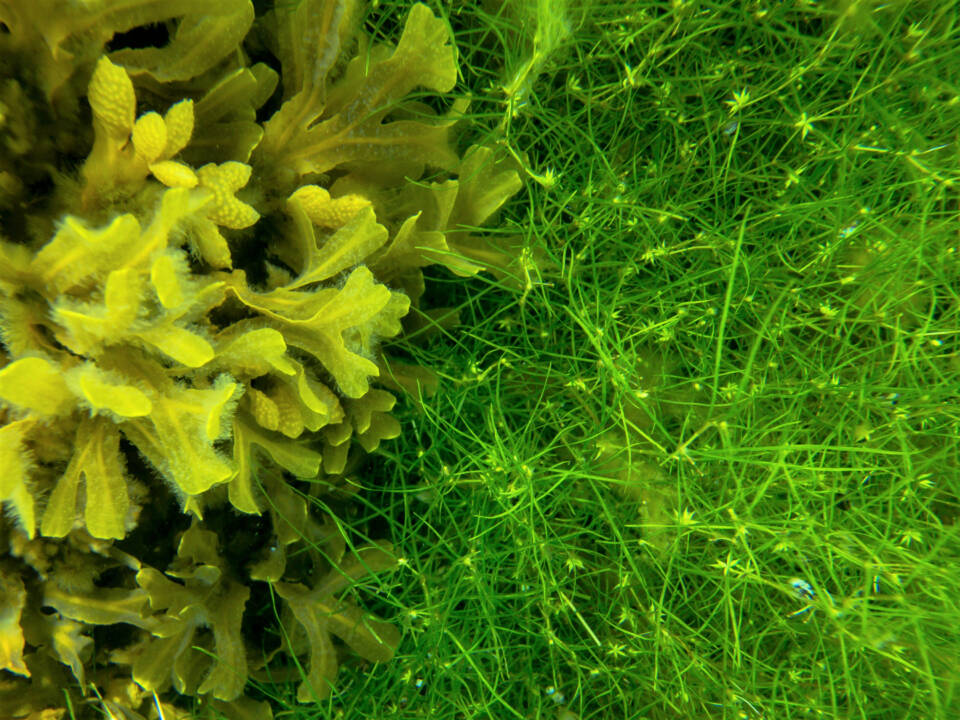
Bladderwrack and horned pondweed
Large brown algae and a delicate vascular plant.
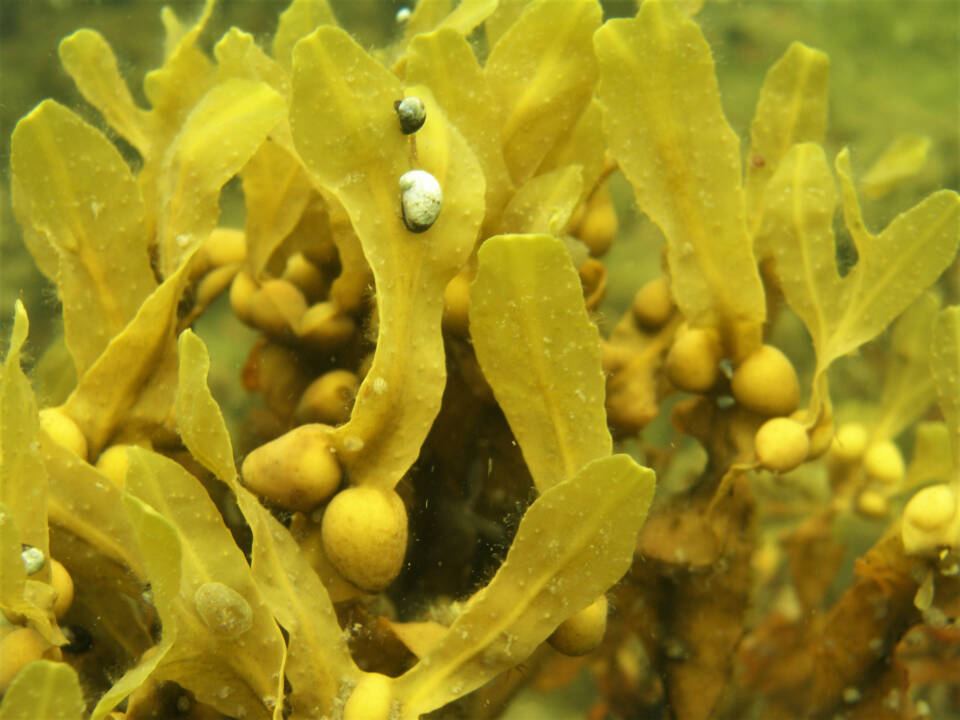
Bladderwrack and a snail
Large brown algae and some snails.

Bladderwrack is a species of brown algae. It is not a plant, although its appearance is deceptively similar. Bladderwrack is a key species in the Baltic Sea, influencing the ecosystem and its functioning more than its abundance would suggest. Its growths provide habitat and food for many species. For example, sea slaters and humans obtain nourishment from it.

People have previously made use of bladderwrack’s rich supply of vitamins and minerals by applying it as fertilizer and soil conditioner in agriculture. It has also been used as a medicinal herb due to its metabolism-boosting compounds. Additionally, dried bladderwrack has been ground into flour for baking. It can also be used in plant-based dyeing.
Many species benefit from bladderwrack, but naturally, the threats it faces also affect the species that depend on it. For example, the grass snake lays its eggs in bladderwrack piles that have washed ashore. As these piles have diminished, the number of grass snakes has also declined. In the 1970s, a strong salt pulse arrived from the Atlantic, bringing nutrients to the coastal surface waters. This allowed bladderwrack’s competitors to thrive, leaving it with less space to grow. Competing algae boosted the population of sea slaters, which then grazed bladderwrack even more aggressively. As a result of that salt pulse, bladderwrack temporarily disappeared from many coastal areas of Finland.
“I am bladderwrack, a brown alga of the Baltic Sea. When the water is clear enough, I get plenty of light. And if the salinity is just right, I thrive on the rocky seabed along the Baltic coast. I cling to stones and bedrock. I may look a bit like a plant, but I’m not one! I don’t have a true stem, leaves, or roots—I absorb nutrients directly from the water!
There’s a real buzz going on in my thickets! For many creatures, I’m practically life itself. They find food and shelter in my underwater forest. It’s no coincidence I’m called a key species of the Baltic Sea! I enjoy company, and I gladly welcome fish fry, shrimps, sea slaters, and snails into my home.
But… this system breaks down if the water has too many nutrients. Filamentous algae and microalgae snatch up the nutrients and spread over me, blocking out the light until I can barely see it anymore. That really kills the vibe—and guess who ends up suffering? Me, and all my fish fry and other lovely little friends.”
The blue mussel is a mollusk and, like bladderwrack, a key species of the Baltic Sea. In addition to the Baltic, it inhabits the Pacific Ocean, the Atlantic, and Arctic regions. It forms extensive colonies on solid substrates but lives at depths of no more than 30 meters. In the Baltic Sea, the blue mussel remains smaller than its counterparts in the oceans, reaching only about half their size.

As a key species, the blue mussel serves as food for many animals, such as the common eider. In poor mussel years, eider populations also collapse. Mussel colonies provide sheltered habitats for smaller species as well. However, one of its most important roles is water purification. A single blue mussel can filter up to two liters of water per hour, meaning the entire population filters an amount equivalent to the volume of the Baltic Sea each year! This filtration naturally accumulates various harmful substances in the mussel’s body, such as heavy metals, human-made compounds, or algal toxins. Eventually, these pollutants spread throughout the entire food chain.
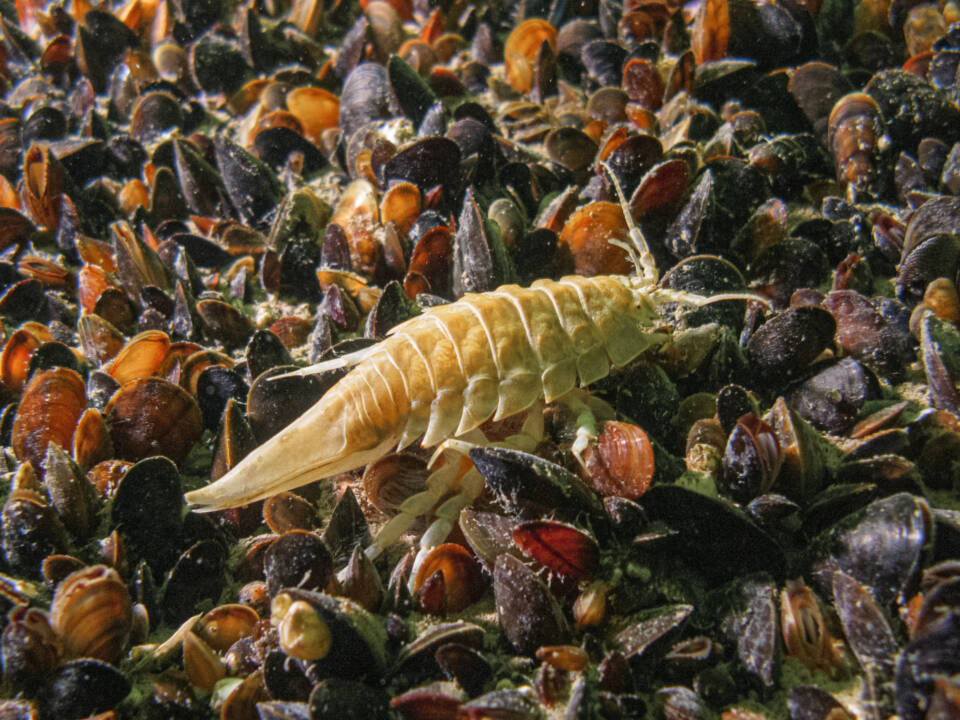
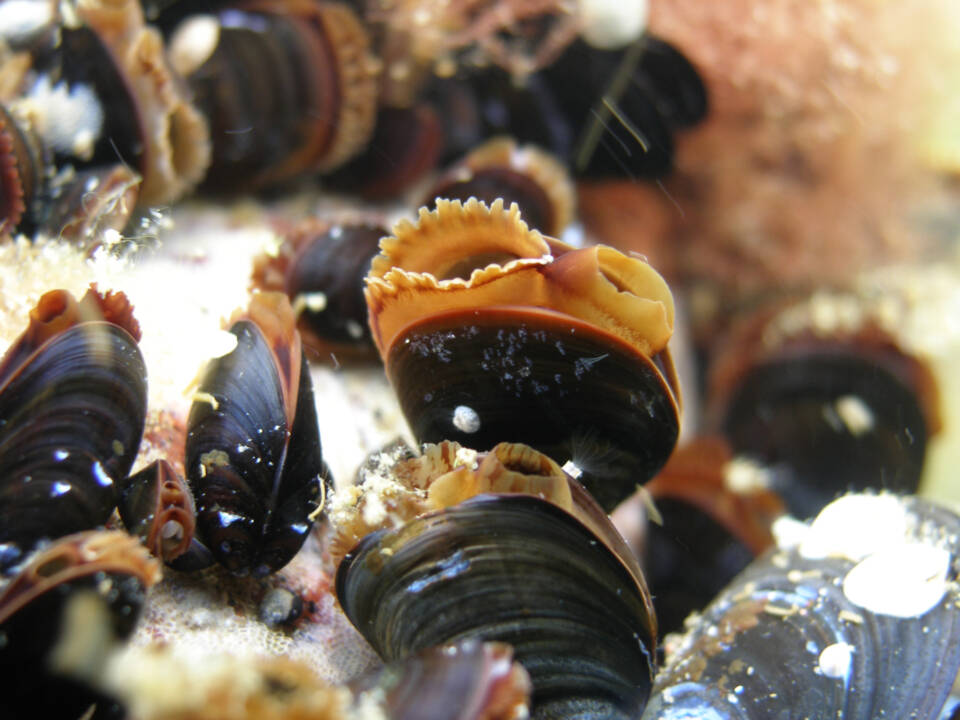
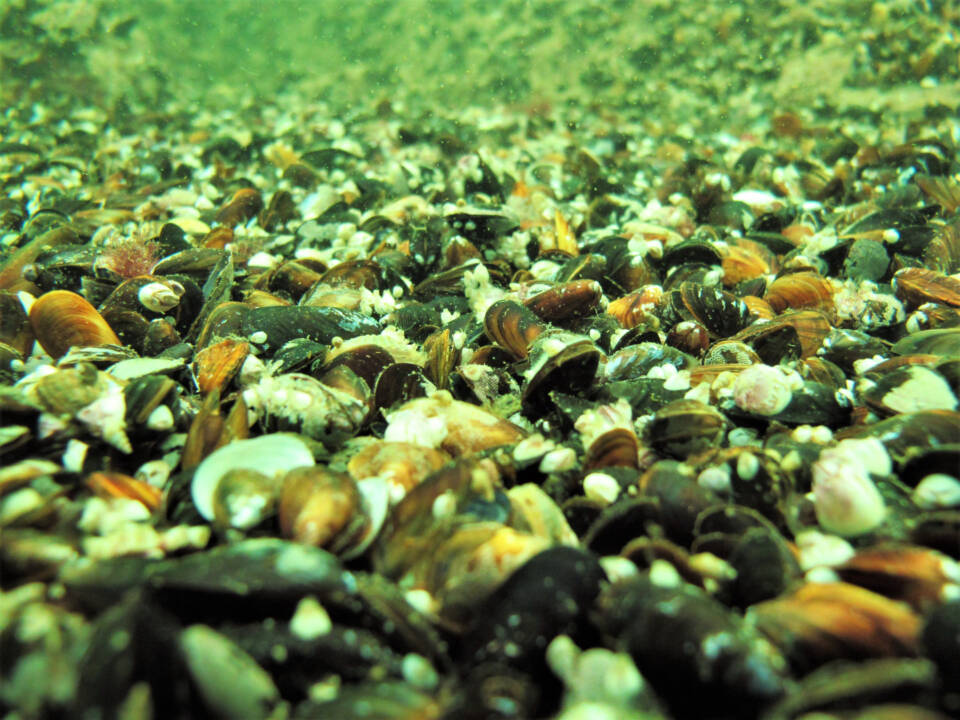
“We blue mussels believe that together is better! We love rocky seabeds. It’s a great place to filter food with our little hairs—nutrients just rain down on us. We’re not a lazy bunch either; I alone filter a massive amount of Baltic Sea water! But there’s a downside to being so efficient: all sorts of stuff ends up in the water that really doesn’t belong there.
I get a headache just thinking about filtering painkillers—especially when I don’t even have a headache to begin with… or a head, for that matter! In the end, though, it’s more of a problem for those who gobble us up—like those poor unsuspecting eiders.”
Seagrass is a vascular plant that grows on the seabed. It thrives in sandy bottoms and can develop shoots up to two meters long. It is found along the coasts of Europe, North America, and Asia. Extensive underwater seagrass meadows provide sheltered habitats for many invertebrate species as well as fish fry. Many waterbirds also favor it as a food source. Humans have utilized seagrass for various purposes, including roofing material and food. Salt has also been collected from it by burning the plants.

Seagrass grows in salty oceans and brackish waters, but low-salinity water is not its natural habitat. The salinity must be at least five parts per thousand. Due to climate change, the salinity of the Baltic Sea is projected to drop below four parts per thousand as the amount of freshwater flowing in from the surrounding drainage basin increases. This threatens the habitats of seagrass—and consequently, the habitats of the small species that live sheltered within it.
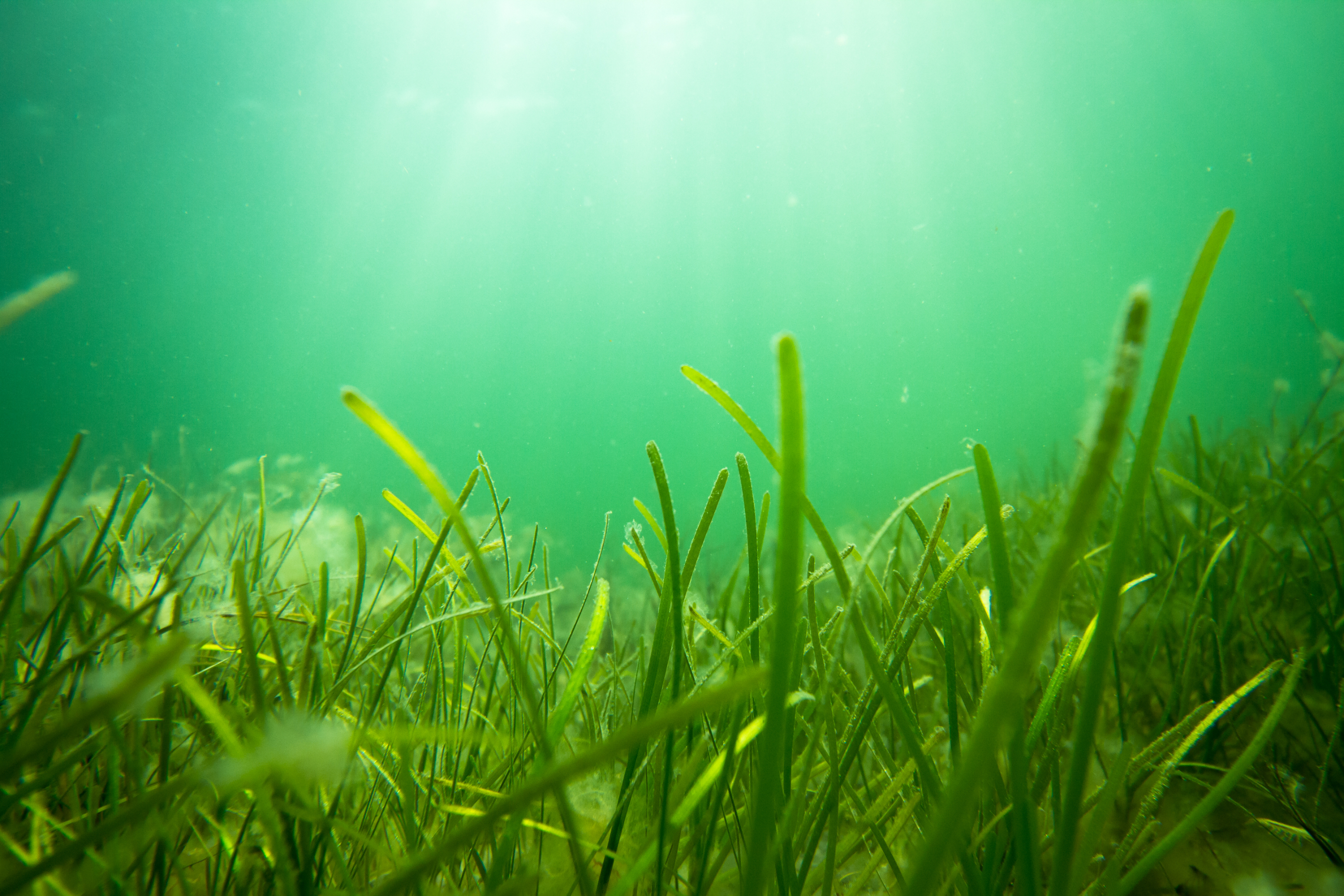
“I am seagrass, the Baltic Sea’s very own underwater lawn. I’m a plant—a true marine grass—and I especially thrive on sandy seabeds. I grow vast underwater meadows, and they’re incredibly important habitats for many species! Cute little fish fry, snails, and tiny shrimp all love the shelter my grassy blades provide. But if you’re really observant while snorkeling, you might spot some relatives of the seahorse swaying between my stems—like the straightnose pipefish and the black-striped pipefish. Now those are some truly beautiful and exotic fellows!“
Test your knowledge: What species is shown in the picture? (in Finnish)(siirryt toiseen palveluun)
Find out which Gulf of Finland organism you would be! (in Finnish)(siirryt toiseen palveluun)