Harbour porpoises are observed several times a year
The harbour porpoise is the only toothed whale species to be seen annually in Finnish coastal areas. The individuals observed in Finnish waters are originally from a harbour porpoise population from the Baltic Proper.
The harbour porpoise (Phocoena phocoena) is one of the smallest toothed whale species in the world. Adult females are about 160 centimetres in length and weigh approximately 60 kilograms. Compared to females, adult males are somewhat smaller, measuring approximately 145 centimetres in length and weighing around 50 kilograms.
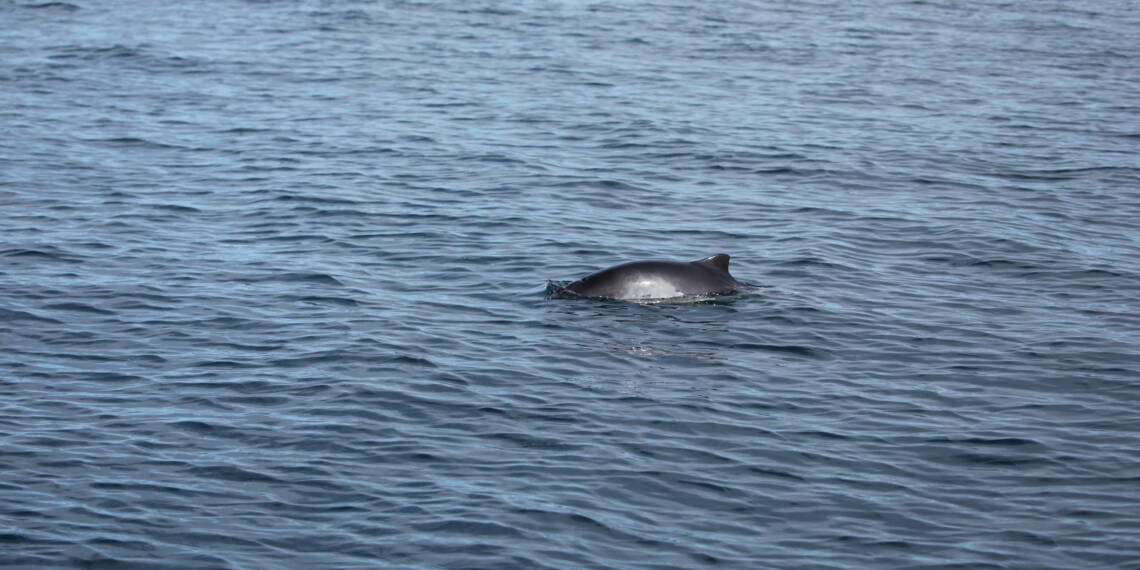
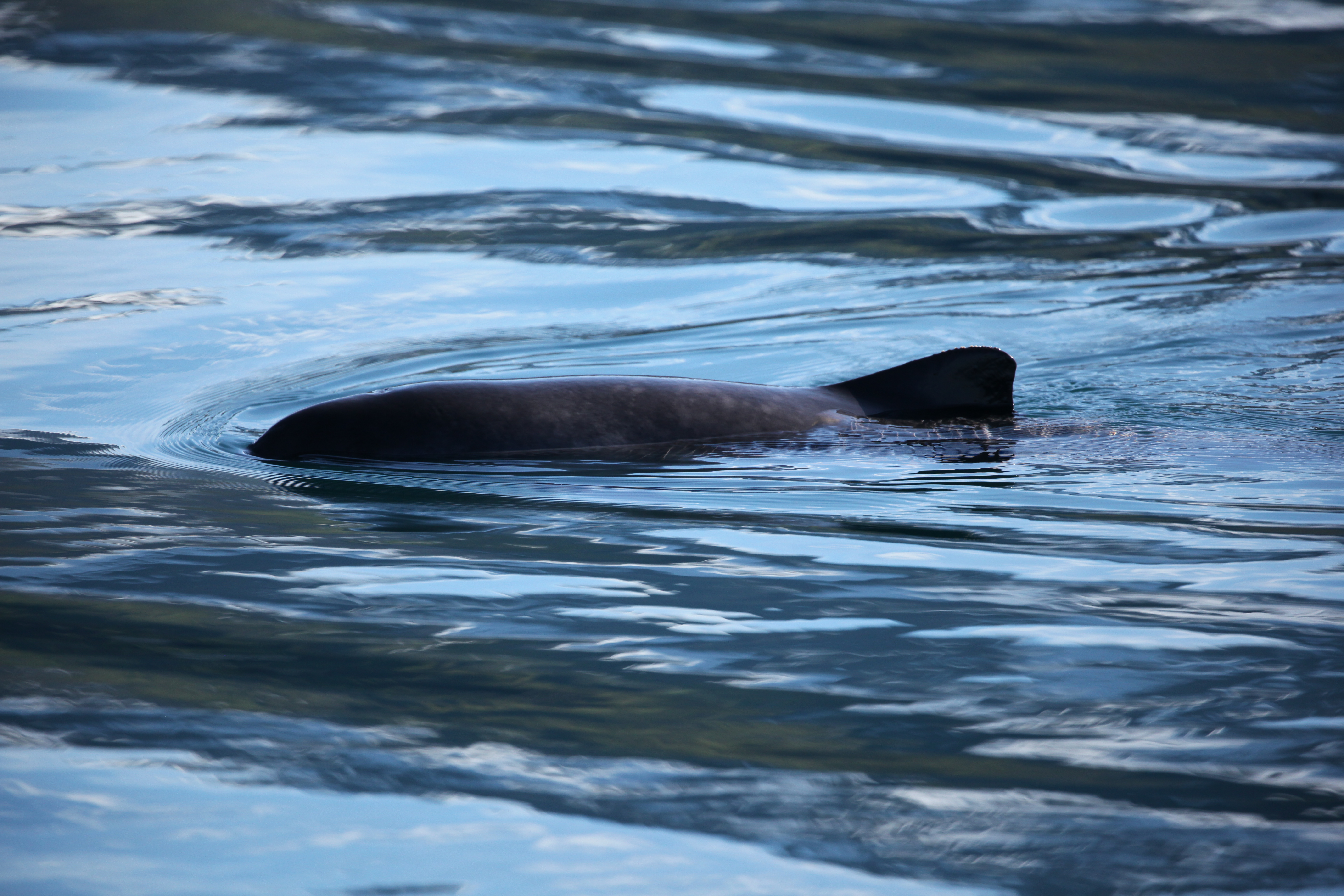
The harbour porpoise has a short, rounded body with a small head that lacks the typical beak of many dolphin species. Its colouration varies from dark-grey to almost black, and the flanks are light grey at the front with a white underbelly. On each side of the body, a narrow dark stripe runs from the corners of the mouth to the pectoral fins. The dorsal fin is low, triangular and slightly concave at the back.
Observing a harbour porpoise requires luck
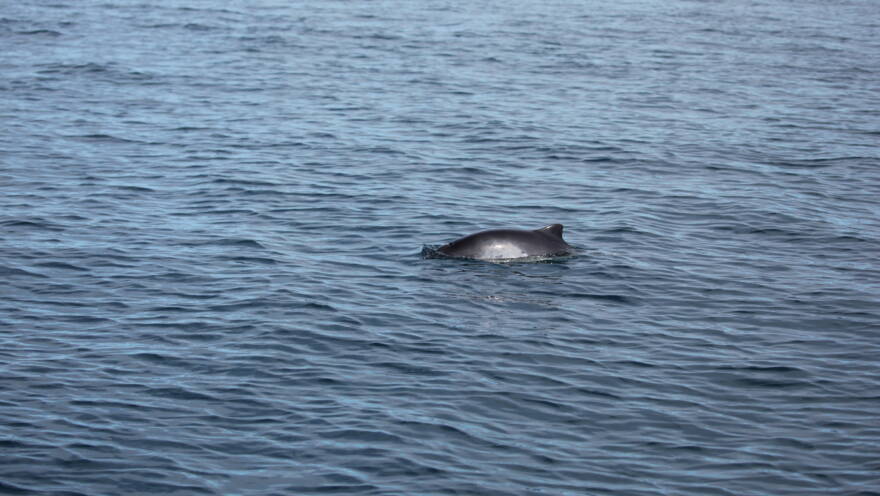
It can be very difficult to detect harbour porpoises, particularly if there are any waves. In general, porpoises are only glimpsed as they roll on the surface, during which time, only part of the back and the triangular dorsal fin show above the surface. The head and tail of a porpoise are rarely seen. It can also sometimes be observed resting motionless near the surface, particularly in calm weather.
Porpoises usually move alone or in groups of a few individuals. They do not seek out the company of people or ships, which makes their detection even more challenging.
Harbour porpoises eat mainly fish
From a global perspective, there are major regional and temporal variations in the main food items and the composition of the prey species of porpoises. The porpoise is an opportunist in its diet, meaning it usually uses the best available food at any given time. For example, in the Finnish marine area, the diet of porpoises is rich in herring and sprat.
Harbour porpoise population collapsed in the early 20th century
The harbour porpoise is not classified as being under threat worldwide. However, by the mid-20th century, the harbour porpoise population in the Baltic Sea had collapsed due to hunting, by-catch mortality in commercial fisheries, and environmental toxins. This population has not yet recovered.
As recently as the early 20th century, the harbour porpoise reproduced at least occasionally in Finnish marine areas. Finnish fishermen could catch over a dozen porpoises annually in their gear. The last sighting of a calf in Finnish territorial waters was in 1938, and the species has likely not reproduced here since the wars.
The porpoises currently seen in Finnish marine areas originate from the population in the main basin of the Baltic Sea. Each summer, mariners report a few sightings from the Gulf of Finland and the Archipelago Sea. Underwater microphones have revealed that porpoises visit the open sea areas south of the Archipelago Sea and Åland fairly regularly also during winter and spring.
Observations of harbour porpose in Finnish coastal areas starting from 1980. The map is based on observations recorded in Laji.fi portal that have a coordinate accuracy of 1000 meters.
The porpoise population of the Baltic Sea Proper is critically
endangered
The population in the Baltic Sea Proper is now classified as extremely endangered. Based on four years of acoustic data collection and analysis by the international SAMBAH (Static Acoustic Monitoring of the Baltic Sea Harbour Porpoise)-project, the population size of the Baltic Sea Proper harbour porpoise is estimated to be approximately 450 individuals.
The most significant threat to the survival of the species in the Baltic Sea is estimated to be by-catch mortality from commercial fishing, especially in the southern Baltic Sea. Porpoises are also threatened by environmental toxins in their food such as PCB, which is accumulated in their tissues.
In the Finnish marine areas, the by-catch of harbour porpoises is extremely rare. In December 2018, one individual porpoise became entangled in a fisherman’s net near the village of Nagu, in the Archipelago Sea.
Probably the most effective way of reviving the harbour porpoise population is to limit harmful fishing practices in areas where porpoises are known to occur regularly. The protection of Baltic harbour porpoises is included in several international treaties and regulation, as well as in Finnish national legislation.
Did you know?
In Finland, harbour porpoises used to be called “sea-pigs”.
-
 Find out more
Endangered species
-
 Find out more
Marine mammals