Fish species of the Finnish marine areas
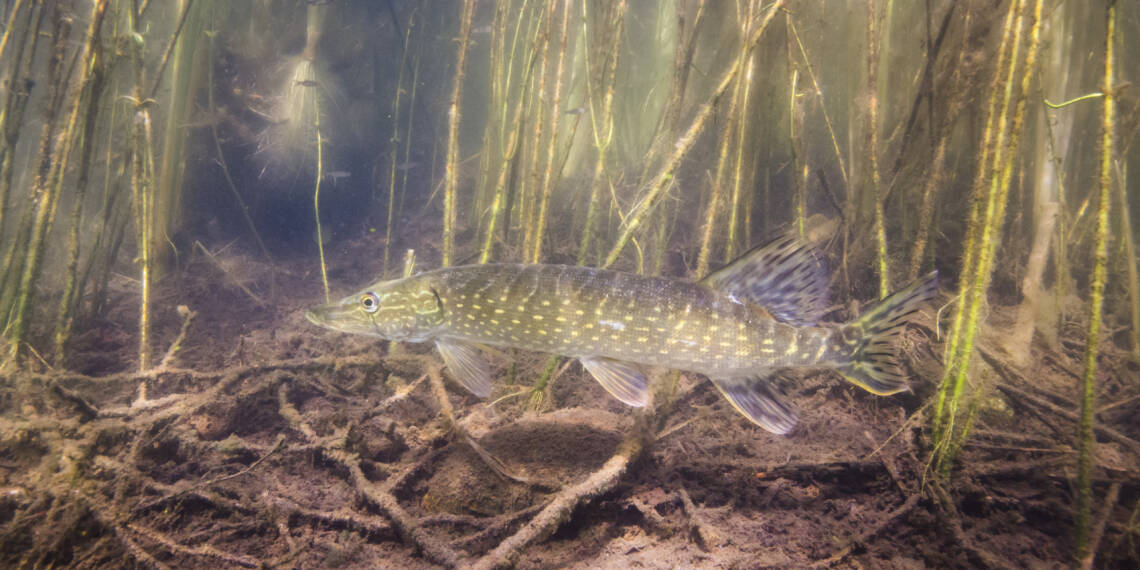
There are just over 60 species of fish found in Finnish marine areas. The varied early history, as well as the brackish water of the Baltic Sea, have led to the emergence of fish species ranging from oceanic to freshwater.
These species include those adapted to both cold and somewhat warmer water. Compared to oceans and tropical inland waters, the number of fish species are small, which is explained by the fact that the Baltic Sea is also younger in its history, as well as more environmentally diverse.
Different species of fish have different requirements for their environment and the demands of the breeding area often form the limiting factor for the stock size. The key factors are the oxygen content, salinity, temperature and how protected the water is. In addition to the reproductive cycle, temperature also plays an important role in controlling the occurrence and migration of adult fish.
Salinity regulates the species
The salinity of the water decreases in the Baltic Sea as you move northward. The extremes are represented by Kattegat, where surface water salinity is about 30‰, and the Bothnian Bay, where the water contains only a couple of parts per thousand of salt.
This gradient in salinity is reflected in the fish fauna: species diversity declines when moving from the Danish straits toward the Gulf of Bothnia. In Kattegat and Skagerrak near Denmark, marine species dominate, while freshwater species are prevalent in the Bothnian Bay.
There are only about 20 true marine species
Of the marine species, the familiar and most important in Finnish commercial fisheries is the herring, i.e. Clupea harengus. Although they remain small in relation to their ocean relatives, good growth and survival rates of Baltic herring in their first year will result in excellent herring production, relative to the water volume in the Baltic Sea.
Baltic herring, sprat, European smelt, three-spined stickleback, and several goby species occur in abundant numbers, particularly in open water areas. Although the European eel and cod cannot reproduce in Finnish marine areas, their individuals arrive and grow in the Baltic Sea after their juvenile life stages are complete.
Salinity limits the occurrence of freshwater species
Freshwater species such as roach and perch are most abundant in low-saline and sheltered coastal waters. They utilise different archipelago zones, depending on the species and the season. Of the freshwater species, approximately half are either from the roach- or carp families. Their share of biomass also seems to increase with eutrophication and warming.
Although the majority of freshwater fish species migrates to rivers, estuaries or inland lakes to reproduce, others can take also advantage of the most sheltered bays, flad-lakes and streams of the outer archipelago areas.
Migratory fish depend on both fresh- and saltwater areas
Trout, salmon, lampreys, dace, vimba bream, and ziege migrate up rivers to spawn in freshwater. Although they are completely dependent on freshwater for reproduction, they may migrate far to sea to feed. Over time, whitefish and grayling have also evolved forms which spawn in the sea.
Their stocks and those of other migratory fish have fallen sharply as a result of rivers being dammed, construction on water bodies, and increasing nutrient-loads. Indeed, most migratory fish are classified as endangered.
By contrast, the abundance of some invasive fish species has increased markedly in Finnish marine waters over the past decade. These are the round goby that originates from the Black Sea and the Caspian Sea, and the Prussian carp that was introduced to Eastern Europe in the 1900s.
The Habitats Directive protects certain marine fish
-
 Find out more
The EU Nature and Birds Directives
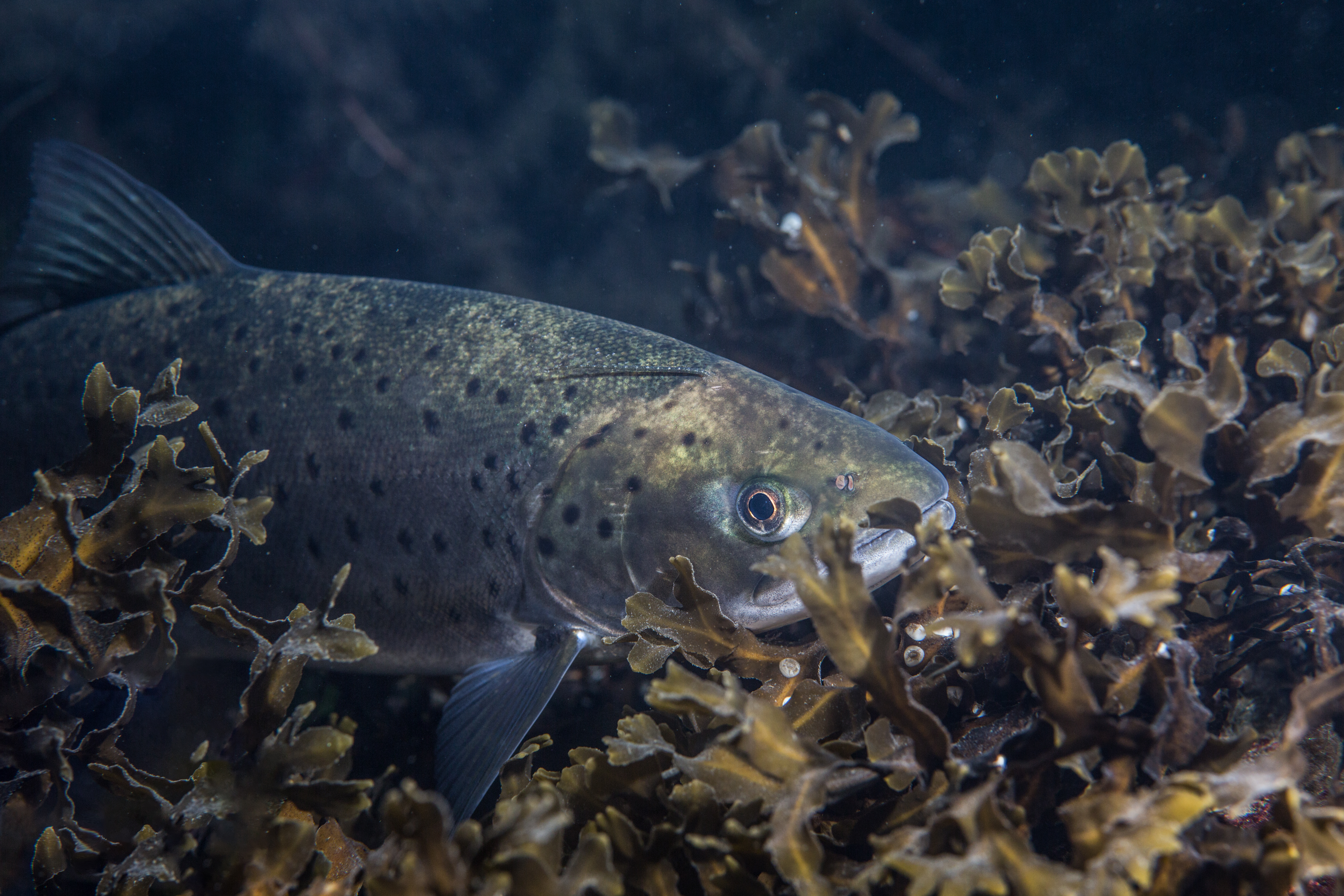
Of the fish species found in Finland, ten are protected under the European Union’s Habitats Directive. The directive obligates Finland to ensure that these fish species remain viable in their natural habitats. These species are subject to both national and international regulations.
Almost all Finnish fish species covered by the Habitats Directive occur in both inland waters and the sea. An exception is the brook lamprey, which is found only in freshwater. Four of the species – salmon, whitefish, vendace, and lamprey – are commercially exploited.
Fish and cyclostomes protected by the Habitats Directive:
- Grayling
- Bullhead
- Salmon
- Kaife
- Vendace
- Lamprey
- Brook lamprey
- Spined loach
- Whitefish
- Asp
There are many unusual fish species in Åland
The salinity of the water around Åland is about 5–6‰, which is relatively high compared to other marine areas in Finland. As a result, more marine species live there than elsewhere in the country, although many freshwater species are also present. Several migratory species, whose spawning grounds are located in Sweden or Finland, have growth areas around Åland.
In total, about 60 fish species live in Åland, nearly half of which are marine species. Common marine fish include Baltic herring, sprat, three-spined stickleback, and bullhead. In the open sea, one may also encounter garfish or greater sand eel.
The Baltic Sea is home to two flounder species that look alike but are genetically distinct: the European flounder and the Baltic flounder. Of these, the Baltic flounder is more common in Åland, while the European flounder dominates the southern Baltic Sea.
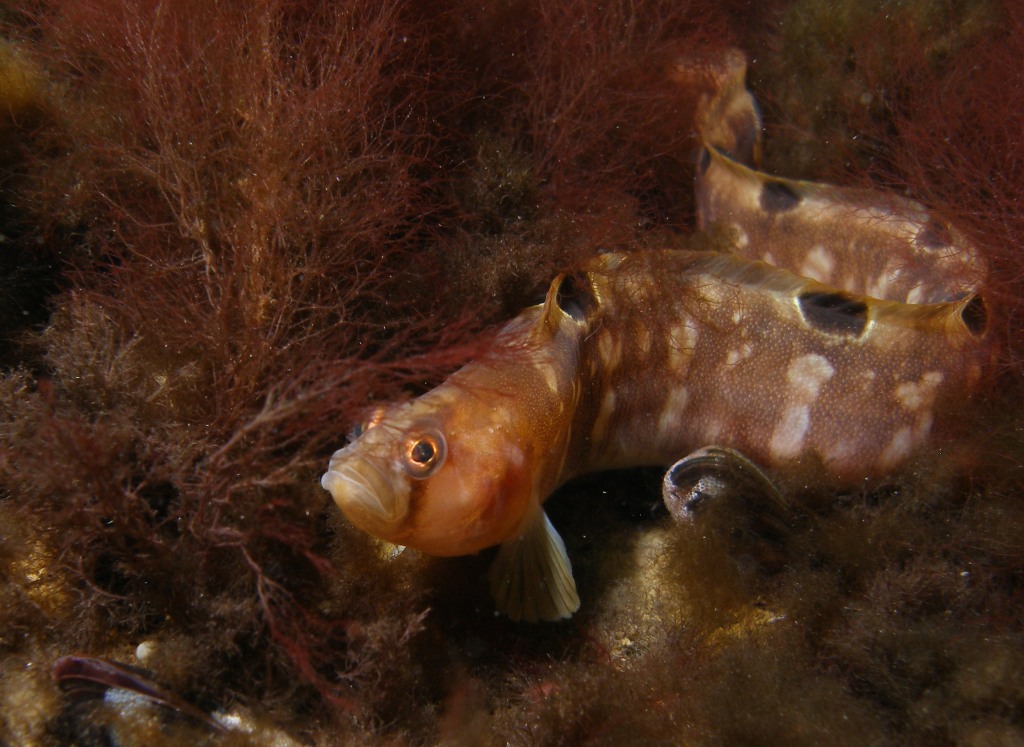
Åland’s waters also host a variety of small-sized fish species that rarely end up in ordinary fishing gear and therefore often go unnoticed. Many of them live exclusively on the seabed. Common small fish include the sand goby, common goby, rock gunnel, straightnose pipefish, black-striped pipefish, and lesser sand eel. Regularly observed species also include the spiny flounder, black goby, spiny sculpin, lumpsucker, seven-spined goby, and snakeblenny.
Some hard-to-detect fish species often escape even researchers’ attention, which is why they are poorly documented. These include the clingfish, eelpout, and fifteen-spined stickleback.
Read more about fishing in Åland!(siirryt toiseen palveluun) (link to external site)
Of all the other fish species found in Finland, you can find good information from Natural Resources Institute Finland’s website(avautuu uuteen ikkunaan, siirryt toiseen palveluun) (in Finnish) and from Laji.fi portal(avautuu uuteen ikkunaan, siirryt toiseen palveluun) (in English).
-
 Find out more
Recreational fishing at sea
-
 Find out more
Fish farming