Move carefully in the marine environment
Respect nature and move without haste
- Move with respect for the peace of animals and other nature-goers.
- Observe landing bans: be especially cautious in protected areas.
- Do not damage vegetation.
- Make fires only at designated fire pits; follow restrictions during dry periods.
- Avoid unnecessary engine use and opt for quieter water transport.
- Don’t speed on the water: navigate carefully, especially in shallow natural harbors.
- Fish for small species too, and follow the minimum size limits set for different catch fish—only keep fish that exceed the limit and release the smaller ones.
- Eat the fish you catch.
why?
Restrictions aim to protect the biodiversity of the marine environment and, for example, the nesting peace of birds. Fragile marine nature often recovers slowly.
Engine noise and careless wandering along the shore can disturb marine inhabitants and other nature-goers.
Speeding with a boat in shallow coastal areas stirs up the seabed and disrupts its ecosystem.
Regulating minimum fish sizes and practicing diverse fishing help maintain healthy fish populations.
When a fish is taken from the water, nutrients are removed with it. That’s why eating wild fish grown in the Baltic Sea helps reduce the nutrient load in the sea.
Boat and travel cleanly, without littering nature
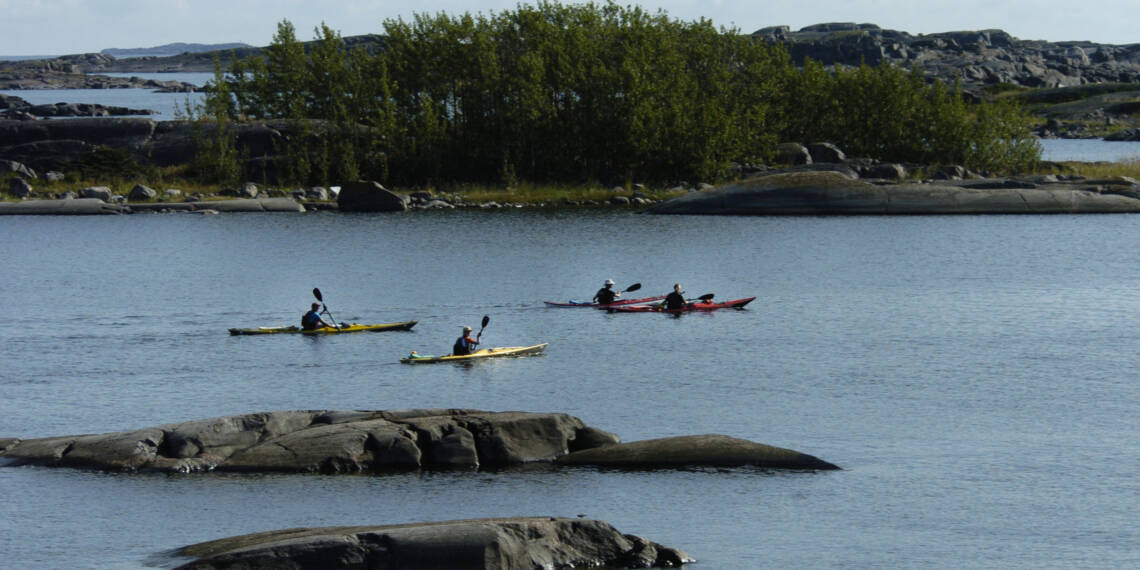
- Prefer sailing, rowing, and paddling.
- Keep your boat in good condition.
- Clean the hull mechanically with a brush or pressure washer—avoid using toxic paints. You can order a text message from the Keep the Archipelago Tidy Association’s Rocco service (in Finnish and Swedish) and clean the hull right after barnacle larvae attach.
- If the hull has been treated with toxic paint, take extra care to prevent cleaning water from entering the waterways.
- Handle harmful substances used in boating properly and deliver any residues to the harbor’s collection point or hazardous waste center.
- Do not discharge untreated bilge water into the sea.
- Empty your boat’s holding tank (toilet waste) at the harbor’s suction point, or use a chemical or dry toilet.
- Dispose of food waste at a bio-waste collection point.
- Do not wash dishes in the sea—use designated washing stations on land.
- Do not litter or throw glass bottles into nature: take back what you brought.
- Do not toss cigarette butts into nature.
- Do not abandon fishing gear or nets in the sea.
why?
Organic waste, such as toilet and food waste, contains phosphorus and nitrogen, which contribute to the eutrophication of water bodies. Anaerobic digestion of biowaste ensures that nutrients are put to beneficial use.
A well-functioning engine does not leak oil into the sea. Glycol used in engine cooling systems is toxic to the environment. Varnishes, paints, oil residues, and solvents are also hazardous waste and do not belong in mixed waste or nature.
Plastic litter is especially harmful to marine animals. A bird entangled in large plastic debris may die, and a forgotten net in the water can be fatal to a seal or duck.
Cigarette butts release plastic and harmful substances into nature.
Glass shards injure mammals and birds moving along the shore.