Flads and Gloe Lakes – The Changing Coastal Lagoons
Shallow bays are valuable habitats and are much sought after for recreational activities. The warm, shallow waters and the shelter of such locations create a pleasant environment for summer cottage owners and pleasure boaters alike. Wide and open bays are particularly popular with swimmers and water sportsmen.
Flads and gloe lakes are found along the entire Finnish coastline, but most commonly in the Bothnian Bay, where the coast is low and post-glacial land uplift is strongest. As the land rises, a flad first forms from a sea bay, with a slightly weakened connection to the sea. Gradually, as the connection to the sea diminishes further, the flad transforms into a gloe lake. The final stage is a freshwater gloe lake, which no longer has any connection to the sea.

The threshold separates the lagoon from the sea
Not all sea bays along the Finnish coast develop into lagoons, even over long periods of time. A key requirement for lagoon formation is that the mouth of the bay has a threshold higher than the surrounding seabed areas, which restricts the inflow of seawater. As land uplift continues, the effect of the threshold increases, causing the salinity in the lagoon to decrease. This change is reflected in the plant and animal life of the basin, where freshwater species gradually gain a stronger foothold.
-
 Find out more
The EU Nature and Birds Directives
The lagoons themselves also become shallower over time as the land rises. Most flads and gloe lakes are only a few meters deep or even shallower. Deeper lagoons are mainly found along Finland’s southern coast, where they are surrounded by rocky shores.
Flads, gloe lakes, and other coastal lagoons are among the habitat types defined by the EU Habitats Directive, which member states are required to protect. In Finland, the Water Act protects all natural flads and gloe lakes up to ten hectares in size.
Sisältö vaatii markkinointievästeiden sallimisen. Ole hyvä ja salli evästeet katsoaksesi sen.
The Rich Biodiversity of Lagoons
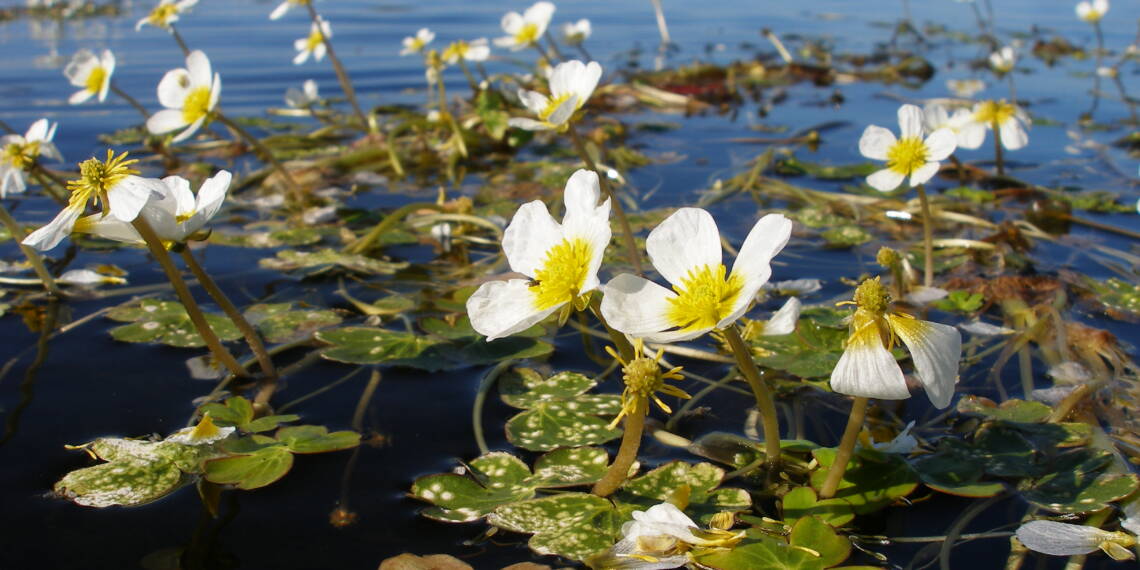
Thanks to their sheltered conditions, lagoon vegetation is often lush and multi-layered. Reeds spread across the shoreline zone, and floating-leaved plants such as water lilies, yellow water lilies, and water knotweed thrive nearby.
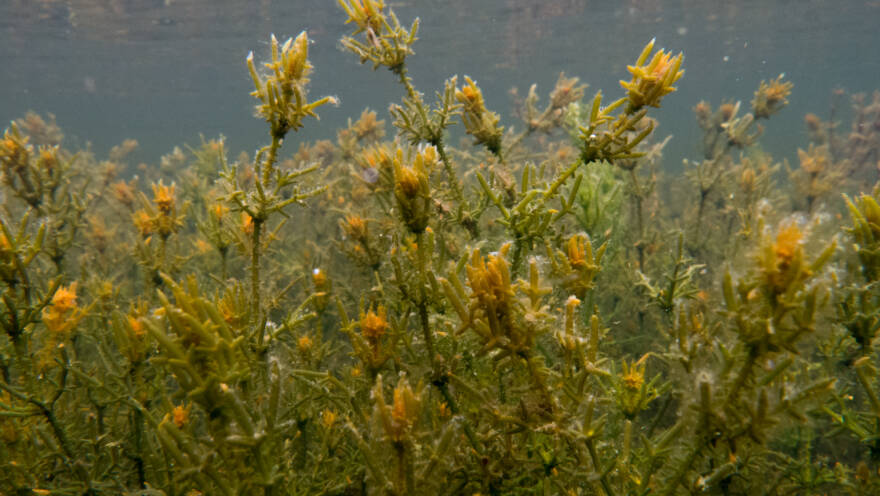
Underwater, the scene is typically dominated by pondweeds and milfoils. In some areas, stoneworts – which resemble submerged plants – are the dominant species, and among them, endangered species may also occur. Sheltered stonewort-dominated bottoms are classified as a threatened habitat type in Finland, and fladas and gloe lakes play a major role in maintaining this habitat.
Among the vegetation and in the bottom mud lives a wide variety of invertebrates, from insect larvae and beetles to small crustaceans and snails.
Did you know?
During cold winters, shallow bays can freeze all the way down to the bottom. Nevertheless, the ice melts in the spring, the water warms up and the plants quickly sprout again.
A Warm Lagoon Sustains Fish Populations
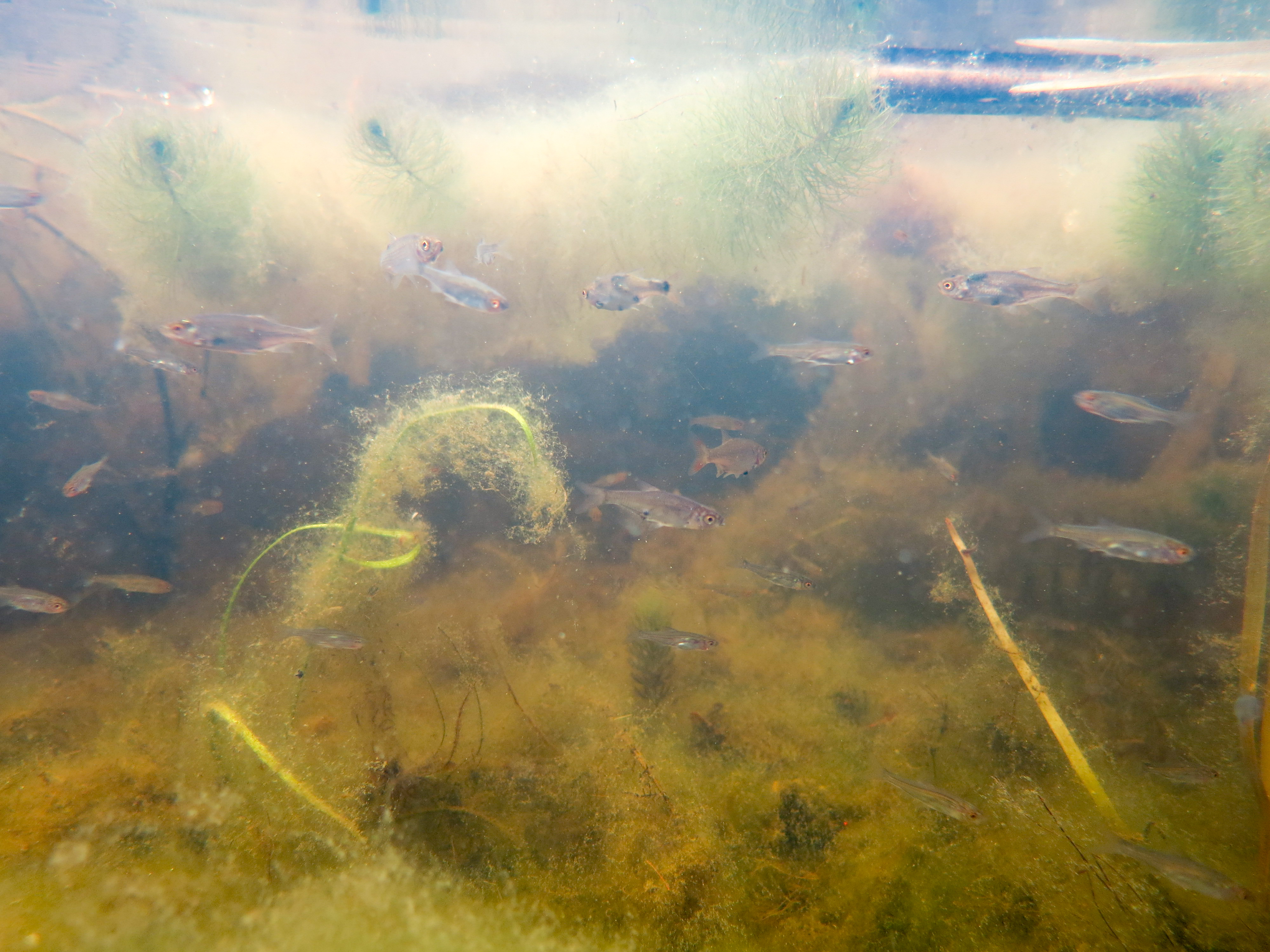
Because the underwater threshold at the mouth of the lagoon slows water flow, the basin warms up quickly in spring. This attracts cyprinid fish, as well as pike and perch, in search of suitable spawning grounds. Flads and gloe lakes are therefore important spawning areas for fish.
By the time the fish fry hatch, the lagoon water is already quite warm and aquatic vegetation has begun to grow vigorously. The tiny fry find both shelter and food. However, many fall prey to larger fish. The angler sitting at the end of the dock or on a rocky shore is the top predator in this food chain – along with waterfowl and waders.
Eutrophication and Dredging Deteriorate Lagoon Conditions
-
 Find out more
Construction and dredging
Shallow fladas and gloe lakes with slow water exchange are highly sensitive to eutrophication. Eutrophication can already be seen at the mouth of the lagoon as strong growth of filamentous algae. Further inside, reeds begin to dominate, crowding out other aquatic vegetation. Eutrophication is influenced both by the general trend in the Baltic Sea and especially by drainage of surrounding land areas, where ditch water is often directed straight into the lagoon.
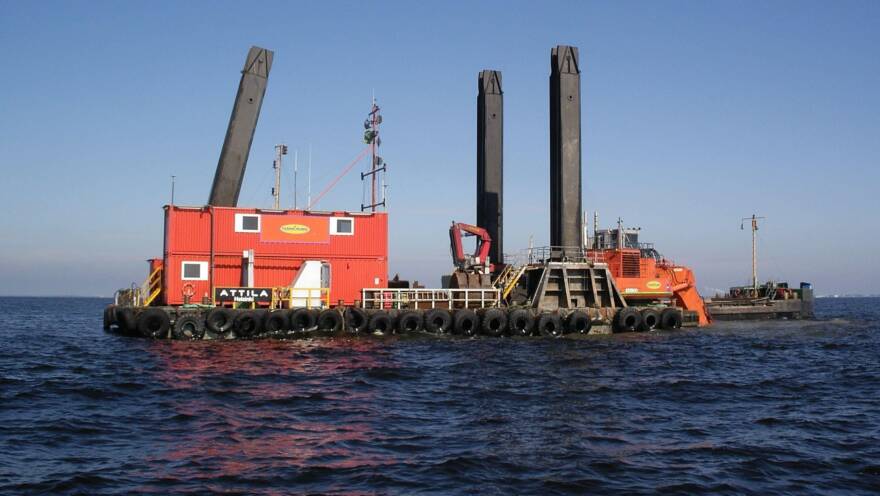
The natural state of fladas and gloe lakes has also been degraded by shoreline construction and boating, along with associated dredging. Particularly harmful is the removal of the threshold at the lagoon’s mouth to improve boat access. This destroys the very feature that allowed the sea bay to develop into a warm-water lagoon.
The future of fladas and gloe lakes is also threatened by climate change, which affects water levels, currents, and the amount of nutrients washed in from land. Invasive species are another potential threat.
The status of coastal lagoons in Finland is bad, and no positive development is in sight. The assessment is based on a 2025 evaluation of the conservation status of habitat types under the EU Habitats Directive for the period 2019–2024.
Status of coastal lagoons
Future trend of coastal lagoons
Habitat threats
State of the Environment
- Eutrophication
- Climate Change
Physical Environment
- Construction
- Bottom Alteration Dredging
Human Activity
- Traffic and Boating
Biology
- Invasive Species
- Overgrowth