A living sea needs nutrients—but everything in moderation!
Contents
- Compare the functioning of a healthy ecosystem and an eutrophicated one
- Marine food web
- Main nutrients
- Phytoplankton and algal blooms
- Zooplankton
- Fish species composition
- On the seafloor
- On the shores
- Teaching Materials: Nutrients
Compare the functioning of a healthy ecosystem and an eutrophicated one
Under each heading, you’ll find information about how a healthy sea differs from an eutrophicated one. You can also compare the differences between these ecosystems through image pairs.
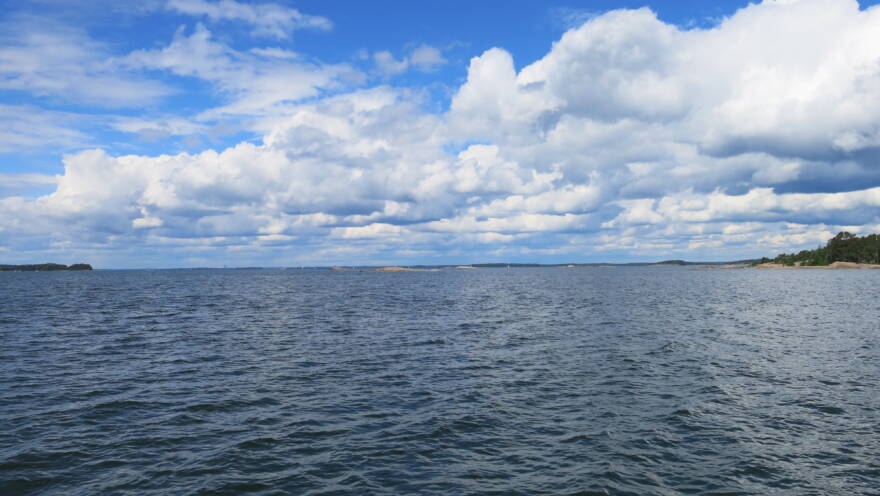
Healthy sea: The sea contains a balanced amount of nutrients, and everything functions smoothly. The ecosystem is thriving and in balance.
Eutrophicated sea: The sea has an excess of nutrients. Algae grow so abundantly that large algal blooms form. The seafloor suffers from oxygen depletion.
Marine food web
Eutrophication is reflected in the food web.
In a healthy sea, the food web is balanced
All marine organisms form a food web. This web is created as small animals feed on primary producers—plants and algae—while larger animals feed on smaller ones. Everyone gets food, and the system functions smoothly.
In the coastal waters of the Baltic Sea, the most important primary producers are large algae and aquatic plants anchored to the seabed. In open sea areas, primary production is mainly carried out by tiny floating algae known as phytoplankton.
Primary producers perform photosynthesis, capturing energy from sunlight. In addition to sunlight, they need nutrients—specific chemical substances like phosphorus and nitrogen. These nutrients are essential for growth and reproduction. In a healthy ecosystem, there is just the right amount of nutrients to allow algae and plants to thrive and produce food for the entire food web.
All other organisms in the food web depend on primary producers: zooplankton, benthic animals, fish, seals, waterbirds, and decomposer microbes. Each species plays its own important role in the marine food web. When the system is healthy, everything works without major problems.
In an eutrophicated sea, algae grow excessively
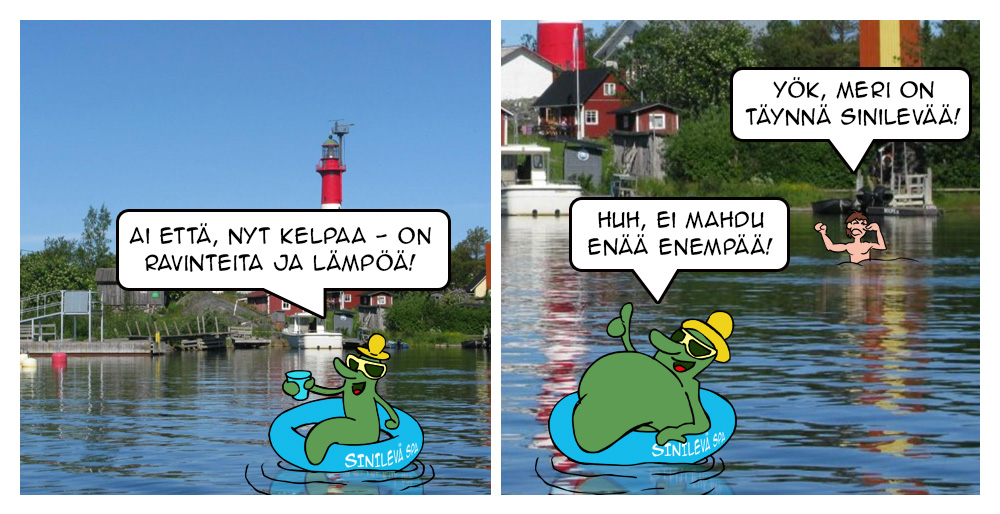
When an ecosystem contains too many nutrients, its delicate balance is disrupted. Algae begin to grow excessively. The sea becomes eutrophicated in much the same way a lawn does when it’s over-fertilized.
In an eutrophicated sea, there are more organisms, along with their remains and waste. This means extra work for decomposer microbes. The intense decomposition activity on the seafloor consumes oxygen reserves, as microbes also need to breathe. In the worst case, oxygen can be completely depleted from the seabed.
The large amounts of nutrients in the Baltic Sea originate from land—wastewater and runoff that have flowed into the sea for decades. Significant progress has already been made in reducing nutrient input, but more measures are still needed and are continuously being developed.
However, results take time. After years of excessive nutrient loading, large amounts have accumulated in the seabed, which slows down the recovery of the Baltic Sea.
Main nutrients
The availability of key nutrients sets limits on the growth of algae and plants.
In a healthy sea, nutrients are scarce
The key nutrients in the sea are phosphorus and nitrogen. These occur naturally in marine environments, but additional amounts flow in from land. Algae require both of these nutrients to grow and reproduce. As a result, algae will continue to thrive until one of the nutrients becomes scarce. At that point, algal growth stops—even if the other nutrient is still abundantly available.
In the Bothnian Bay, phosphorus is usually the first nutrient to run out, which then limits algal growth. In contrast, in the open waters of the Gulf of Finland, nitrogen is typically the limiting factor.
Even when nitrogen is depleted and most algae decline, certain photosynthetic cyanobacteria—commonly known as blue-green algae—can continue to grow. This is because they are capable of using nitrogen dissolved in the water from the atmosphere. As a result, they can thrive even when other species are already suffering from nitrogen deficiency.
In an eutrophicated sea, there is an excess of nutrients
If the sea contains high levels of the key nutrients algae need—nitrogen and phosphorus—neither runs out, and algae continue to grow. This leads to eutrophication. Among Finland’s marine areas, the Gulf of Finland and the Archipelago Sea are the most severely affected. These regions experience intense planktonic algal blooms, visible as large masses of algae. Even the Bothnian Sea is beginning to show signs of eutrophication.
The majority of nutrients causing eutrophication along Finland’s coastline originate from agricultural fields. Fertilizers are used to increase crop yields, but if the crops don’t absorb all the nutrients, the excess can escape into nearby water bodies. Fields are often located along rivers or near the coast, making the journey of nutrients to the sea short.
Nutrients also enter the sea from forest drainage, residential areas, industry, and fish farming. Additionally, air pollution contributes nutrients that settle into the sea. Altogether, these various sources add up to such a large nutrient load that the Baltic Sea suffers from nutrient overload.
did you know?
Microorganisms living in the soil bind soil particles and nutrients. These tiny organisms can help reduce the runoff of nutrients from fields into the sea. This is an area of ongoing research.
When gypsum is added to agricultural soil, the soil’s ability to retain phosphorus improves significantly. As a result, phosphorus no longer flows into the sea.
It’s wise to reduce emissions where the greatest impact can be achieved with minimal cost. For example, wastewater treatment in the city of St. Petersburg has benefited the entire Gulf of Finland.
Phytoplankton and algal blooms
Large phytoplankton concentrations indicate the eutrophication of the sea.
In a healthy sea, phytoplankton flourish in the spring.
In spring, the sea contains a high concentration of nutrients. These nutrients originate from organisms in the marine food web—their remains and waste. Bacteria and other microorganisms break down these remnants, releasing the nutrients into the water.
During winter, nutrient consumption is minimal because there isn’t enough light for algae to grow. But when spring arrives and sunlight increases, algae find a nutrient-rich buffet waiting for them. This triggers a rapid increase in phytoplankton.
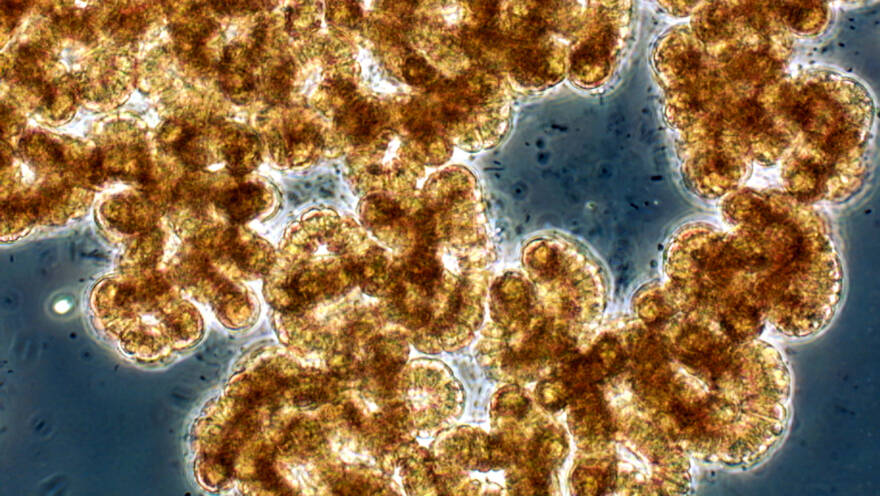
In fact, springtime plankton blooms can be so dense that they tint the water brownish. A single drop of water may contain up to 2,000 tiny algal cells.
These spring algal blooms are a natural part of a healthy sea’s annual cycle. They often go unnoticed because few people swim or wade in the cold spring waters. Additionally, spring blooms are not toxic, which is why they rarely make the news. By early summer, the blooms fade as the algae consume the available nutrients.
In an eutrophicated sea, summer brings thick blooms of blue-green algae
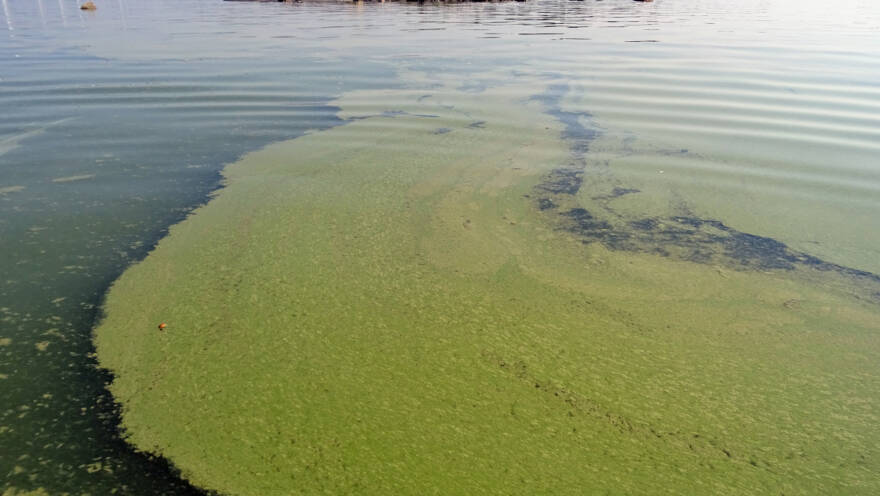
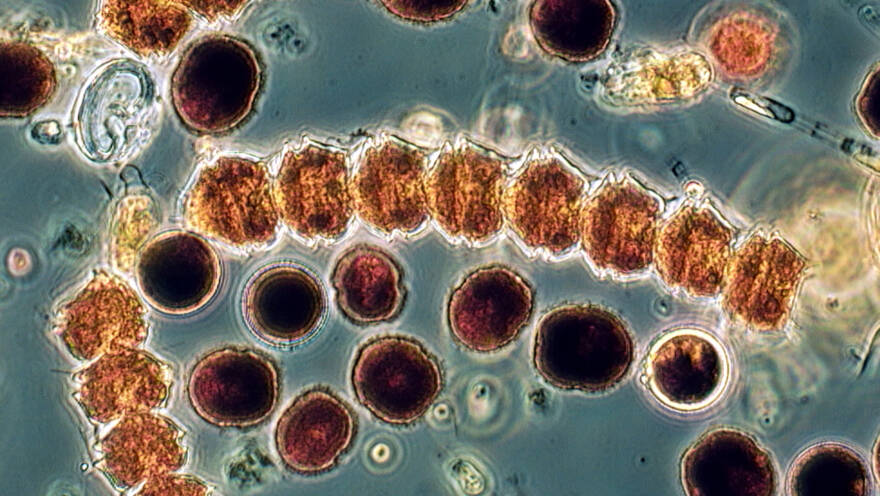
In an eutrophicated sea, nutrients may remain available throughout the summer. As the water warms, cyanobacteria—commonly known as blue-green algae—begin to dominate. These organisms thrive in warm conditions and can accumulate in large masses near the water’s surface.
Blue-green algae have a major advantage over other algae: some species can utilize nitrogen dissolved from the atmosphere into the water. This allows them to continue growing even after conventional nitrogen sources are depleted—provided there is still phosphorus in the water.
Blue-green algae draw attention because their cells rise to the surface, forming rafts or thick, soupy layers, especially during calm weather. These summer mass occurrences are known as cyanobacterial blooms. While the term “bloom” suggests flowering, blue-green algae don’t actually flower. However, the colorful surface mats can resemble blossoms. The color of the bloom depends on the photosynthetic pigments each species contains, ranging from yellowish-green to vibrant turquoise.
Some blue-green algae are toxic. Their toxicity cannot be determined by color or appearance alone, which is why it’s always wise to avoid contact with them.
did you know?
The ratio of nitrogen to phosphorus and the temperature of the water determine which species of planktonic algae thrive in the sea. The Baltic Sea is home to as many as 2,000 phytoplankton species!
Phytoplankton are far from simple. Some species prefer feeding on other algae rather than photosynthesizing. There are even species that switch between photosynthesis and consuming algae depending on conditions.
A single planktonic algal cell is microscopic. But when their numbers surge, the resulting algal mass can be visible all the way from space.
Zooplankton
Zooplankton serve as an intermediate link in the food web.
In a healthy ecosystem, zooplankton species of various sizes alternate with the seasons. When the sea becomes eutrophicated, the composition of phytoplankton changes, and the zooplankton that feed on them also shift toward smaller-sized species.
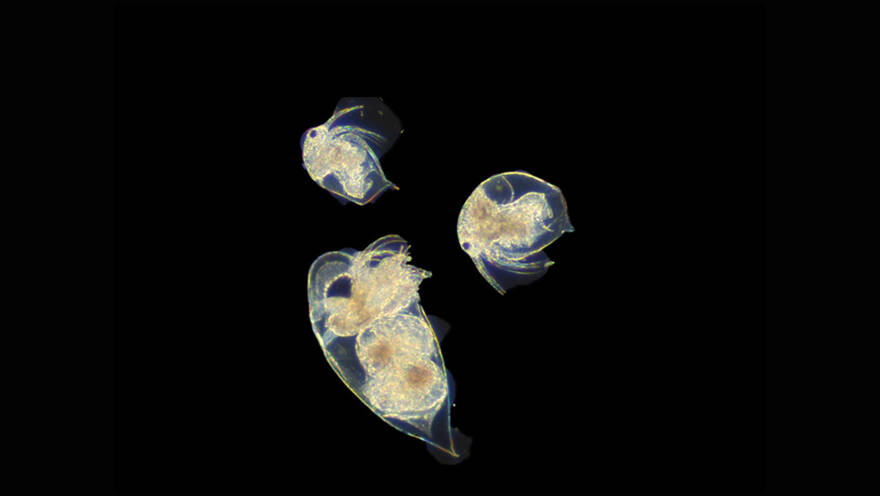
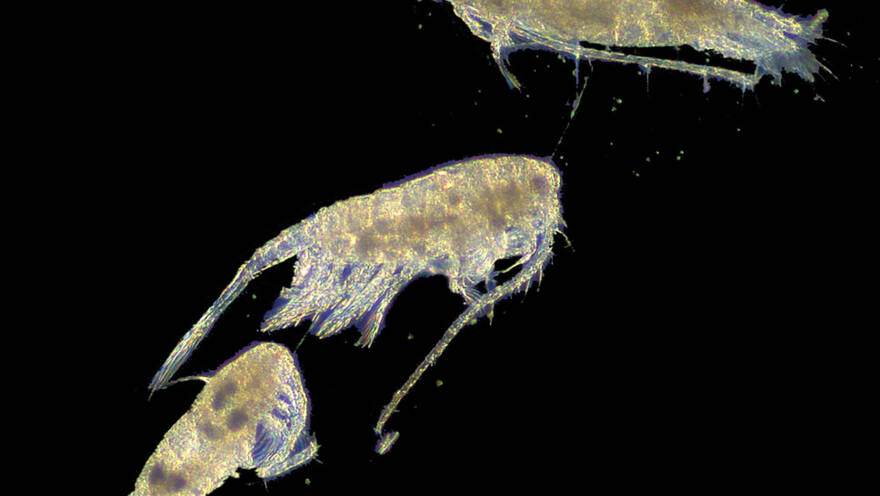
In a healthy sea, zooplankton fulfill their role
Zooplankton play a vital role: they consume phytoplankton and are then eaten themselves. In doing so, zooplankton transfer the energy and matter stored in phytoplankton to the next level of the food web.
In spring, the water is dominated by small zooplankton species such as rotifers. Larger species like copepods appear later as the water warms.
Zooplankton never consume all the phytoplankton. Some phytoplankton die and sink to the bottom, where microbes break them down. This process is part of the normal nutrient cycling in a marine ecosystem. In a healthy ecosystem, everything functions smoothly without major disruptions.
In an eutrophicated sea, a large portion of the phytoplankton remains uneaten
In an eutrophicated sea, phytoplankton are abundant. As planktonic algae increase, the zooplankton that feed on them also become more numerous. However, zooplankton face a challenge: eutrophication alters the species composition of phytoplankton, making them less nutritious for zooplankton.
This shift in phytoplankton species affects the zooplankton community as well. Ciliates, rotifers, and small water fleas become more common, and the average size of zooplankton decreases. As a result, a large portion of the phytoplankton remains uneaten and sinks to the seafloor. There, decomposition activity intensifies, consuming oxygen from the bottom layers.
did you know?
The Baltic Sea is home to over 150 species of zooplankton!
Many factors influence the composition of zooplankton communities, including water temperature and salinity.
Zooplankton migrate vertically through the water column. They follow a strict daily routine: descending in the morning and rising in the evening. This behavior helps reduce their chances of being seen and eaten.
Fish species composition
Eutrophication affects the composition of fish species
Perch thrives in a healthy sea. Roach benefits from eutrophication, as it can cope well even in murky waters.
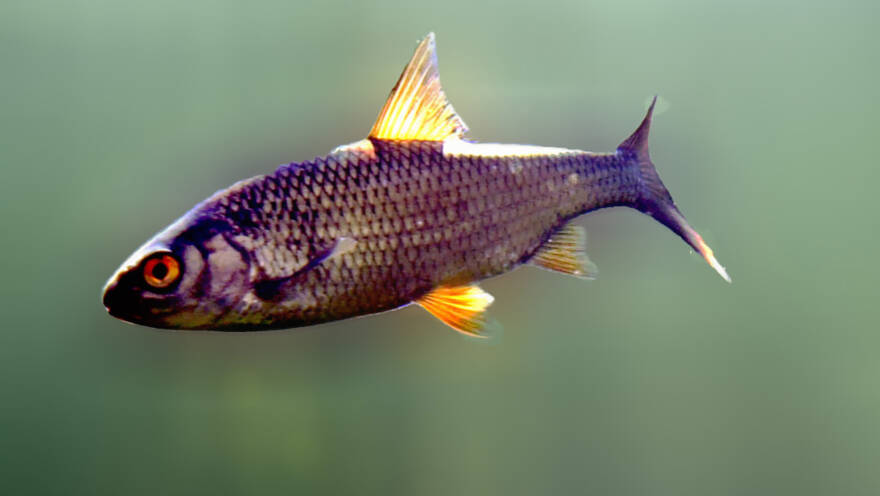
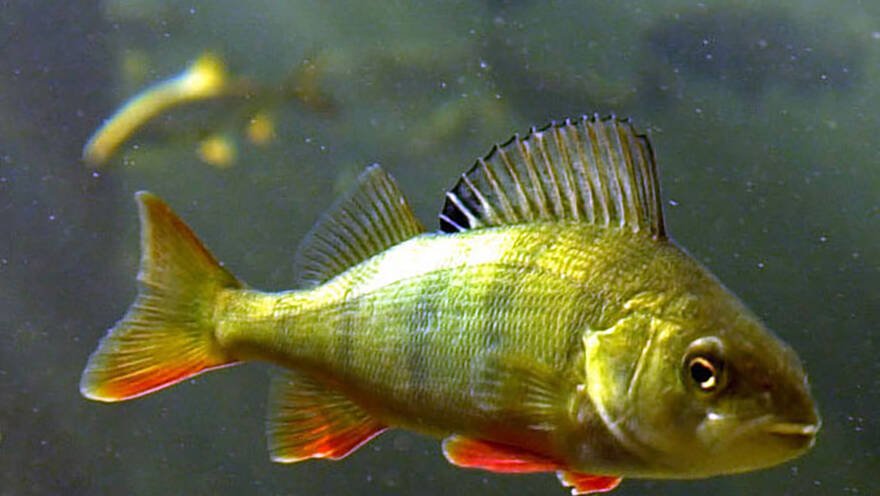
In a healthy sea, fish have access to high-quality food
Zooplankton are an important food source for herring and many other fish species. Large zooplankton species, in particular, are considered high-quality fish food. Some fish species find their nourishment in coastal zones, especially among bladderwrack beds. These underwater thickets also provide shelter for fish fry.
In a healthy sea, zooplankton consist of species of various sizes, including many large ones. Coastal bladderwrack vegetation is lush and thriving, and oxygen depletion does not trouble the fish.
In such a marine environment, many different fish species can find everything they need: suitable breeding and hiding places, along with nutritionally rich food. As a result, the fish community remains diverse, and no single species dominates at the expense of others.
The fish community in an eutrophicated sea undergoes changes
Eutrophication increases the number of fish, but it also brings other changes. It alters the living conditions and food availability for fish. As the sea becomes eutrophicated, the zooplankton community shifts toward smaller species, which are less nutritious for fish than larger ones. Coastal bladderwrack beds disappear as the water becomes murkier, and bottom-dwelling animals vanish from oxygen-depleted seabeds.
All of this affects fish populations. Cyprinid fish, such as roach, become more abundant because their fry can find food more easily in turbid waters than other species. Zander also benefits from eutrophication. In contrast, pike and perch suffer, as hunting becomes more difficult in murky conditions. Eutrophication also negatively impacts flounder, which lives on the seabed.
Cod is a species adapted to salty seas and occasionally migrates to Finnish marine areas. However, it cannot reproduce in the southern Baltic Sea if the salty bottom waters lack oxygen.
did you know?
The condition of fish populations is regulated by both eutrophication and fishing. Minimum size limits are often set for prey fish to ensure they have a chance to reproduce before being caught.
Salmon and sea trout are supported in returning to their spawning grounds: fishing for them in the sea is restricted, fish passages are built to help them bypass dam structures, and the riverbeds of their spawning areas are restored.
On the seafloor
Oxygen is essential on the seafloor
In a healthy sea, there is enough oxygen on the seafloor to support marine life. In an eutrophicated sea, large amounts of algal biomass sink to the bottom, where microbes decompose it and consume all the available oxygen.
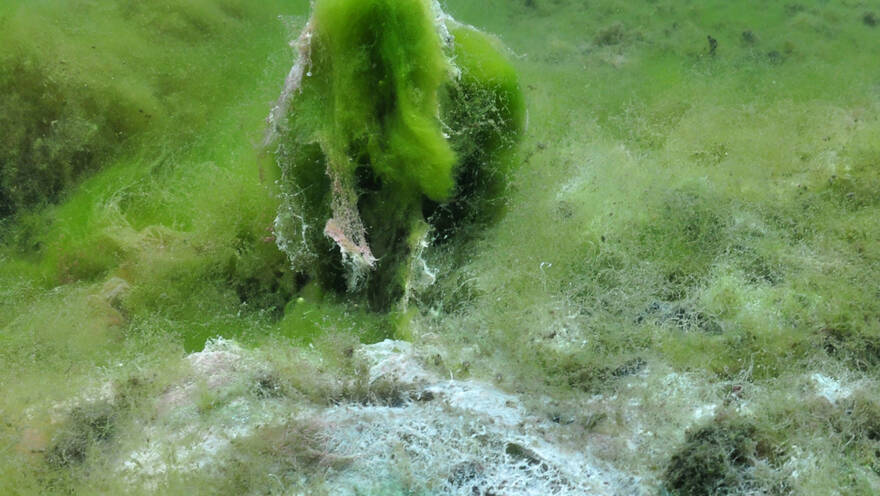
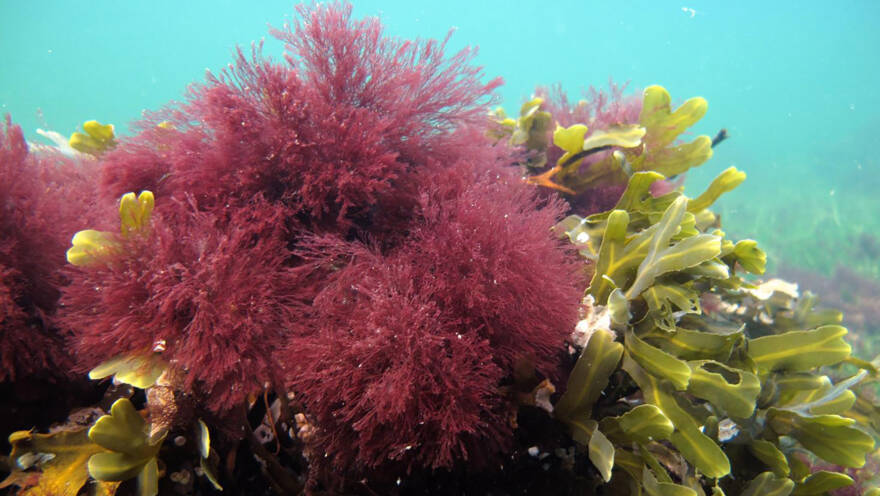
On the seafloor of a healthy sea, oxygen remains sufficient for a long time
In spring, when phytoplankton are abundant, most of them remain uneaten. Dead algal cells sink to the seafloor, becoming food for bottom-dwelling animals and decomposer microbes. These microbes release the nutrients bound in the algal cells back into the water in a form usable by algae.
Decomposer microbes respire and consume the oxygen reserves in the water. However, oxygen is used up so slowly that fresh, oxygen-rich water usually reaches the seafloor before all the oxygen is depleted.
In a healthy sea, the seafloor typically has sufficient oxygen. Under oxygen-rich conditions, some nutrients bind to the sediment. A well-oxygenated seafloor also provides favorable living conditions for benthic animals.
In an eutrophicated sea, oxygen on the seafloor is quickly depleted
In an eutrophicated sea, masses of phytoplankton and filamentous algae accumulate, and large amounts of dead organic matter sink to the seafloor. Decomposer microbes on the bottom work intensively, rapidly consuming the water’s oxygen reserves. Oxygen levels drop and may be completely depleted, especially in deep areas of eutrophicated regions and sheltered coastal zones beneath thick mats of filamentous algae.
The release of nutrients bound in bottom sediments back into the water is called internal loading. This internal marine process cannot be equated with external loading, which introduces new nutrients into the sea. Instead, internal loading re-releases nutrients previously brought in by external sources.
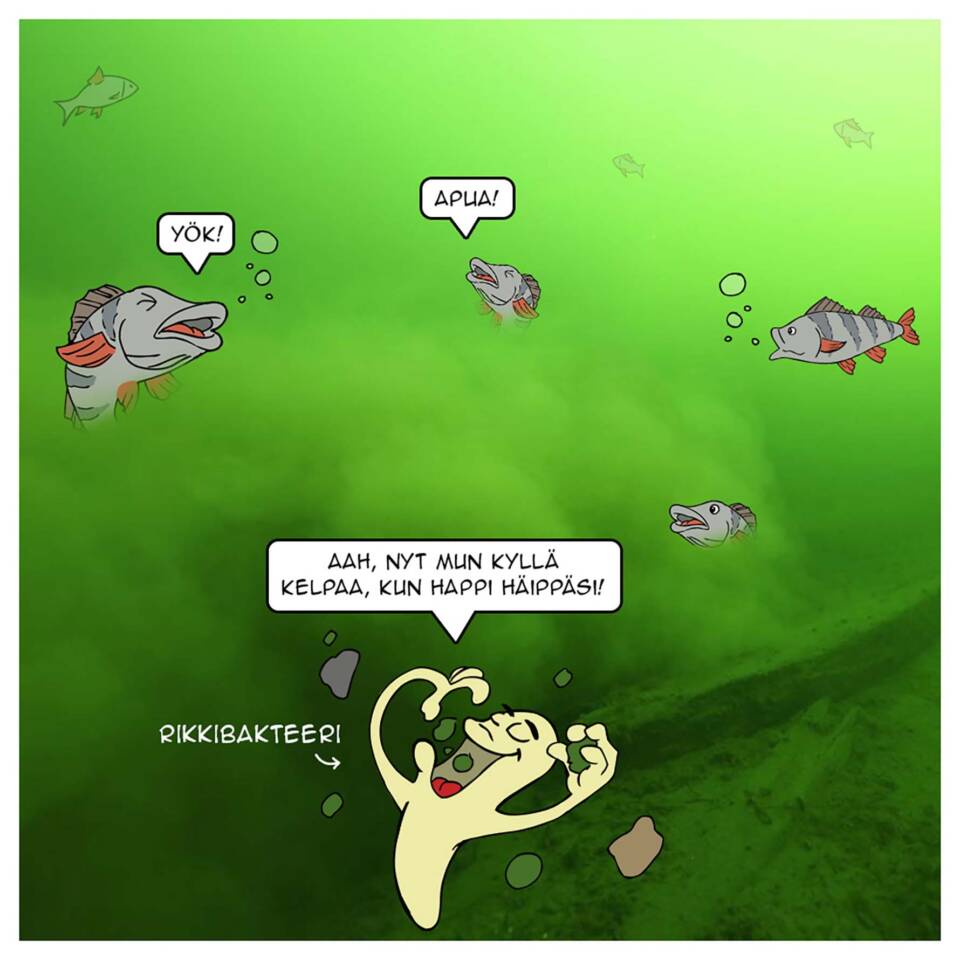
Eutrophication increases primary production and the amount of organic matter settling on the seafloor, which accelerates microbial decomposition and thereby raises oxygen consumption.
When oxygen runs out, decomposition begins to produce toxic hydrogen sulfide. This repels fish and kills benthic animals. As bottom sediments become anoxic, their ability to bind phosphorus weakens. Nutrients then start to leak from the sediment back into the water, further worsening eutrophication.
Along the coast of the Gulf of Finland and in the depressions of the archipelago seabed, oxygen depletion occurs in some areas during summer. Oxygen replenishment from the surface is blocked because the so-called thermocline separates the warm surface water from the colder, deeper layers. In autumn, the thermocline disappears and the water layers mix.
Sisältö vaatii markkinointievästeiden sallimisen. Ole hyvä ja salli evästeet katsoaksesi sen.
In the main basin of the Baltic Sea, also known as the Baltic Sea Proper, there is a permanent halocline—a layer where salinity changes sharply. Here, lighter, low-salinity water rests atop heavier, saltier water. The layers do not mix, not even in autumn. The deep, salty bottoms receive oxygen only when salty, oxygen-rich water flows in from the North Sea. However, these saltwater pulses occur so infrequently that they are insufficient to keep the deep areas of an eutrophicated sea oxygenated.
On the shores
Life is bustling in the coastal zone
In a healthy sea, diverse habitats alternate according to water depth. In an eutrophicated sea, filamentous algae and common reed thrive and spread widely, reducing species diversity.
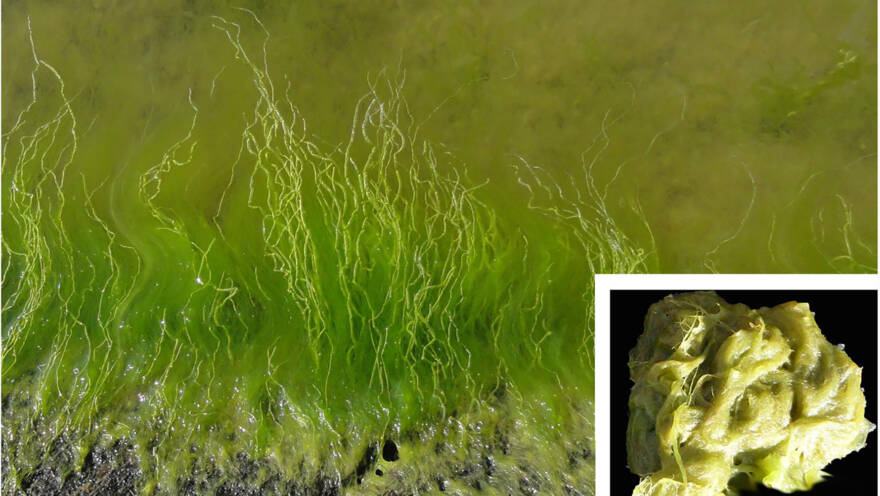
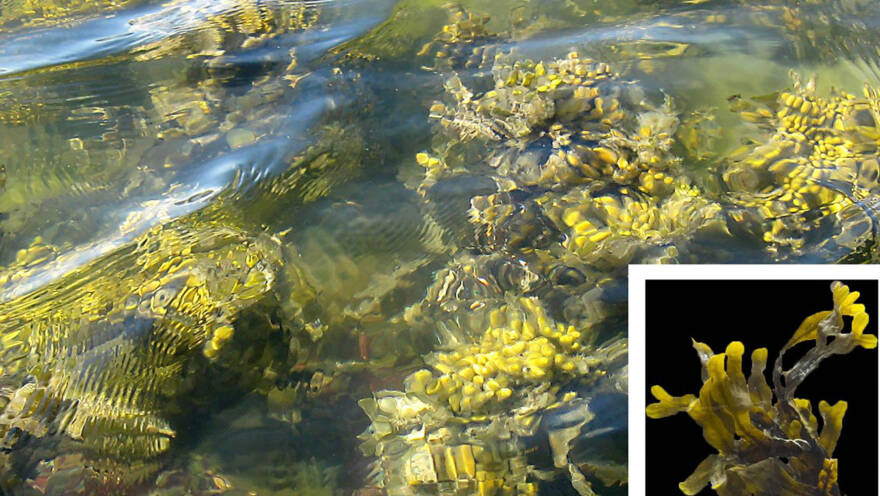
A thriving coastal vegetation is home to many organisms
The shores of the Baltic Sea host a variety of habitats: hard rocky areas as well as soft sandy or muddy bottoms. The most important primary producers in the coastal zone are large algae and aquatic plants anchored to the seabed.Soft shores are occasionally bordered by dense stands of common reed. At the base of the reeds, in a sheltered underwater jungle, live fish, insects, and other invertebrates.
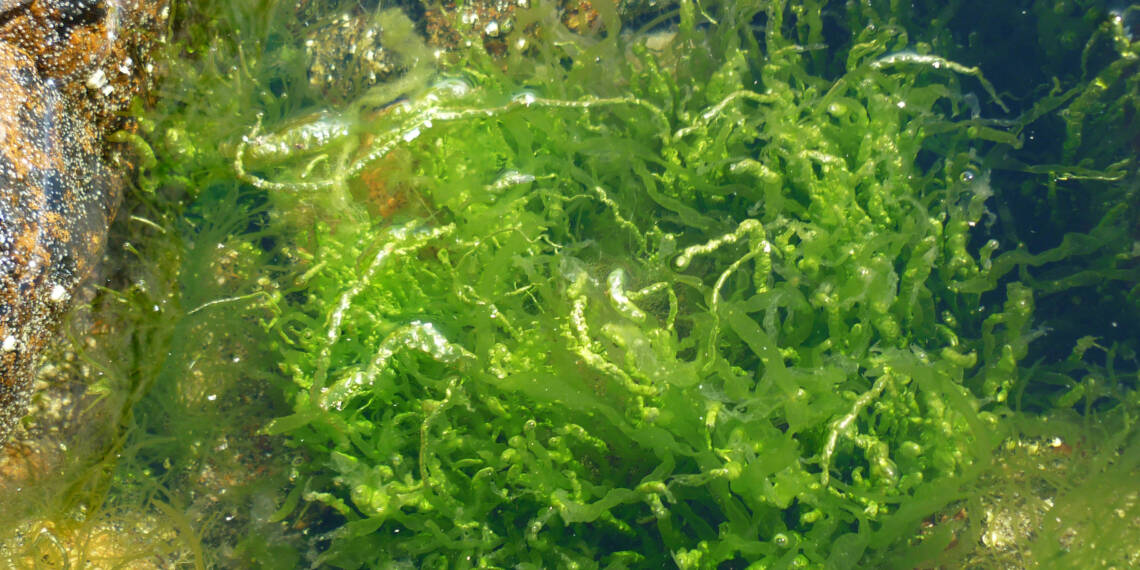
On hard rocky bottoms near the waterline, green filamentous algae flourish during summer. In winter, ice tears away the old algae, but in spring they begin to grow again. Among the filaments live snails and the juvenile stages of other invertebrates. As they mature, these animals move to deeper areas where perennial algae, such as bladderwrack, grow. Bladderwrack beds are characteristic of healthy marine rocky bottoms. They shelter many times more organisms than the short-lived filamentous algae.
In the shallow sandy bottoms of a thriving sea, the grass-like eelgrass thrives. This aquatic plant forms extensive meadows in places, providing habitat for many fish and invertebrates.
On eutrophic shores, organisms suffer
The Finnish coastline is predominantly shallow. The effects of eutrophication are more pronounced on shallow shores than in the open sea.
On eutrophic soft-bottom shores, common reed spreads extensively. Its expansion is further aided by the fact that cows and sheep no longer graze along the shores. Reed beds displace other species, leading to a decline in shoreline biodiversity.
Underwater eelgrass meadows on shallow sandy bottoms deteriorate as plankton blooms cloud the water. The decline of eelgrass makes life more difficult for numerous species.
On eutrophic rocky shores, thick mats of filamentous algae grow and the seabed becomes slimy. Bladderwrack, which lives deeper, suffers from a lack of light due to murky water and overgrowth of epiphytic algae. As bladderwrack diminishes, the diverse community living among it also declines. Even juvenile fish lose their sheltered habitat.
did you know?
Bladderwrack is a key species along the Baltic Sea coast. This means that many species depend on bladderwrack beds.
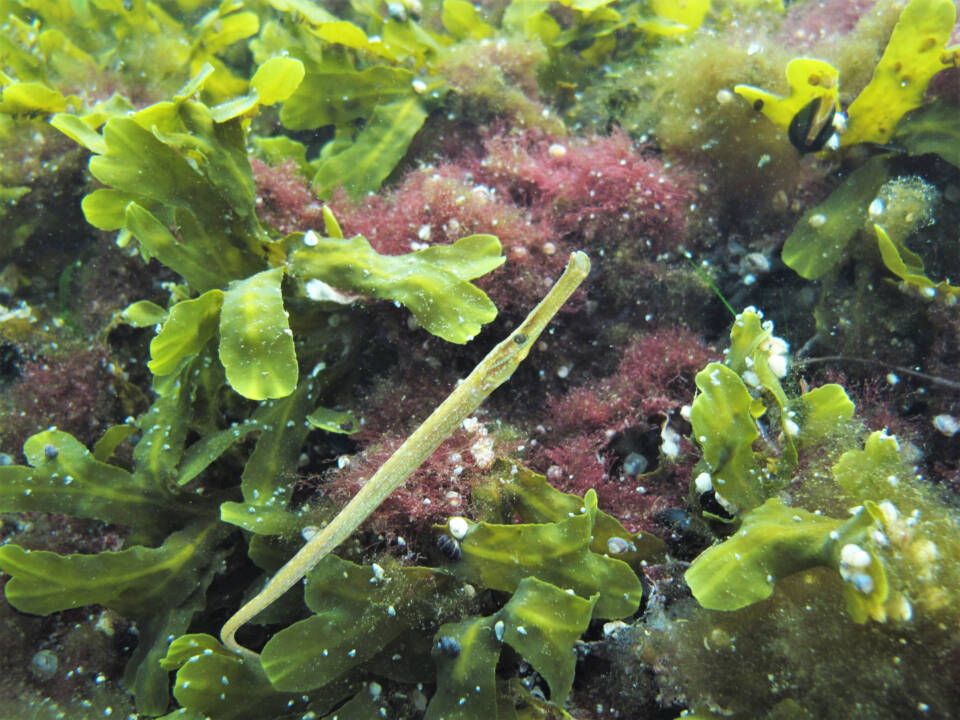
The straight-nosed pipefish, a relative of the seahorse, is an exotic sight in the Baltic Sea. It thrives in the shelter of both eelgrass and bladderwrack.
Test your knowledge: Nutrients (in Finnish)(siirryt toiseen palveluun)