The Diversity of Zooplankton Revealed Under the Microscope
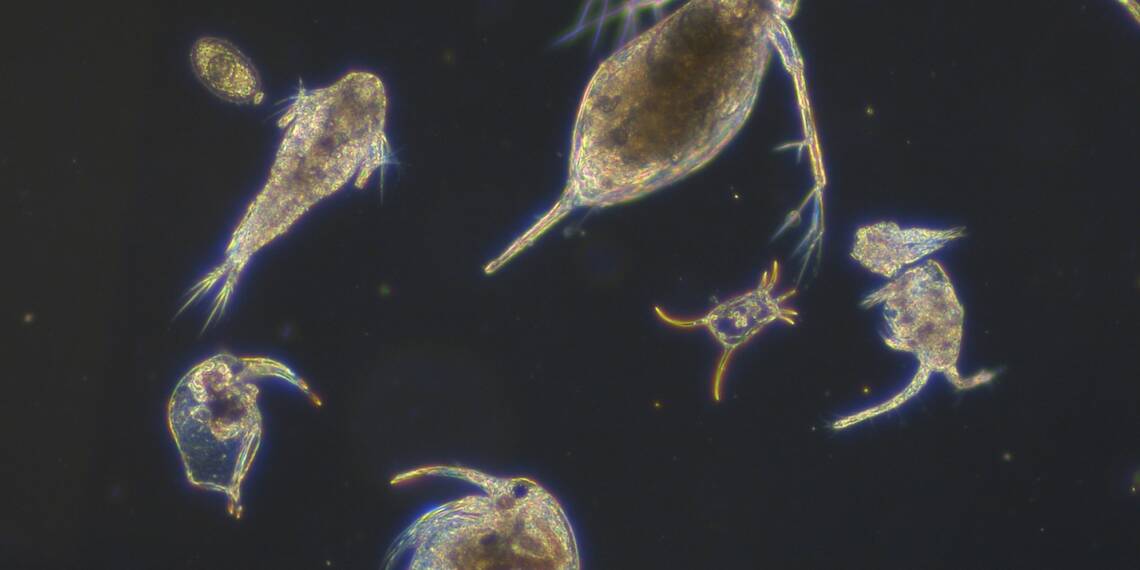
Zooplankton is a collective term for microscopic animals that live suspended in the water column. The largest zooplankton species can just barely be seen with the naked eye, but their true diversity is revealed through a microscope. In the zooplankton image gallery, you can explore the smallest animals of the Baltic Sea!
The species in the Baltic Sea are adapted to brackish water and tend to be small compared to oceanic species. The most important zooplankton groups in our marine area are copepods (Copepoda), water fleas (Cladocera / Diplostraca), rotifers (Rotifera), and ciliates (Ciliophora).
The images in the gallery were produced as part of the Finnish Environment Institute’s zooplankton monitoring program. When using the images, the photographer’s name must be included alongside the image. The photographer’s name and additional information about the species are displayed when the image is clicked.
Copepods Are the Largest Zooplankton Group in the Baltic Sea
Copepods (Copepoda) form the largest and most important group of zooplankton in our marine area.
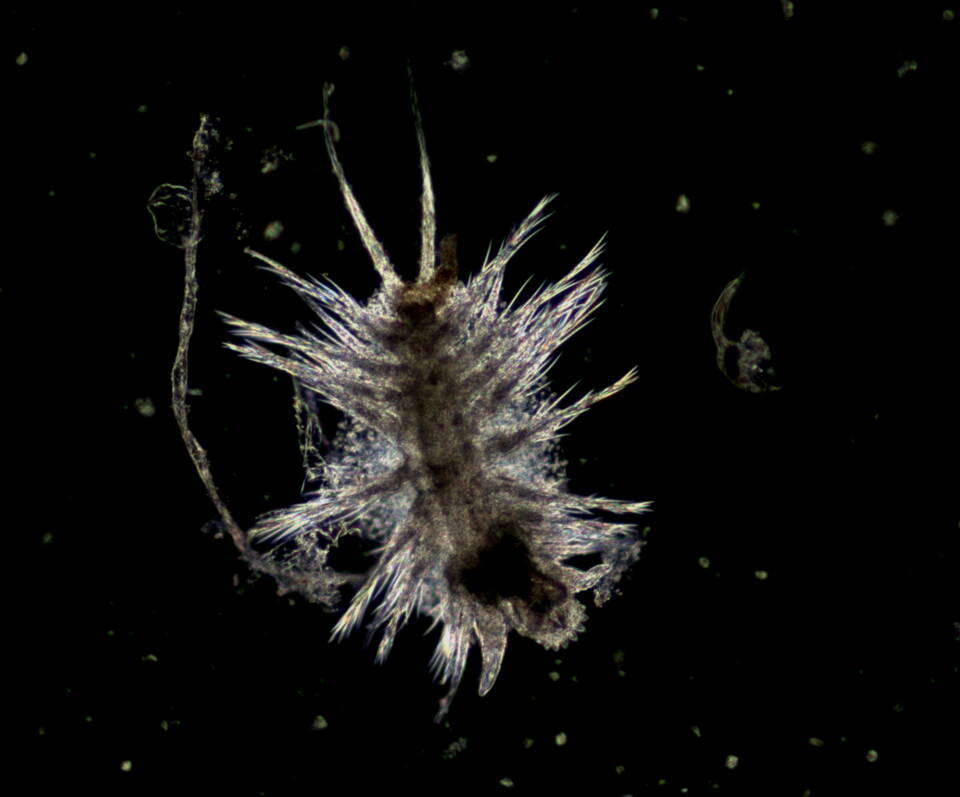
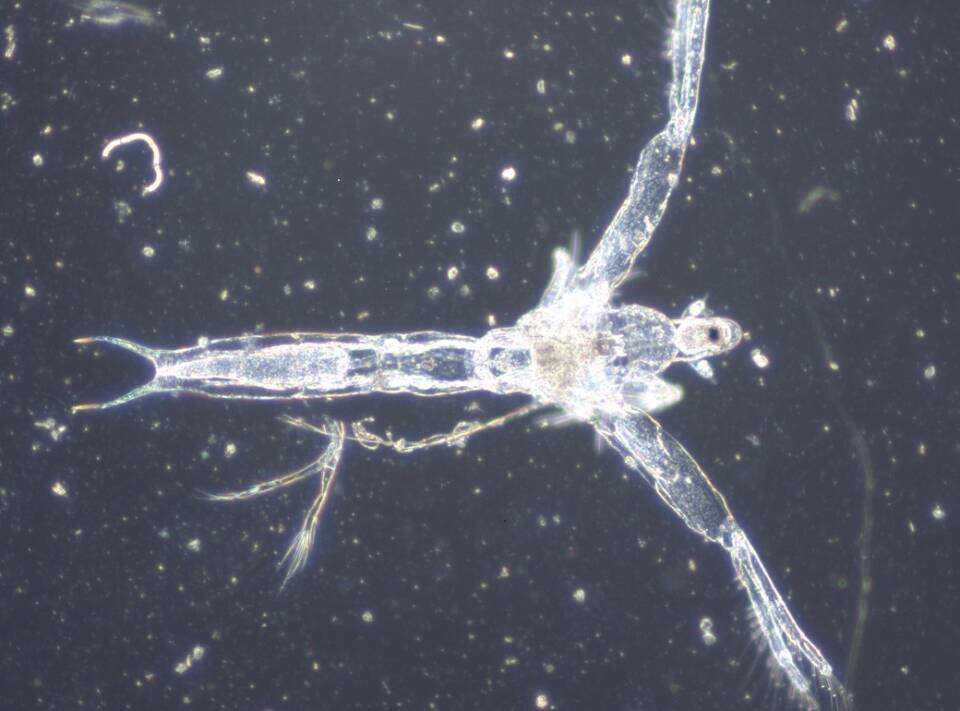
Copepods belong to the subclass of crustaceans (Crustacea) and undergo a complex metamorphosis during their life cycle, which includes several larval stages (nauplius larvae) and copepodite stages. The appearance of copepods changes significantly between these stages. In the final stage, a sexually mature adult emerges. Adult copepods in the Baltic Sea are about 1 mm long, with the exception of the larger Limnocalanus macrurus.
Three copepod orders are found in the Baltic Sea plankton: Calanoida, Cyclopoida, and Harpacticoida. Of these, Calanoida—commonly known as calanoid copepods—are the most dominant in the Baltic Sea.
Calanoid copepods (Calanoida)
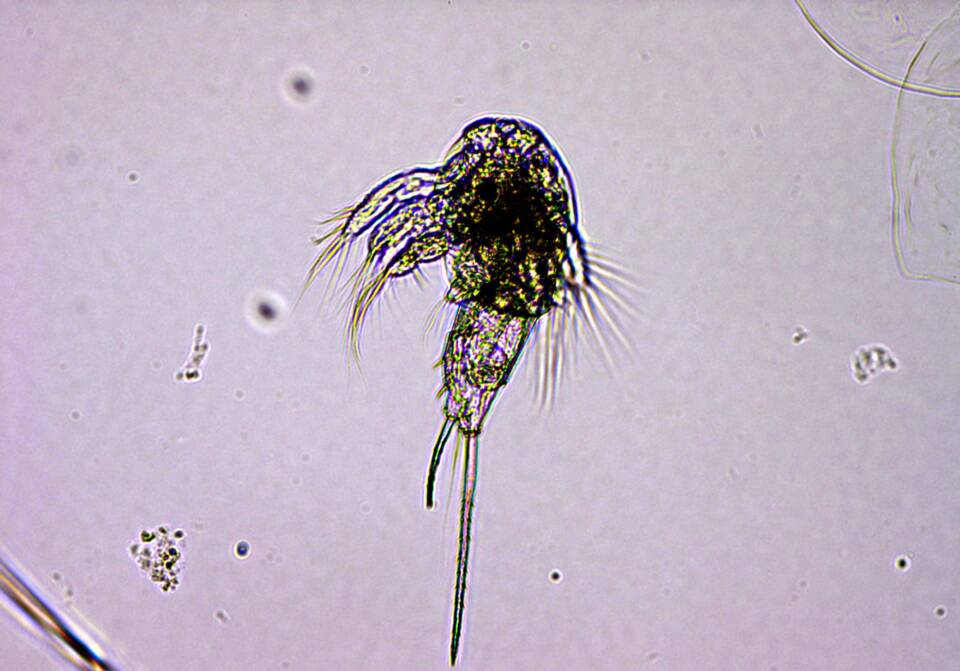
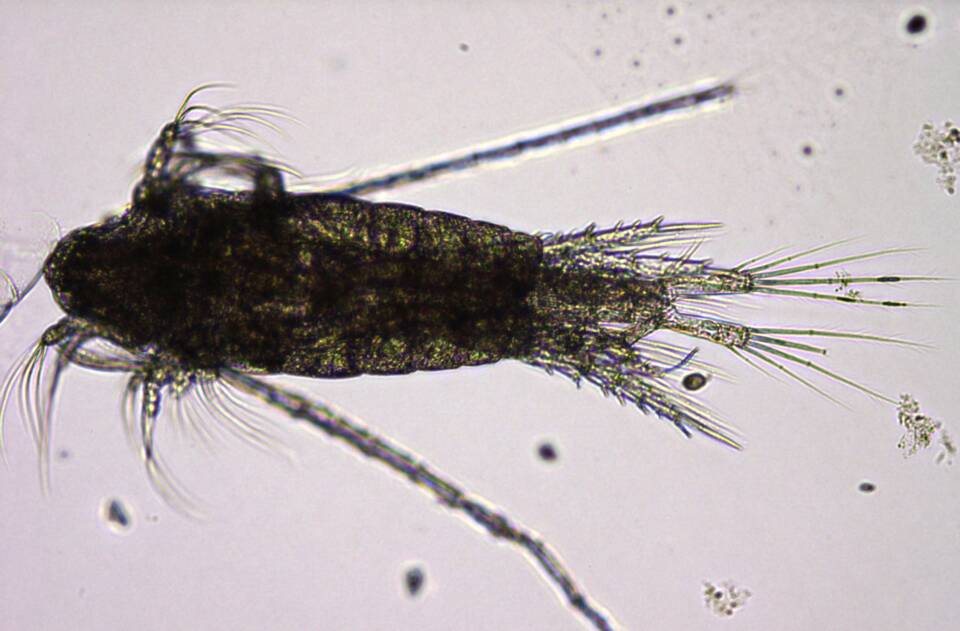
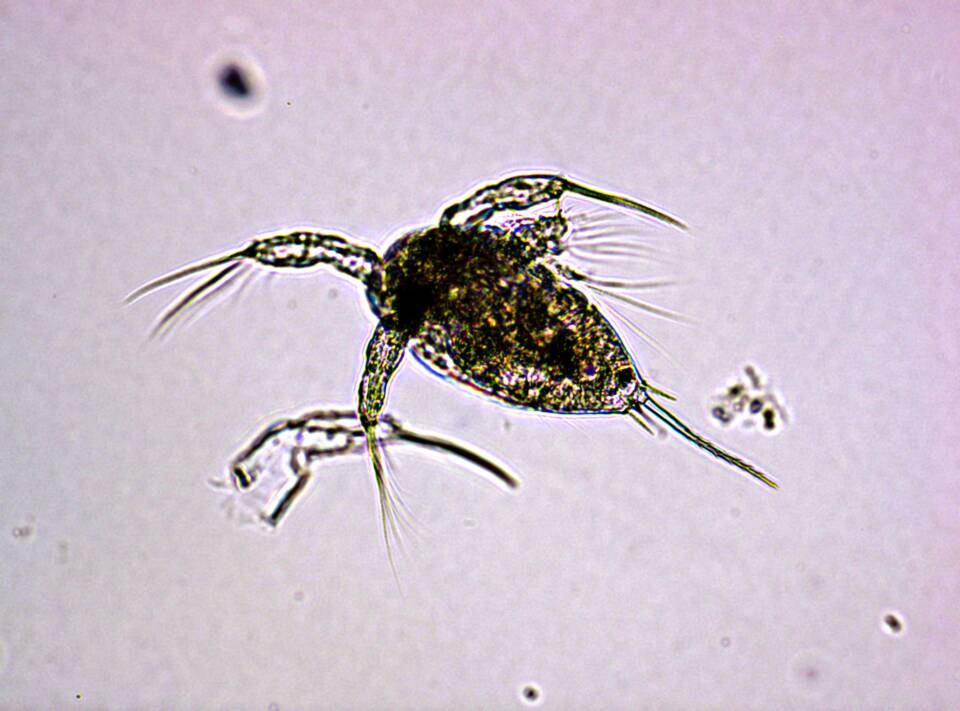
Calanoids, or calanoid copepods, are entirely planktonic species, and most of them are marine, meaning they survive only in saline water. Calanoids have an oval-shaped anterior body, and in adult individuals, the first antennae are longer than the front part of the body.
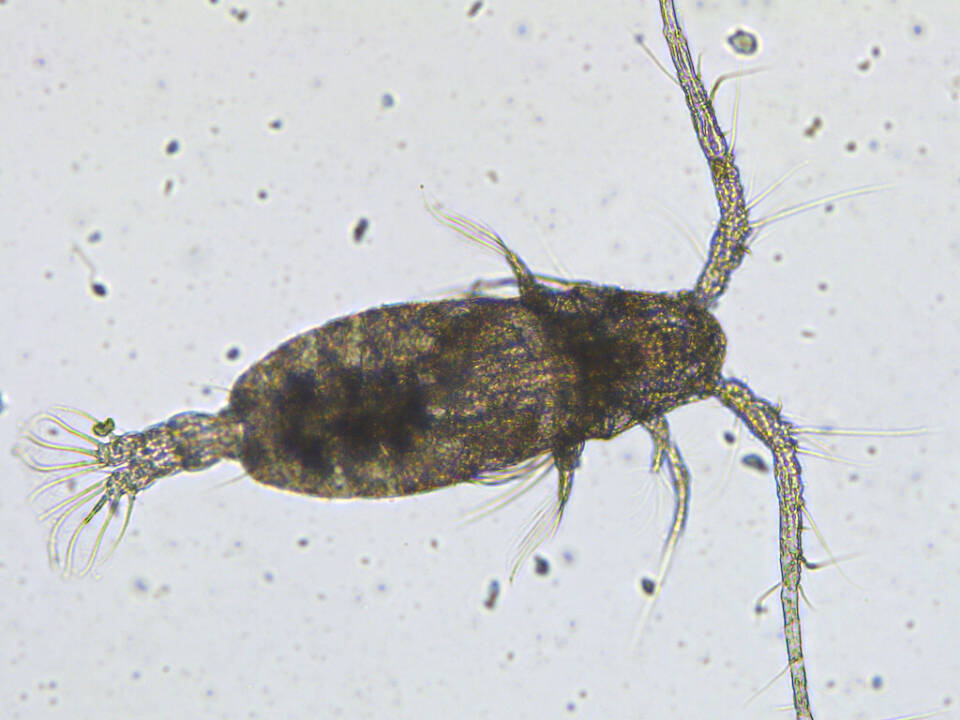
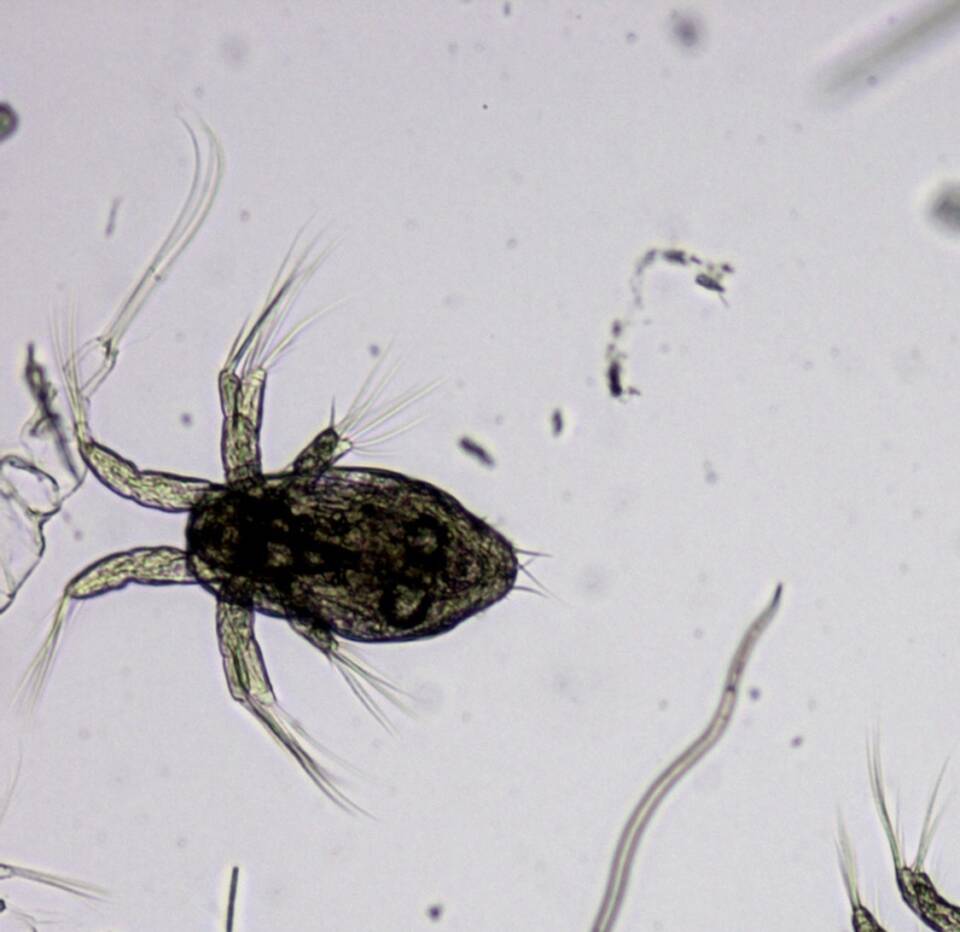
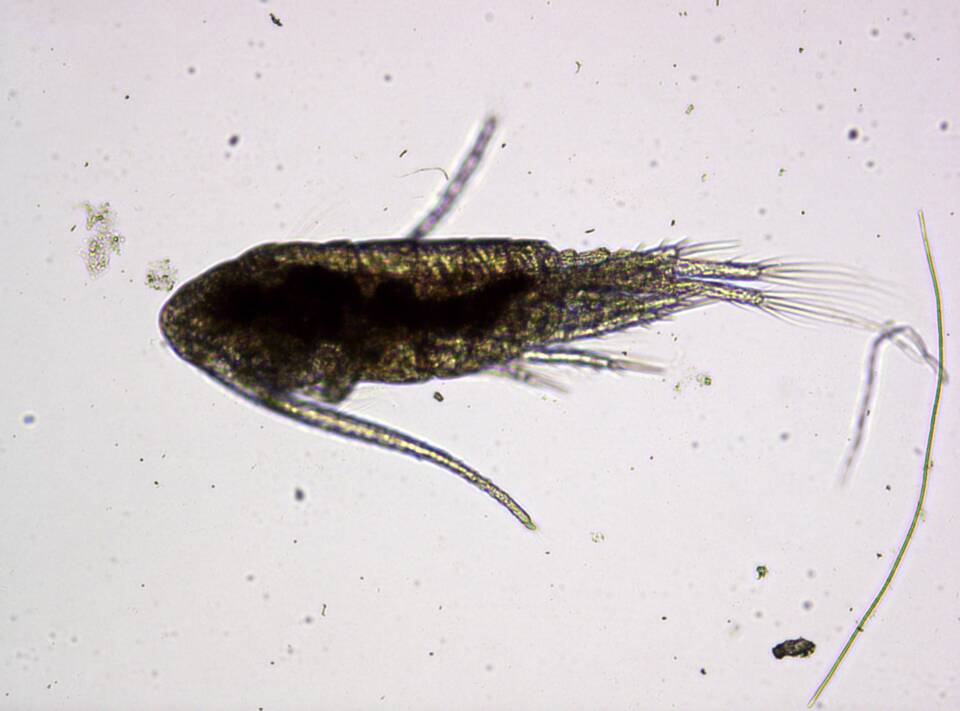
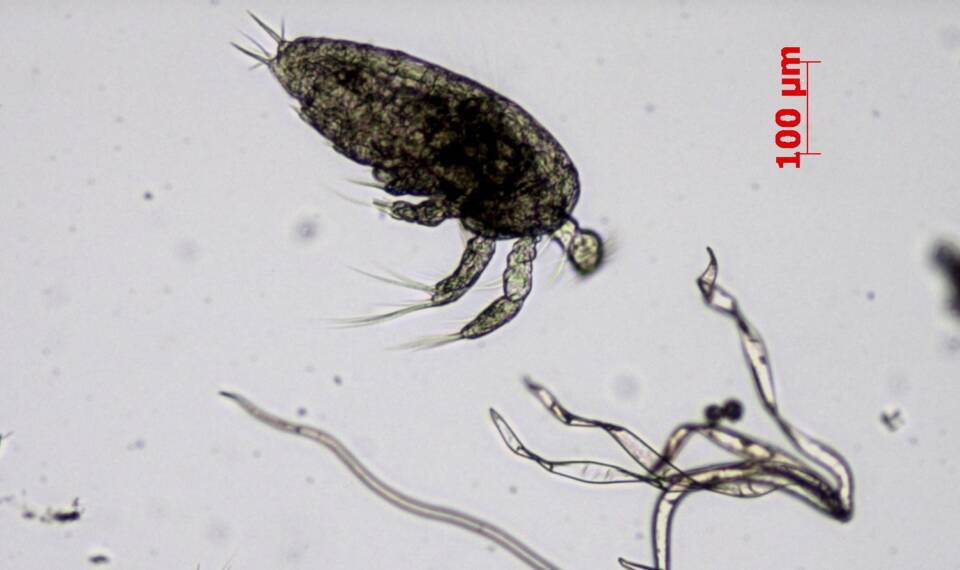
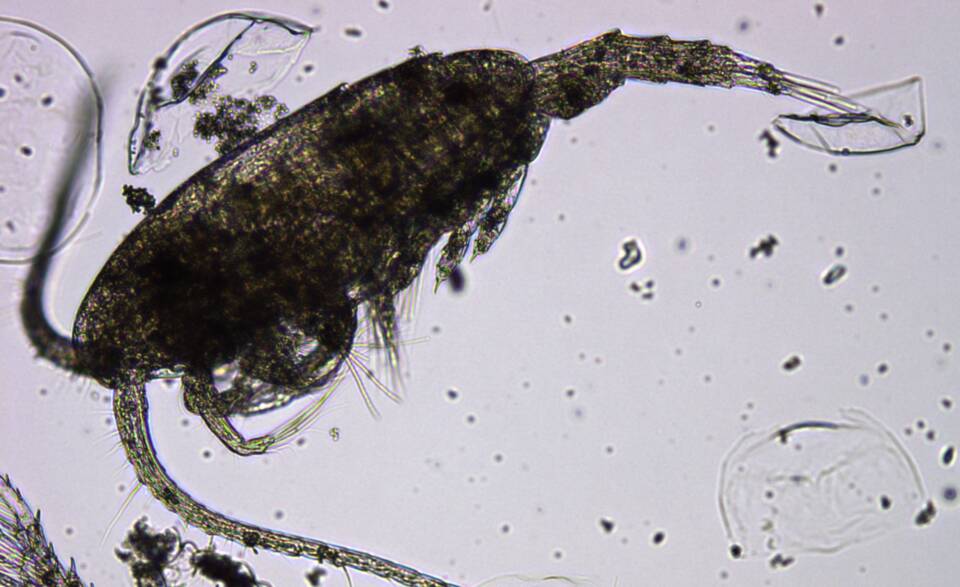

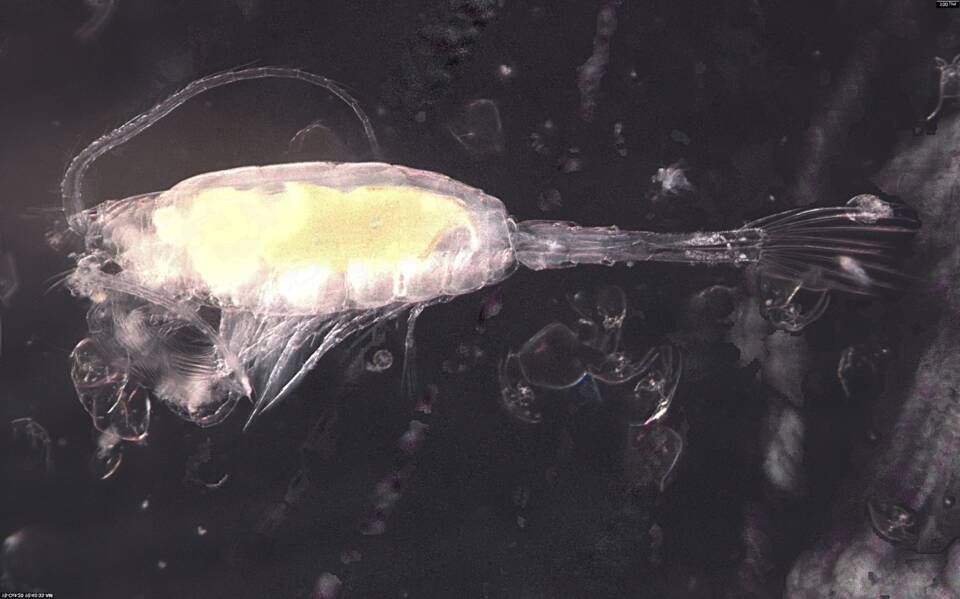
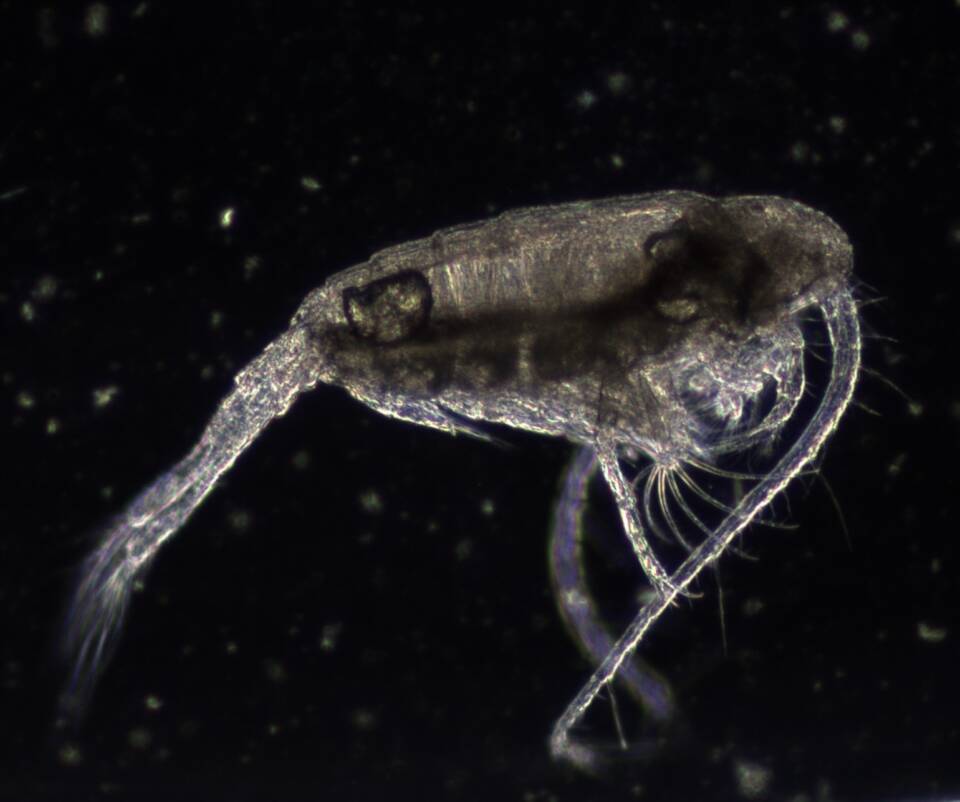
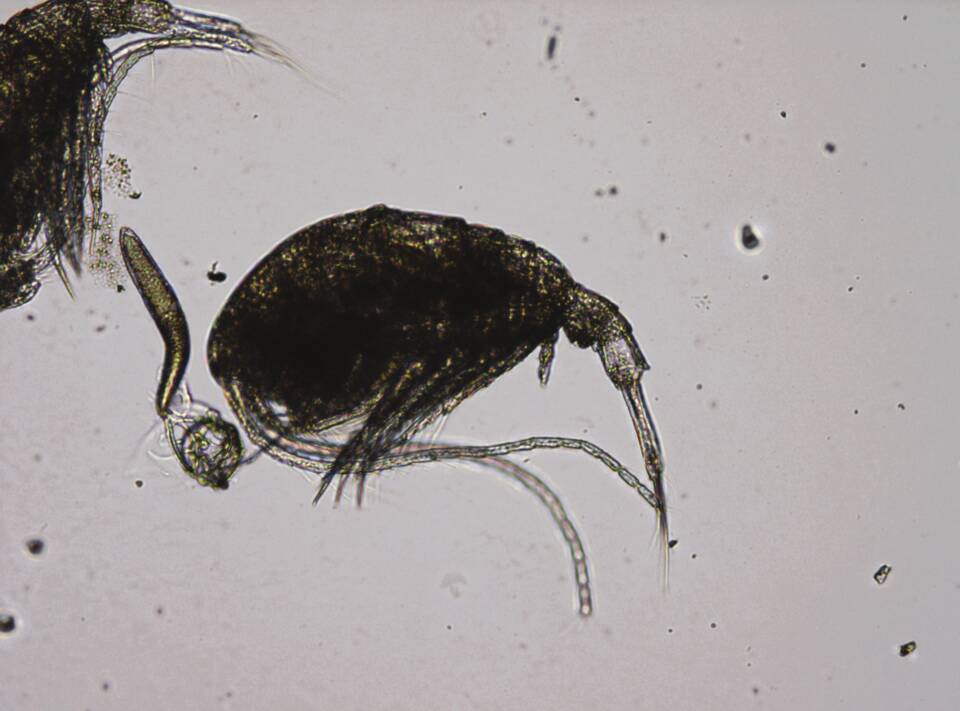
Cyclopoid copepods (Cyclopoida)
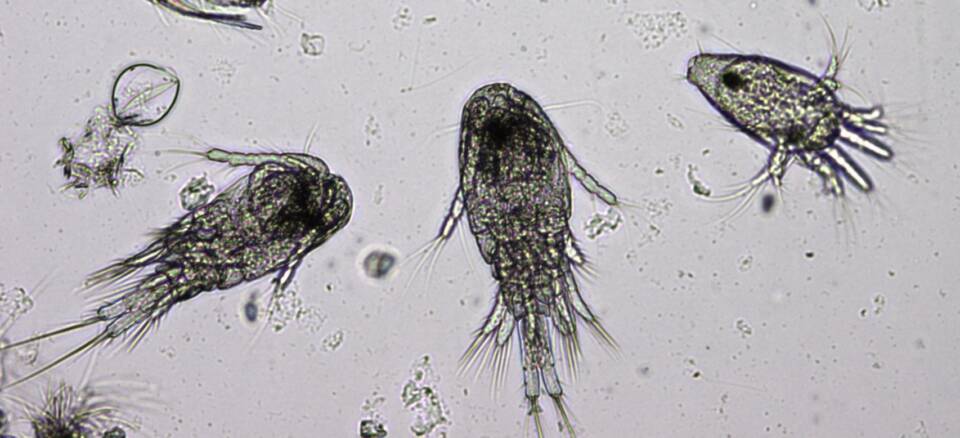
Species of the order Cyclopoida mostly live among aquatic vegetation in freshwater environments. Compared to calanoids, their anterior body is more rounded, and their first antennae are shorter. Cyclopoid copepods are primarily freshwater species.
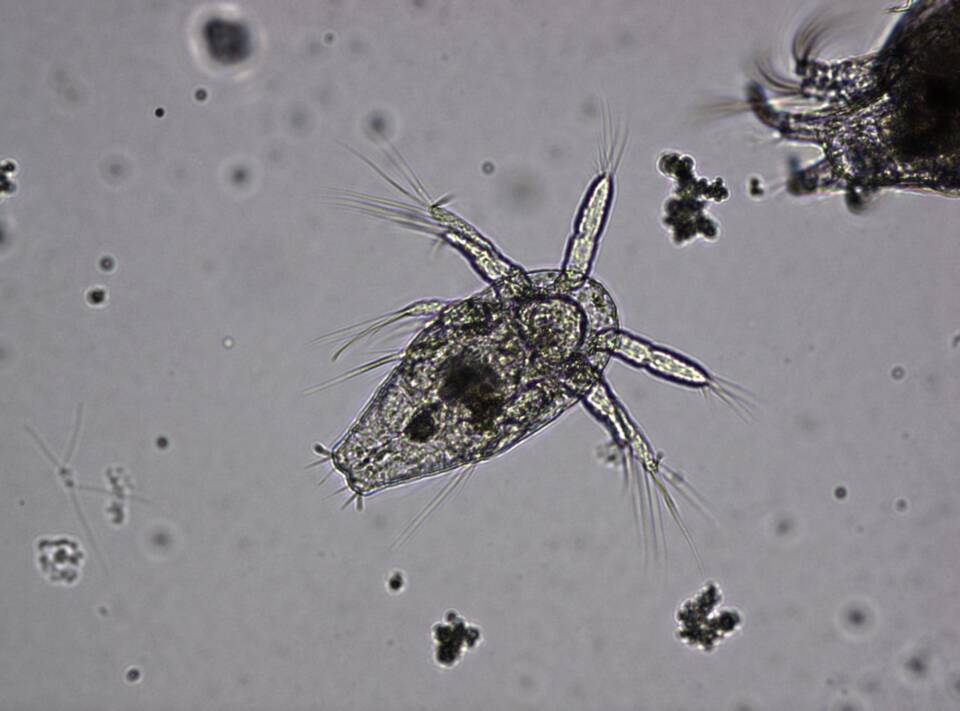
Harpacticoid copepods (Harpacticoida)
Species of the order Harpacticoida are mainly found near the sea bottom, but they are occasionally captured in plankton samples taken from the water column.
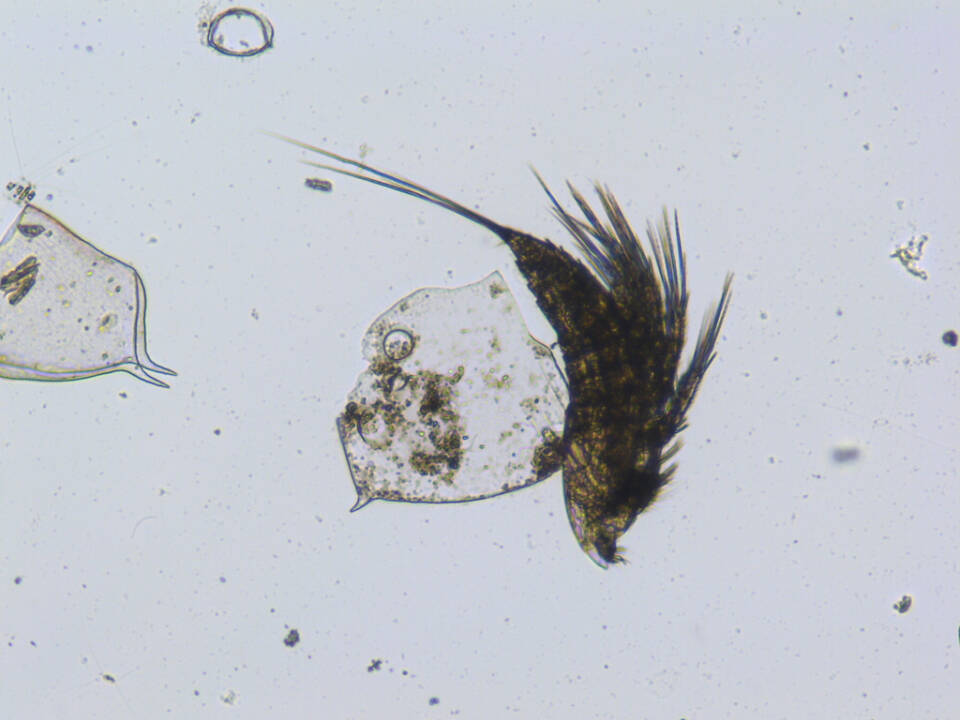
Water fleas are crustaceans
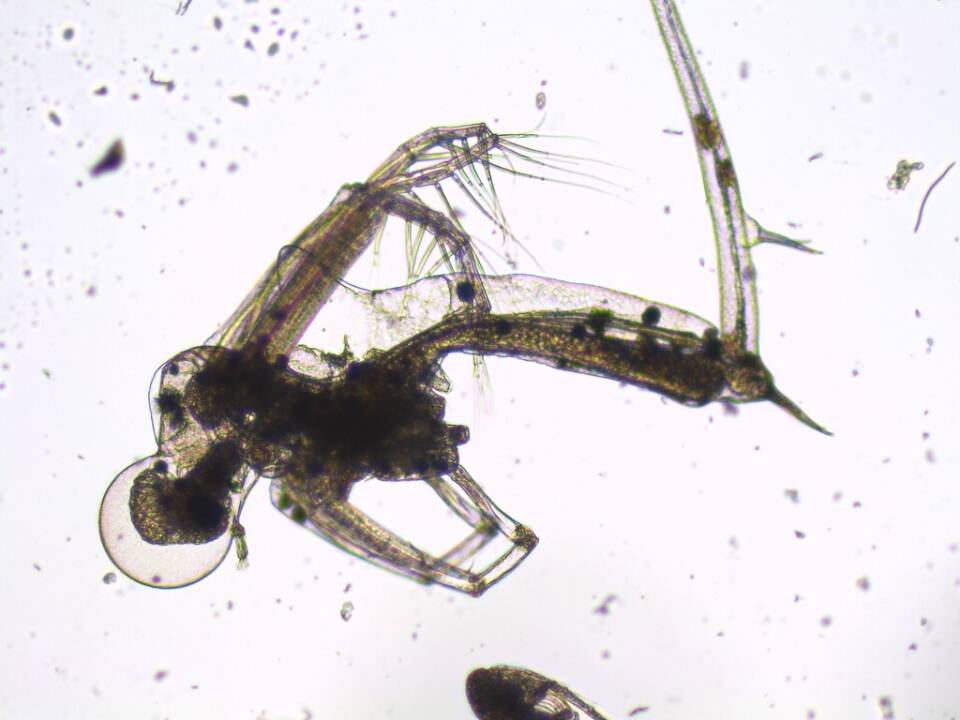
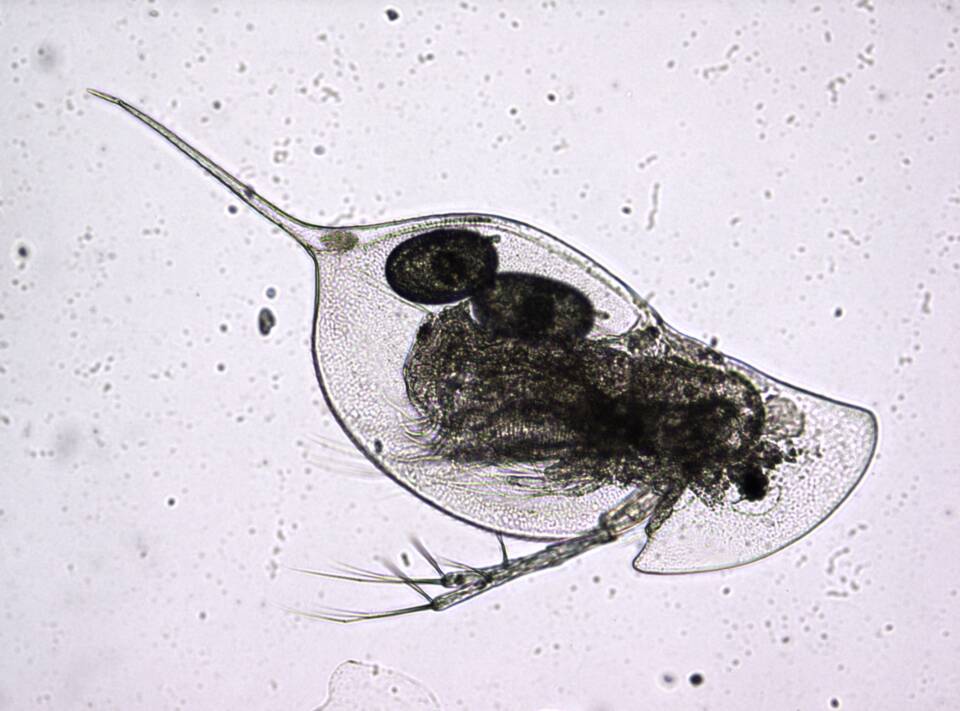
Water fleas (Cladocera/Diplostraca) belong to the crustaceans, just like copepods. Most species of water fleas inhabit freshwater environments, and among them are both herbivores and predators. Unlike copepods, water fleas develop without metamorphosis (with the exception of Leptodora kindti). Water fleas reproduce mainly asexually, through parthenogenesis, and males typically appear only in the autumn.

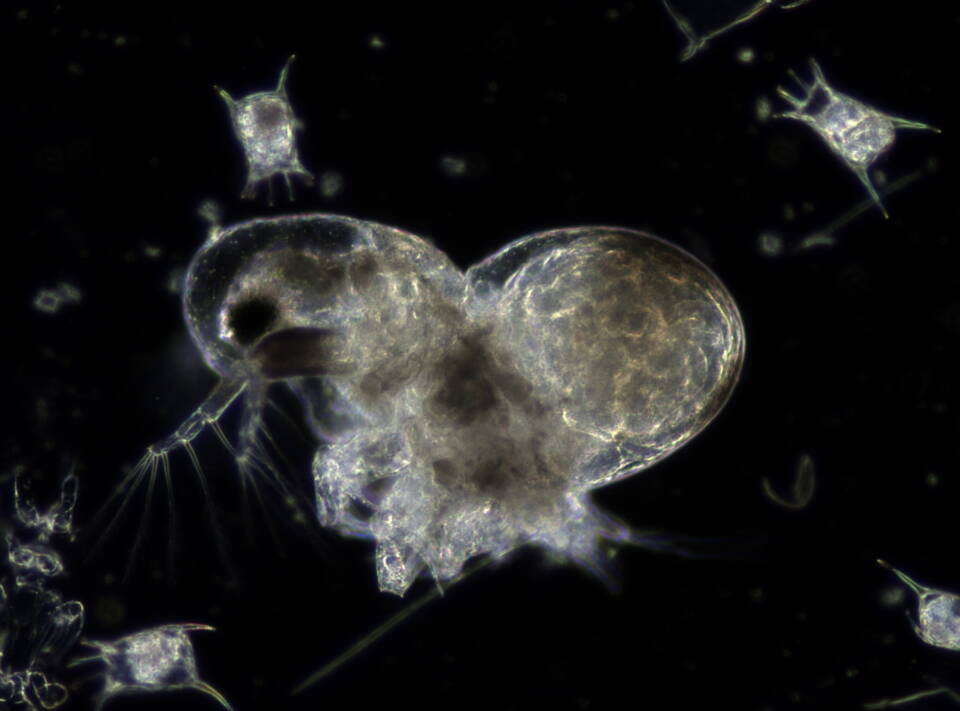
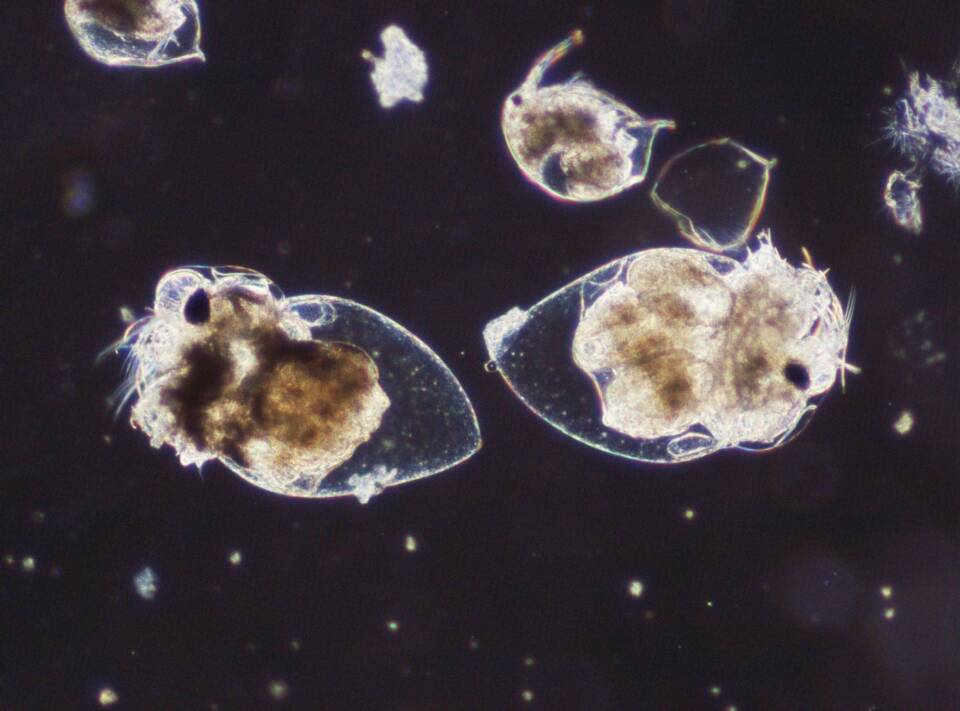
Rotifers (Rotifera)
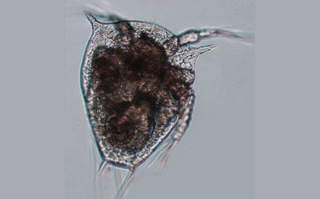
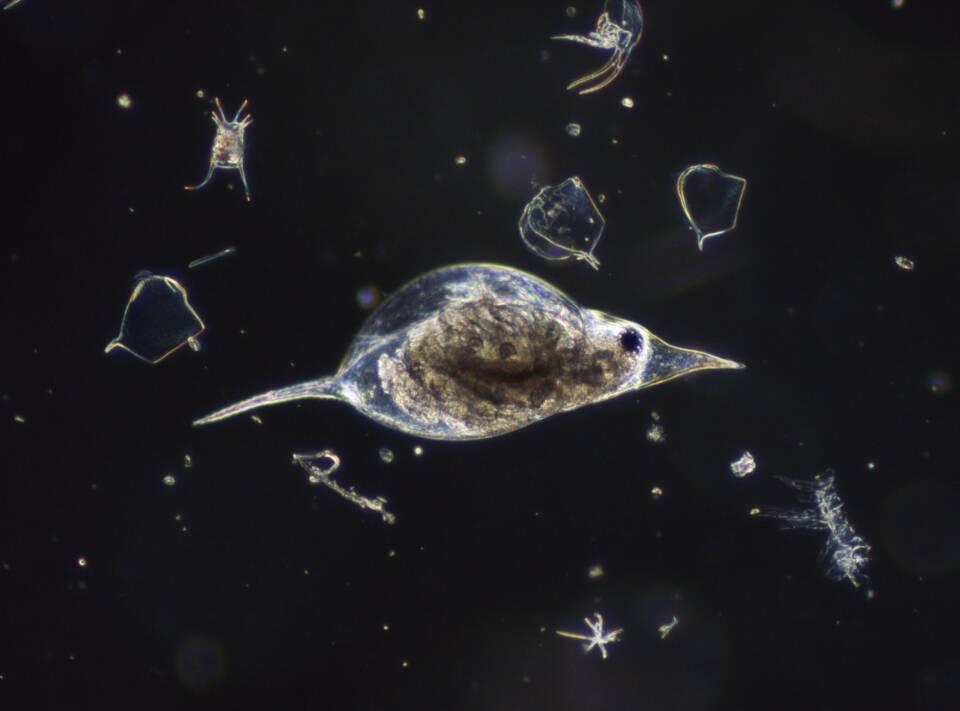
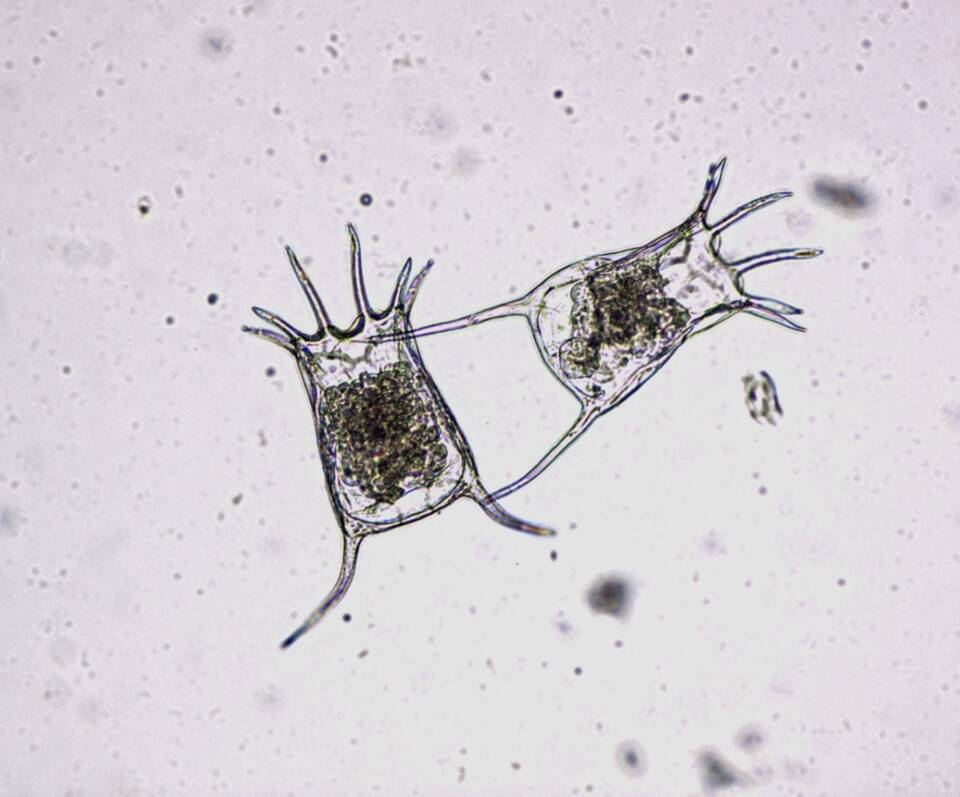
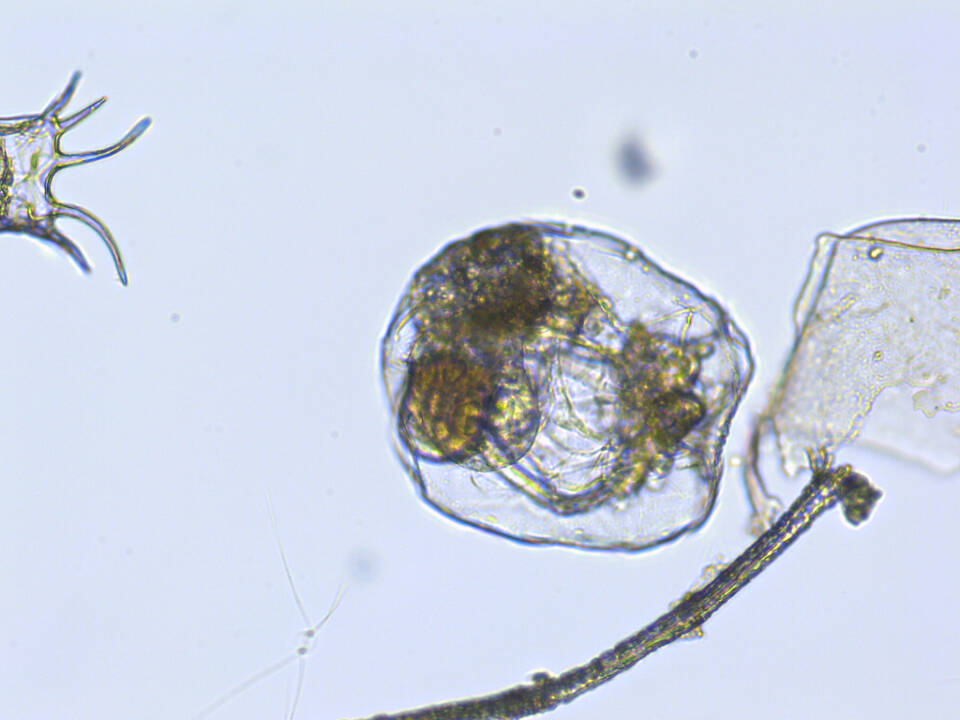
Rotifers are small organisms with highly variable appearances. In the Baltic Sea, species typically range in size from about 100 to 500 µm. Rotifers get their name from a rotating, wheel-like structure at their front end, which is covered in cilia. The spinning motion of these “wheels” creates a current that directs food toward the organism’s mouth. Rotifers filter feed on dead organic matter, algae, and other microscopic living organisms in the water, making them a crucial component of the aquatic food web. The most common rotifers found in the Baltic Sea are species of Keratella and Synchaeta.
Ciliates (Ciliophora)
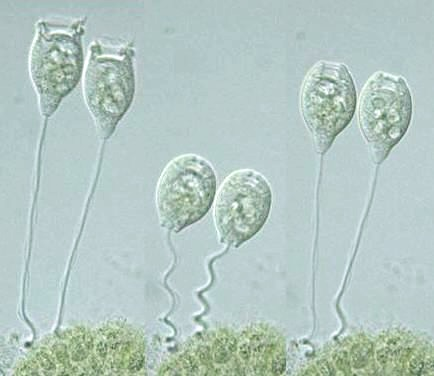
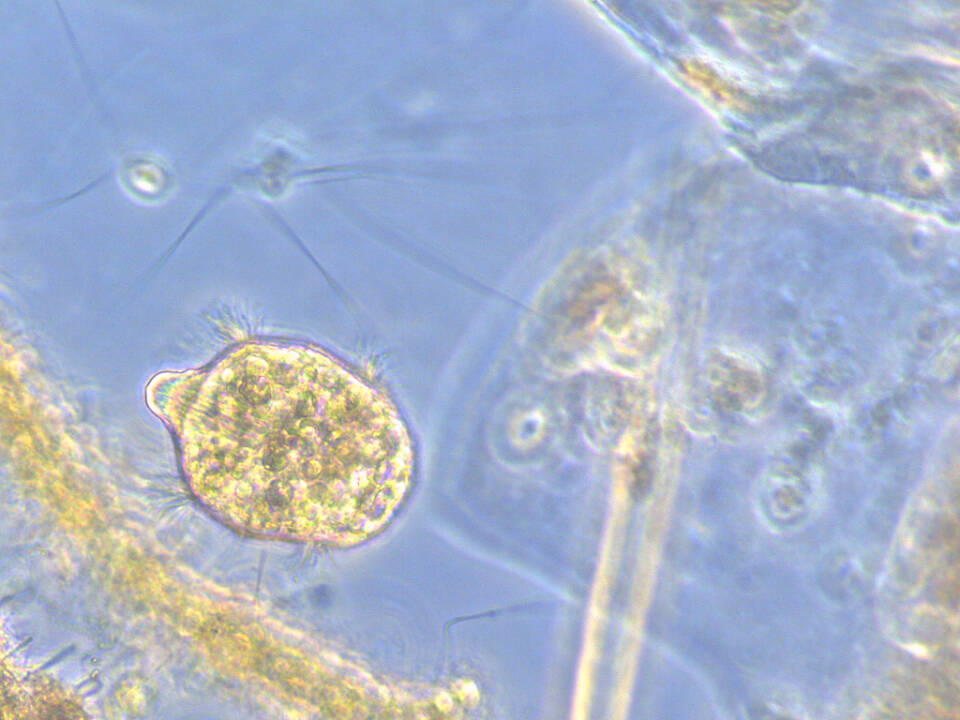
Ciliates are single-celled protozoa less than 150 µm in length, which use cilia for movement and feeding. The cilia may cover the entire body or be concentrated in specific areas. The most common ciliates in the Baltic Sea include, for example, the genus Zoothamnium and the genera Helicostomella and Tintinnopsis, which belong to the order Tintinnoidea.
Other zooplankton groups
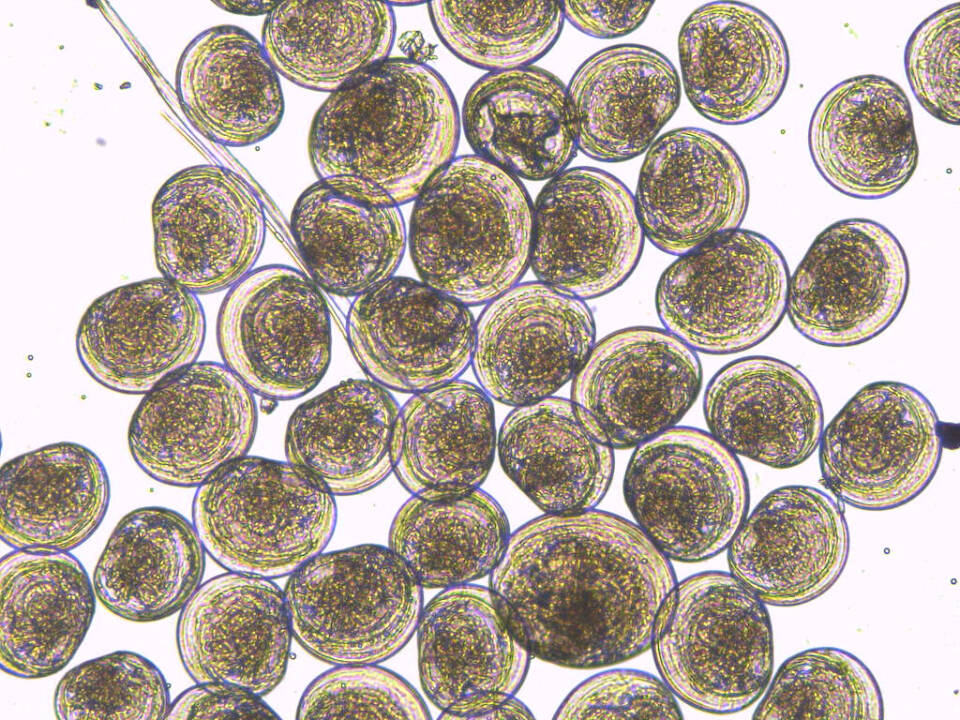
Zooplankton samples also contain a large number of so-called meroplanktonic species, meaning species that have a planktonic stage in their life cycle. These include, for example, larval forms of certain bivalves (Bivalvia), gastropods (Gastropoda), polychaete worms (Polychaeta), and the barnacle Amphibalanus improvisus. In addition, individuals from groups such as mysid shrimps (Mysidacea) and nematodes (Nematoda) are occasionally found, as well as ephyrae, the larval stage of the moon jellyfish (Aurelia aurita). Zooplankton samples may also contain phytoplankton, fish larvae, pollen, and detritus.