The Ocean Shapes Life on Earth
The ocean covers more than two thirds of the Earth’s surface. As much as 97 per cent of the world’s water resources are found in the ocean. Rivers flowing into the seas carry dissolved salts from soils and bedrock. The average salinity of seawater is 3.5 per cent, meaning that each litre contains about 35 grams of salt. By evaporating three buckets of seawater, it is possible to obtain roughly one kilogram of sea salt.
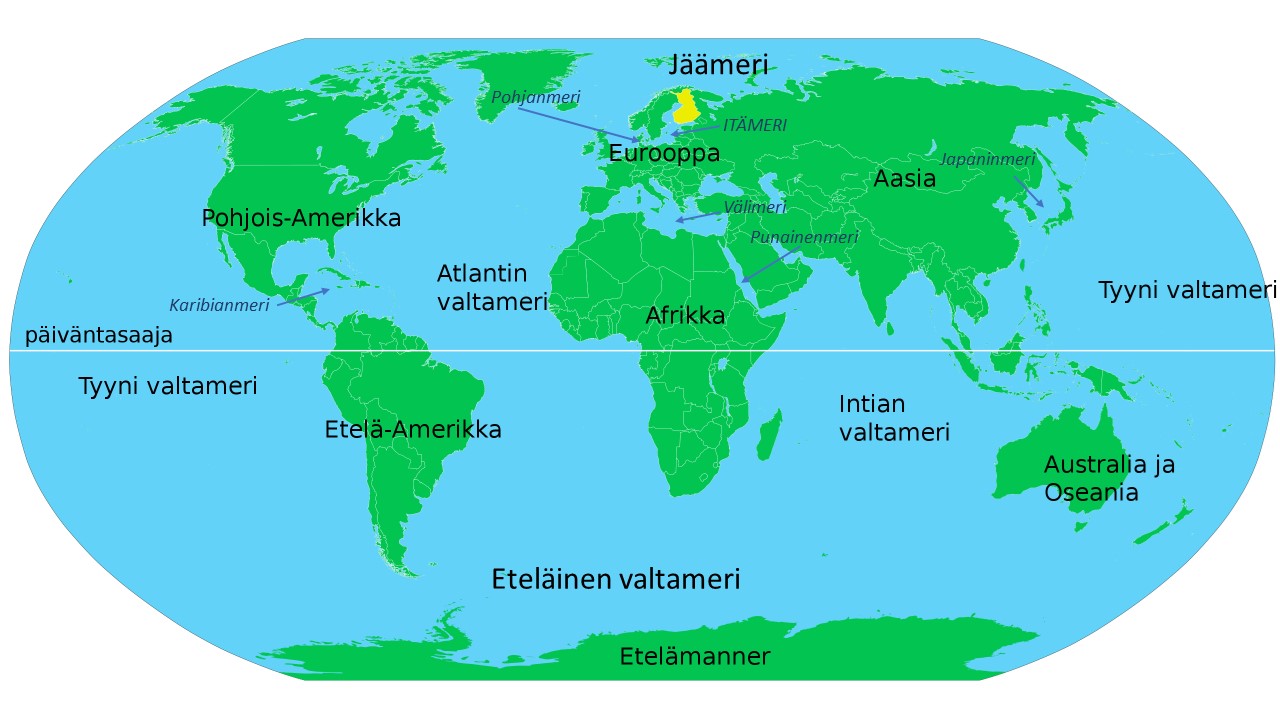
The Baltic Sea is part of the global ocean that encircles the Earth. Today, this vast body of water is understood as a single interconnected ocean, whose named parts are linked to one another. In its broadest classification, the ocean is divided into five parts: the Atlantic Ocean, the Pacific Ocean, the Indian Ocean, the Southern Ocean and the Arctic Ocean.
Around the edges of the ocean lie numerous marginal seas and inland seas. Examples of marginal seas include the Bering Sea and the North Sea, which are bordered by a continent on one side and the open ocean on the other. Inland seas are bodies of water that are largely enclosed by peninsulas or chains of islands. Large inland seas include the Caribbean Sea and the Mediterranean Sea, while smaller examples include the Baltic Sea and the Black Sea.
The Pacific Ocean
The Pacific Ocean covers an area of 162 million square kilometres and has an average depth of 4,080 metres. It is the largest division of the world ocean, covering more than one third of the Earth’s surface. The region is home to numerous large inhabited archipelagos. The deepest point in the ocean, the 11-kilometre-deep Mariana Trench, is located in the Pacific Ocean.
The Atlantic Ocean
The Atlantic Ocean covers an area of 85 million square kilometres and has an average depth of 3,650 metres. Along the margins of the Atlantic, continental shelves are broader and more stable than those of the Pacific Ocean. The seas bordering the Atlantic rank among the world’s most important fishing grounds and sources of oil and mineral resources. The Baltic Sea is part of the Atlantic Ocean.
The Baltic Sea is connected to the North Sea through the Kattegat Strait between Sweden and Denmark. Distinctive features of the Baltic Sea include its low salinity, weak tides, shallow waters and its location entirely on the continental shelf. The Baltic Sea has an average depth of 54 metres, while its deepest point reaches 459 metres.
The Indian Ocean
The Indian Ocean covers an area of 71 million square kilometres and has an average depth of 3,740 metres. The great rivers Indus and Ganges flow into the Indian Ocean, carrying vast quantities of sediment with them. The Ganges delta extends some 2,000 kilometres to the Bay of Bengal. The Indian Ocean is traversed by seven major ocean currents. A unique feature of these currents is that they reverse their direction twice each year.
The Arctic Ocean
The Arctic Ocean covers an area of 16 million square kilometres and has an average depth of 1,210 metres. This northern extension of the Atlantic Ocean is the smallest, shallowest and coldest of the world’s five ocean divisions. It is connected to the Pacific Ocean through the Bering Strait. The Arctic Ocean is covered by ice for most of the year. In recent decades, the ice cover has become thinner and more fragile. Sea ice is melting particularly rapidly along the margins of the Arctic region. e
The Southern Ocean
The Southern Ocean covers an area of 22 million square kilometres and has an average depth of 3,270 metres. It lies between the coast of Antarctica and the 60th parallel south. The powerful Antarctic Circumpolar Current flows eastward around the continent, isolating the surface waters of the Southern Ocean from the more northern parts of the global ocean. The waves of the Southern Ocean are high and icy cold.
The continental shelf is a shallow marine zone surrounding the continents
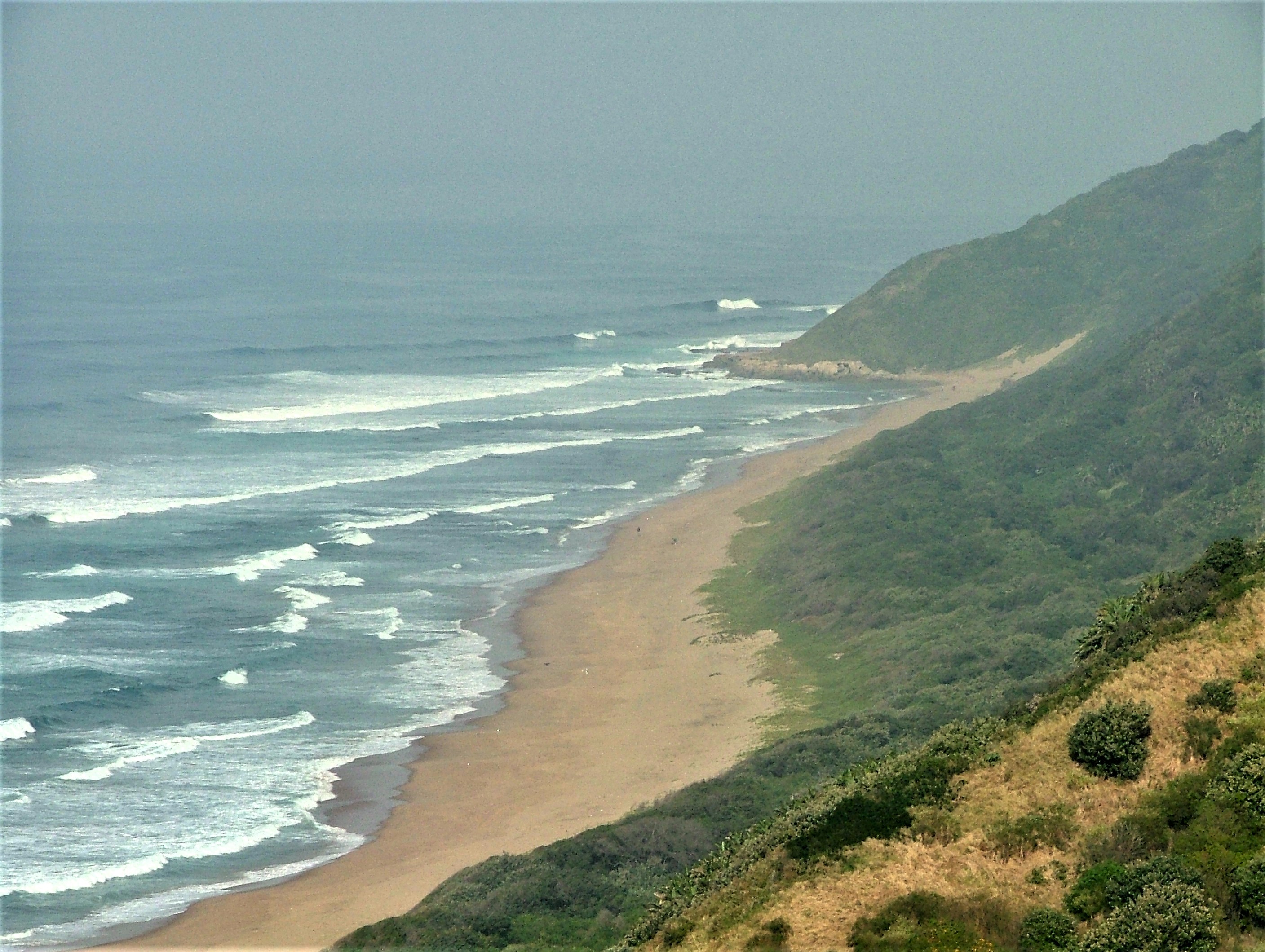
The continental shelf extends from the coast out towards the open ocean and consists of shallow waters less than 200 metres deep. The Baltic Sea and the North Sea lie entirely on the continental shelf, which is why they are relatively shallow. In regions where tectonic plates collide, such as off the coast of Chile, the continental shelf may be very narrow, causing the seafloor to deepen rapidly. Sediments carried from land accumulate on continental shelves, where they are deposited in layers over time. Many of the world’s exploited oil reserves and mineral resources are located on continental shelves.
The continental shelf and shallow marine zone end at the continental slope, a steep descent carved by submarine canyons. Sediment flows down these slopes in turbidity currents. At a depth of around three kilometres, the continental slope gradually gives way to the gently rolling continental rise.
Mountain-like chains formed along the boundaries of tectonic plates cross the oceans as mid-ocean ridges. Most of these ridges lie beneath the sea, but in some places, such as Iceland and the Azores, they rise above the ocean surface. The western part of Iceland rests on the North American Plate, while the eastern part lies on the Eurasian Plate. These plates are slowly moving apart at a rate of about 2.5 centimetres per year, resulting in frequent small earthquakes and, occasionally, larger ones.
Dramatic landscapes unfold in the twilight and darkness of the deep seafloor
Vast stretches of the deep ocean floor are punctuated by mountains and steep cliffs, much like those found on land. Ridges are cut by deep valleys and submarine canyons. Of the thousands of volcanoes on the seafloor, many are active today.
Deep-ocean basins extend several kilometres below the surface. Ocean trenches are deep, narrow depressions that reach depths of more than six kilometres. The Mariana Trench in the western Pacific Ocean is about 50 kilometres wide and 2,000 kilometres long. It contains the deepest point in the global ocean: the Challenger Deep, which reaches a depth of nearly 11 kilometres. The trench is shrouded in complete darkness, and the pressure is about a thousand times greater than atmospheric pressure at sea level. Both crewed submersibles and remotely operated underwater vehicles have descended into the trench. Research teams have found thousands of pieces of litter on the seafloor, including fishing gear, glass, metal and even a plastic bag.
Compared with the Mariana Trench, the Baltic Sea is remarkably shallow. Its depth is measured in metres rather than kilometres. The deepest point of the Baltic Sea reaches a modest 459 metres.